Tips for New Students

As there are new students in nearly every grade level in Lower School this year, please be assured that your child is not the only one adjusting to being immersed in a brand new language three times a week.  Several of you have expressed concern and inquired about extra work that your children can do outside of class to ‘catch up’ to their peers, hence this blog entry!

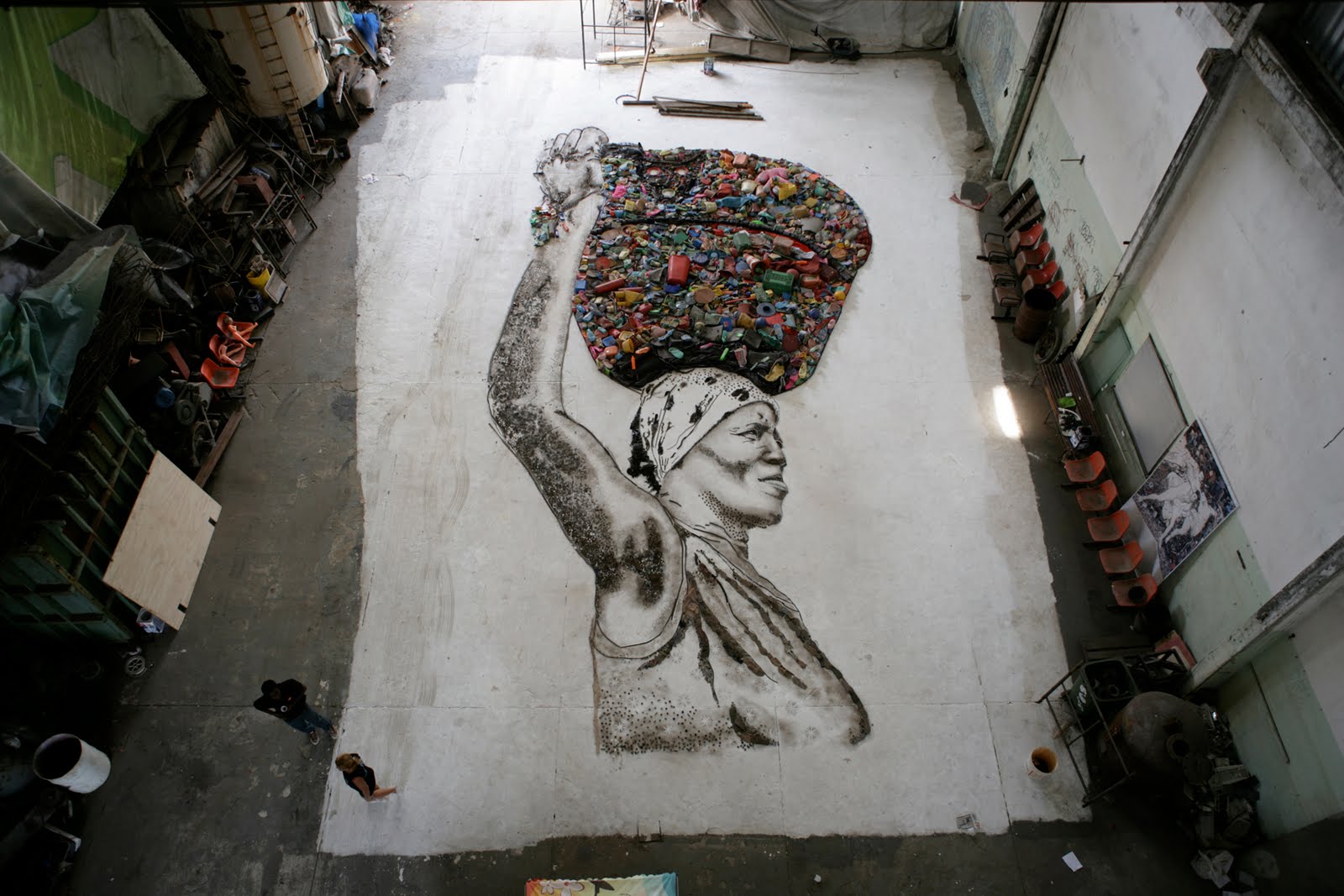
To begin, I believe strongly in cultivating a love for learning–and specifically, language-learning–which means that I would like any extra work outside of class time to be more enjoyable than not.  Therefore, just jump in, as the image above illustrates. My number one suggestion for new students is to check out this website and spend time watching cartoons in the target language, so that they feel more comfortable being immersed in the language (see “Cartoons” on the sidebar). The goal right now is for your child to overcome his/her discomfort with not being able to comprehend everything. Aside from that, new students are also strongly encouraged to be proactive during class time, both by watching when I point to bilingual signs as well as asking their classmates questions (“How do you say…?”). I am going to reiterate to ALL classes next week (in English!) the importance of teaching one another, particularly since we have a lot of new students this year. I believe in building a classroom culture where students learn not only from me but also from each other.

As far as specific suggestions go, many students in Lower School are familiar with and adore the show Pocoyo. Have “Spanish Saturdays” or “Taco Tuesdays”, where your child spends twenty or thirty minutes listening to and watching Spanish cartoons. (If any links don’t work, please let me know; I have to update them from time to time. Or, if your child has a favorite show not on the list, email me and I will try to find a translated version.) Your child does not need to ‘do’ anything here, just sit and be with the language; his/her brain will begin internalizing the rhythm and cadence of the language on its own, unconsciously. For more ideas, please see the “Summer Packet Letter” on the sidebar.

While it is true that other students have been taking Spanish for many years now, I have repeatedly seen new students at every grade level exhibit tremendous success in the past (this is my ninth year teaching). Give it some time (it is very early in the year!), and encourage your child to be patient, ask questions, and practice being ‘okay’ with not understanding everything. The vocabulary will come. I do not pressure students to produce language until they are ready, and remind them that babies do not speak on Day #2 out of the womb; language takes time.


Other Thoughts

A Conscious Effort: Use Spanish as much as possible, wherever you go. Make it a game. Are you waiting in line? At the mall? At the grocery store? Online waiting for a website to load? In a traffic jam? Train your brain to use those ten second blips of nothingness to be productive and stay mentally active. Try to remember a word or phrase–or several–in the target language while you are waiting. A minute here or there will prove much more effective in long-term retention than an hour or two of studying. When your skills begin to advance, work on translating what you hear in your head. Learning a language might be a challenge, but it should be a fun challenge! Make a conscious effort to incorporate Spanish into your daily life.

Bilingual Technology: Fiddle around and change your iPod, iPad, iPhone, Facebook page, laptop, email or any other gadget you may have to Spanish. You can usually find the languages under “Settings”, “International”, or “Control Panel”. Note: Only change your technological devices to Mandarin Chinese if you have some spare time on your hands and a lot of patience–sometimes it can be tricky finding your way back to English. (And yes, I do say this from experience.)

Spanish Channel: Find the Spanish channel on your television.  For that matter, find the Portuguese and Italian and Russian and Mandarin Chinese channels, too.  See if you can hear the different cadences/rhythms/intonations between the languages.  Most importantly, have fun guessing!

Number Challenges: Count to twenty in Spanish when you’re brushing your teeth every morning.  Too easy?  Count backwards.  Still too easy?  Skip count forwards and backwards (0-2-4-6-8-10-12, 11-9-7-5-3-1, etc.). Do mental math.   Don’t just memorize numbers in order; make them meaningful.  How do we use numbers in the real world?  Count change in Spanish, say the total of the restaurant bill in Spanish, jump rope or play hopscotch in Spanish.  Numbers are everywhere…!

Three Levels: 1) Recognition: you can’t remember the word, but when you see or hear it, you know what it means; 2) Production: you remember the word in both English and Spanish, and can translate it on the spot; 3) Emotional connection: you not only know the word in English and Spanish, but you also understand it…when you say it, you mean it and aren’t just translating (example: please = poooor faaaaaavvvoooooooor)

Finding Meaning


Tiny particles of cinnamon swirled through the air around her, pulling her into a scented, Fantasia-like dream. She began to drift away—far away, to the most nebulous of states—and felt the strength of the oneiric vacuum increase as she approached. Entering required an official signature, a ‘no-return policy’, a promise with the universe that could never be broken. Should she stay or should she go? The Clash. Literally—between two worlds. Although a fan of British punk rock, she didn’t care for the lyrics, hated making decisions, choosing, eliminating possibilities. It was all so… finite. The cinnamon was falling faster now, diving into the funnel that led to everything ethereal. 

A light bulb exploded, and she became conscious again of this world. Reality, she scoffed. What was that? Shattered glass covered the carpet. It was a mess, that’s what. And that dim-witted poltergeist, always messing with her, destroying a perfectly good meditation. She sighed, repeating her mantra: Everything happens for a reason. Believe the words, internalize them. She curled up on the couch, not believing, not internalizing, not feeling. The breaking point had arrived—overindulge in Brie cheese, crackers, and strong wine, or do something—as in, productive, worthwhile, meaningful. She desperately craved meaning in her life. While imagination would always guide her, this vicarious living in fantastical worlds merely exacerbated the situation.

Opening the door with purpose, she marched confidently up to the desk. A whiff of incense passed by her nostrils, and she zeroed in on the source: Skinny bamboo twigs. She watched, distracted, as the smoke twisted around a small Buddha statue, curly-cue style, much like the Hindi letters on a nearby sign. Ten minutes later, she was there. That is, literally speaking, though perhaps not quite yet ‘present’ in the ontological sense—but at the very least, situated on her mat. 

The lights dimmed. A woman in her thirties, evidently the master yogi, began with a soft exhalation. She followed along, closing her eyes, connecting with the universe. Slowly, the airways opened. She was breathing. How long had it been since she last took a breath? A real breath? Too long. Her body flowed along with the motions, leg forward, arms upward, lunge, repeat. Upward dog and then downward dog, accompanied by other fancy unidentifiable sounds in… was it Sanskrit? It felt old, grounded in something with a history, something real, something meaningful. Her body emptied itself of the toxins, of the apathy that had tried to destroy her soul, and a joy emerged in its place, imprinting a permanent smile on her heart. The ecstasy directed her walk; she was floating, really floating. With purpose.

Tech/Education

Technology

  1. Tech Gets A Time-Out
  2. Silicon Valley Parents Are Raising Their Kids Tech Free
  3. This Panda is Dancing – Time Well Spent
  4. The Digital Language Divide
  5. I Used to Be a Human Being (Andrew Sullivan)
  6. The ‘Busy’ Trap (Tim Kreider)
  7. The Disease of Being Busy (Omid Safi)
  8. Thinking About a Lack of Thinking (Grant Wiggins)
  9. Thoughtlessness, Part 3 (Grant Wiggins)
  10. Thoughtlessness, Part 2 (Grant Wiggins)
  11. Can We Auto-Correct Humanity? (Prince Ea)
  12. The Shallowness of Google Translate
  13. How Google Translate Works…

Education

  1. What is the Teacher’s Role in the Classroom? (NAIS)
  2. All I Need to Know I Learned in Kindergarten (Mitchel Resnick)
  3. What if the Secret to Success Is Failure? (Dominic Randolph)
  4. Learner Performance – Immersion (ACTFL)
  5. 143 English Words That Are Spanish
  6. To Learn a New Language…
  7. 9 Great Resources to Learn Spanish (FluentU)
  8. 8 Ways to Get Daily Language Practice (FluentU)
  9. Theory of Second Language Acquisition (Stephen Krashen)
  10. Rethinking Cinco de Mayo
  11. Children’s Language Learning (Finland, Finnish BBC)
  12. Why Are Finland’s Schools Successful?
  13. Kindness Film Festival (Edutopia)
  14. What Makes a Prodigy?
  15. Where Creativity Goes to Hide (Patrick Bassett, NAIS)
  16. On Cosmopolitanism (Patrick Bassett, NAIS)
  1. Heaven on Earth: A Guide to See Bolivia’s Salt Flats
  2. Things to Do in Peru: Exploring the Wonders of Machu Picchu
  3. Chile, Finland, Mexico and More (Fulbright Blogs)
  4. Dancing – World Cultures

Multiple Languages

“The hyperpolyglot is someone who is both a gifted and massive language accumulator. They possess a particular neurology that’s well-suited for learning languages very quickly and being able to use them” (Michael Erard*).


Multiple Languages & Hyperpolyglots

  1. How our brains cope with speaking more than one language
  2. The Mystery of People Who Speak Dozens of Languages
  3. Why we can dream in more than one language
  4. DC Carpet Cleaner Who Speaks 24 Languages
  5. How to Maintain Multiple Languages (Agnieszka Karch)
  6. Hyperpolyglots – Secrets of Language Superlearners*
  7. How Many Languages Can You Juggle?
  8. Man Fluent in 11 Languages (Alex Rawlings)
  9. Adventures of a Teenage Polyglot (Timothy Doner)
  10. Teen Speaks Over 20 Languages (Timothy Doner)
  11. Why I Taught Myself 20 Languages (Timothy Doner)
  12. How Can I Avoid Confusing Languages? (Olly Richards)
  13. Infographic – Hardest Languages to Learn
  14. 4 Blogs Every Language Learner Should Follow
  15. Top 100 Language Lovers (2014)
  16. The World’s Top 20 Languages (Mental Floss)
  17. Speaking Multiple Languages Can Influence Children’s Development
  18. Tips to Become Fluent… Fast
  19. Why Learning Foreign Languages…
  20. Foreign Language Skills Worth Acquiring
  21. Natural Born Linguists

The Bilingual Brain

  1. Language Utilizes Ancient Brain Circuits That Predate Humans
  2. Foreign Languages and Rational Decisions
  3. Do Bilingual Children Learn Differently?
  4. Bilingualism and Poverty
  5. This Is Your Brain On Language
  6. How Bilingualism Boosts Your Brain
  7. Bilingualism and Brain Power
  8. Foreign Languages Trigger Brain Growth
  9. Do We Use Only 10% Of Our Brain?
  10. Bilingualism Fine-Tunes Hearing
  11. The Benefits of Bilingualism
  12. Bilingual Kids Have Multiple Advantages
  13. Bilingual Children
  14. The Bilingual Brain Is Sharper and More Focused
  15. When Labels Don’t Fit Hispanics
  16. For a More Creative Brain, Travel

Untranslatable

  1. Infographic – Idioms of the World
  2. 10 Spanish Words, No English…
  3. The Cozy Linguistics of Hygge (JSTOR)
  4. The Norwegian Secret
  5. How ‘Hygge’ Helps You (Denmark)
  6. Infographic – Untranslatable Words
  7. Tongue and Tech
  8. A Loss For Words
  9. Arabic Loanwords in European Languages

TEDx

“In order to attain the impossible, one must attempt the absurd.” -Miguel de Cervantes


  1. How to Find a Wonderful Idea (OK Go)
  2. Gorgeous Portraits of the World’s Vanishing People (Jimmy Nelson)
  3. How Tech Companies Control Billions of Minds Every Day (Tristan Harris)
  4. What Adults Can Learn From Kids (Adora Svitak)
  5. The Power of Introverts (Susan Cain)
  6. Dreams from Endangered Cultures (Wade Davis)
  7. Txtng Is Killing Language. JK!!! (John McWhorter)
  8. Psychedelic Science (Fabian Oefner)
  9. The Danger of Instant Gratification (Jesse Weinberger)
  10. Your Elusive Creative Genius (Elizabeth Gilbert)
  11. The Art of Choosing (Sheena Iyengar)
  12. No Child Left Monolingual (Kim Potowski)
  13. The Internet is on Fire (Mikko Hypponen)
  14. The Art of Memory (Daniel Kilov)
  15. More Than Words (Translation vs. Interpretation)
  16. The Most Important Language (Poet Ali)
  17. Defining Your Identity (Amy Walker)
  18. Grow Up, Learn Another Language (Gaston Dorren)
  19. Learn A New Language (Benny the Irish Polyglot)
  20. The Benefits of a Bilingual Brain (Mia Nacamulli)
  21. Where Joy Hides and Where To Find It (Ingrid Fetell Lee)

TEDx- Articles

  1. How Language Can Affect… (Keith Chen)
  2. How Cultures Make Decisions
  3. Why I Taught Myself 20 Languages (Timothy Doner)
  4. 40 Brilliant Idioms… (TED Blog)

Summer Packet 2016

PREVIOUS YEARS: Link to ALL SUMMER PACKETS!

To My Fellow Linguists and Citizens of the World:

Learning a language is a beast of a project to undertake. In addition to reading, writing, speaking, and listening—with countless vocabularies, dialects, and accents to untangle—you also have cultural layers and sublayers to sort through. It takes time and patience, and a willingness to understand that learning a language does not happen overnight. You must surround yourself with the language and culture every day, keep your study at the forefront of your mind, and use those blips of nothingness while waiting in line to try and recall what you last studied. An impossible task? No. Challenging, yes—but impossible, never! *For inspiration, read Why I Taught Myself 20 Languages, by Timothy Doner.

In metaphorical terms, then, you must slay the dragon. This summer, Lower School students are encouraged to keep their language study alive by ‘slaying the dragon’. Below you will find a series of language-related challenges. Upon completing each challenge, students may color in a section of the dragon. The dragon is slayed when all sections are colored in. Please hang the dragon picture in a visible or high-traffic area of your household, to remind students to continue their study. The challenge commences on the first day of summer, so if students have already done something on the list, they are asked to do it again.

1) Watch a movie in the target language, with Spanish voiceover and English subtitles. Note: you are welcome to change both to Spanish, but quite often, the translations are done in different countries: what you are hearing is not what you are reading. This can be incredibly confusing and frustrating for a beginner; it is more important right now for students to listen to the language: input, input, input! If your family does not want to watch the movie in Spanish with you, ask to invite some friends over. ¡Fiesta!

2) Label ten things in your house in Spanish. Use WordReference or Google Translate to look up the correct spelling. Make sure to include the “el” or “la” word–for example, la mesa/the table. Listen to the pronunciation so you know how to say it!

3) Prepare a traditional recipe with your family from a Spanish-speaking country. Make it interesting and try something new that you have never had before. Guacamole? Patacones? Tres leches cake? Gallo pinto? Horchata? Churros? Enjoy the process of searching for a recipe (appetizer? drink? main course? dessert?), buying ingredients you may have never heard of before, and then preparing it as a family. There tends to be a big focus on family and community in Latin American households, so make sure that everyone helps out. The more, the merrier!

4) Find a Spanish language-learning app that you like, and then level-up three levels to complete this challenge. Here are a few suggestions for apps: DuolingoMemriseFluentU, and/or MindSnacks.

5) Ask to schedule a family night out at a local Mexican/Cuban/Spanish-speaking restaurant. Then, either order in Spanish (if you already know how), or ask the waiter a few questions and learn how! Most people are more than willing to share their linguistic knowledge. To complete this challenge, take a picture of the food you ordered. (Note: there is no way for me to know with 100% certainty that you actually ordered in Spanish, so I am trusting you to be honest with yourself on this one.)

6) #10daychallenge: practice counting backwards or skip counting in Spanish whenever you brush your teeth for ten days in a row. Do NOT count aloud, or else you will spit out the toothpaste foam and get in trouble for making a big mess! Instead, count in your head—cero, dos, cuatro, seis, ocho, diez, doce; uno, tres, cinco, siete, nueve, once. If you don’t know the numbers very well, ask your parents to help you look them up on the computer so you know how they are spelled and pronounced. The point is to challenge yourself, so if 0-10 is too easy, work on something a bit more difficult. (100-200-300-400-500, etc.)

7) Go with your parents when they run errands or go shopping, and look for signs in English and Spanish. When you see one, write it down or ask your parents to take a picture of the sign with their phone. Find five signs, and you get to color in another section of the dragon! If you are not sure where to start, everything from the plumbing section to the magazine rack at Lowe’s is labeled in English and Spanish. The doors to—and other directional signs throughout—J.C. Penney’s at the mall are bilingual. Caution signs for wet floors are often in multiple languages. Airports have a million signs. Keep your eyes open!!

8) Listen to a Spanish radio station (87.7 FM) or podcast for twenty minutes and write down five words you understand. Don’t stop listening when you get to five words—you have to listen for the whole twenty minutes! Keep in mind that this could be five minutes a day for four days; it does not have to be all at once. What does Spanish sound like to you? Rap music? Raindrops?

9) Visit your local library and/or bookstore, and ask where the children’s foreign language section is located. Spend at least ten minutes flipping through the books and trying to find words you know—be a word detective! The local library has a huge Spanish section. Half-Price Books also has decent collections, but they are mixed in with other languages, so you really have to pay attention to know what language you are looking at. Tip: look at the copyright page to find out where the book was published, and then ask your parents what country that city is in. If it’s a Spanish-speaking country, the book is probably written in Spanish.

10) Make miniature weather signs in Spanish (with pictures!), and be a meteorologist: post the appropriate weather sign on the window every day for a week. See AccuWeather in Spanish for vocabulary, or use the guide below:

a. Hace sol: it’s sunny (“ahh-say soul”)
b. Está despejado: it’s clear (“es-TAH dehs-pay-HAH-doe”)
c. Llueve: it’s raining (“you-A-bay”)
d. Está nublado: it’s cloudy (“es-TAH new-BLAH-doe”)

Now hang this on your refrigerator or bookmark it on your computer before it gets lost. Your support and enthusiasm for the foreign language program are greatly appreciated. Have a wonderful summer, and be happy.

Gracias,

-Your Resident Linguist <3

Resumen Q3/Q4, 15-16 (PK-5)

Grade
PKThis semester, students in prekindergarten built the night sky—size-appropriate for stuffed animals—out of glow-in-the-dark moon and star stickers on blue paper; chose a stuffed animal to cuddle with under a huge blanket/manta; had the class electrician/electricista turn off the lights; whispered buenas noches/goodnight to their peers; and then pretended to fall asleep as they listened to Pato sing Estrellita (Twinkle, Twinkle Little Star). 

When the sun rose, students stretched, chatted, and then started the bedtime routine all over again!  They also met Stan, the pet dog of Pato—“Why is he named Stan, Pato?”  “Because he speaks Stan-ish!”—and played a few sports games together.  In addition, students spent a week decorating their very own mini-piñatas; read Corre, perro, corre (Go, Dog, Go) and several David Shannon books, among many others; classified and sorted toys by color and size; and even ventured outside (yes, Spanish exists there, too!).  Gracias for a fabulous year.
KThis semester, students in kindergarten let their imaginations run wild.  What began as responding to action commands (verbs)—“Run!  Jump!  Fly!”—gradually evolved into acting out any word, from keys and vegetables to a blossoming class flower (aerial view, with shoes in the center and reverse sit-ups).  Later, verbs and nouns were tied together via reenactments of the daily morning routine—brushing teeth, putting on clothes, washing face, riding or biking to school, greeting teacher, and even earning stickers for completing math problems in the target language! 

In Project Land-ia, kindergarteners combined droplets of food coloring to create beautiful designs; had fun with more floating/sinking experiments; went on a plastic insect treasure hunt; created a life-sized spider web out of yarn; pulled Pato up and down on a pulley system; ‘traveled’ to Spain/España in a boat (i.e., a box dragged across the ocean—rather, floor—on the tape floor map by yours truly); were introduced to the Salsa (dance); created a school, movie theater, and house for Pato, and a hospital for Stan (a paper pet dog of Pato, who speaks Stan-ish, and was injured [crumpled] one day when he tried to run away and someone grabbed at him).  Finally, students have been working on both reading and writing Spanish sight words.  Gracias for a fabulous year.
1This semester, students in first grade worked on understanding the difference between a statement and a question in Spanish (quiero/I want vs. ¿puedo?/ can I?), through context cues and punctuation.  Later, they were given age-appropriate worksheets in the target language and, via use of logic, sight words, and teamwork, had to deduce the instructions themselves! 

Additionally, students composed both silly and serious sentences; chose food nicknames; tasted Mexican candies; made Me gusta/I like collages; learned a soccer chant from Spain; earned (fake) euros for cleaning the classroom (limpiar/to clean); built an impressive 3-D model of part of Chichen Itza out of colorful paper cubes, in an “assembly-line” type of factory (Mexico); and had fun playing Hangman and Spanish Bingo.  First graders also increased their clean-up routine productivity by imagining the trashcans as “Monstruos de la basura” (Trash Monsters), and then feeding the ravenous creatures with papers and scraps at the end of class.  Gracias for a fabulous year.
2This semester, students in second grade continued with their daily journal entries.  Here, they wrote about how they were feeling (emotions), included the day and date, and described the weather, paying special attention to accents, spelling, and punctuation.  They also made sure to note which geography-level they were working on: levels one through three deal with naming the Spanish-speaking countries on the tape floor map, and level four involves flag identification (independent work). 

In addition, second graders had fun acting out their new animal passwords; built an impressive 3-D model of part of Chichen Itza out of colorful paper cubes (Mexico); talked about the concept of Spanglish; practiced reading their lines in a Spanish mini-play script; learned about Cinco de Mayo; and played a variety of games in the target language, including Charades, Pirinola, Bingo, Game Show, and Cops and Robbers.  Gracias for a fabulous year.
3This semester, students in third grade began by helping the rest of Lower School build an impressive 3-D model of part of Chichen Itza out of colorful paper cubes (Mexico).  One particular cube managed to attach itself to a Popsicle stick and grow a face—and thus was borne Cubby el cubo cubano (Cubby the Cuban Cube).  In order to tell the story of present-day Cubby, however, it was necessary to travel back in time; through role-playing, third graders learned about the lost treasure and Spanish Fleet of 1715, and then used this story (nonfiction) as a point of origin for their own original story (fiction). 

Their adventure involved intimidating bodyguards, good and evil forces (e.g., the girl who poured a milkshake on Cubby, the paper cube!), the fact that Cubby lives in a printer and therefore could photocopy and clone himself, and a ridiculous and messy finale of soap and marshmallows that expanded in the (yes, real) microwave.  Later, students went on another historical voyage to learn about endangered languages and how creoles/languages are formed, and as an extension, worked to create their own languages.  Knuffle Bunny added some good food for thought here—is thinking language, pre-language, or merely wordless emotional stuff?  Lastly, third graders chose class (food) nicknames; had a ‘masculine and feminine nouns’ competition; learned about Cinco de Mayo, and began their final class story of the year.  Gracias for a fabulous year.
4This semester, students in fourth grade divided their time between working in the town and getting a healthy dose of grammar.  In the latter, fourth graders ‘leveled up’ from one written translation to another, deepening their understanding of and making connections between Spanish etymologies and general syntax.  After grasping the overarching idea (of both verb conjugations and nonliteral translations), students created their own quizzes to test one another, and then worked to apply this newfound knowledge in meaningful contexts. 

For example—in addition to the town simulation—they also rehearsed and presented (partner) stories with puppets, and invented their own class story about a bear named Jellybean who lives on Mars.  Additionally, fourth graders talked about exchange rates and other currencies; learned about Cinco de Mayo; and wrapped up the year with a focus on how to ask questions in the target language.  Gracias for a fabulous year.
5This semester, students in fifth grade began preparing for the Fifth Grade Spanish Program.  After familiarizing themselves with each of the three plays, fifth graders were assigned a main part in one play and minor roles in the others.  Since then, students have been working on using appropriate vocal intonation and expression; facing the audience; adding relevant movements; brainstorming creative costume ideas and what type of music might be fitting for certain scenes; gathering items for their prop boxes; and memorizing their lines. 

Students should be immensely proud of their dedication, grit, preparation, and linguistic and theatrical skills.  As a result of all of their hard work, the upcoming theatrical debut (on Friday, May 20, 2016 @1:30pm) is sure to be a tremendous success.  As the year wraps up, fifth graders will divide their time between a basic grammar review and soccer games, weather permitting.  Gracias for a fabulous year and (sniff, sniff!), best of luck in Middle School!

Resumen, 15-16 (Grade 5)

Term
1This term, students in fifth grade spent the bulk of their time immersed in the target language and ‘The Art of Storytelling’.  Accordingly, students mixed culture and creative imaginations to create numerous class story-plays with student actors.  From a cockroach/la-cu-ca-ra-cha who stole instruments from a Mariachi band and a peccary who lives in Costa Rica, to a microscopic world and an upset guinea pig (Oreo—canta, no llores/sing, don’t cry), the linguistic journey never ceases to be original.  Gracias for a great quarter.  Also, please mark your calendars: May 20, 2016 @1:45pm is the end-of-the-year Fifth Grade Spanish Program and a must-see!
2This term, students in fifth grade assumed new ages and identities in the Class Family; chose individual passwords; acted out two Latin American legends in the target language (based in Cuba and Peru); participated in a mini-soccer unit; discussed the major differences between interpretation (spoken) and translation (written); learned about El Día de Los Tres Reyes Magos and later tasted Rosca de reyes; reviewed the basic Salsa and Cha-cha dance steps; heard a presentation about Guatemala from a visiting Upper School exchange student; and then talked about and received Worry Dolls (Guatemala).  In addition, fifth graders also began brainstorming, rehearsing, and preparing for their end-of-the-year program on May 20, 2016 @1:45pm.  Looking forward to seeing you there!
3&4This semester, students in fifth grade began preparing for the Fifth Grade Spanish Program.  After familiarizing themselves with each of the three plays, fifth graders were assigned a main part in one play and minor roles in the others.  Since then, students have been working on using appropriate vocal intonation and expression; facing the audience; adding relevant movements; brainstorming creative costume ideas and what type of music might be fitting for certain scenes; gathering items for their prop boxes; and memorizing their lines. 

Students should be immensely proud of their dedication, grit, preparation, and linguistic and theatrical skills.  As a result of all of their hard work, the upcoming theatrical debut (on Friday, May 20, 2016 @1:30pm) is sure to be a tremendous success.  As the year wraps up, fifth graders will divide their time between a basic grammar review and soccer games, weather permitting.  Gracias for a fabulous year and (sniff, sniff!), best of luck in Middle School!

Resumen, 15-16 (Grade 4)

Term
1This term, students in fourth grade excitedly delved into the task of creating their own pueblo/ town.  A typical day consists of students striving to use the language in a variety of meaningful contexts and situations.  As a result, the learning environment tends to be more boisterous than not, but in a lively, jovial sort of way, where fourth graders spend their time traveling to the bank, taking out money, working at the local shops, buying, selling, bargaining, trading, and occasionally employing ‘frantic gesturing’ when they find themselves unable to recall vocabulary or simplify an idea.  Gracias for a great quarter.
2This term, students in fourth grade began opening new businesses in the pueblo/town.  For example, there are a few street musicians who play on the classroom keyboard and earn their living from passers-by; students who buy tickets to watch Sr. Wooly videos at the town movie theater; and customers who frequent the Italian Restaurant on a regular basis.  Fourth graders also spent some time away from the town to learn about outdoor street markets/mercados (in South America) as well as the importance and multi-faceted roles of street art in Argentina (e.g., graffiti, murals, political statements, etc.).  Later, they also worked on written translations as mental warm-up exercises for the beginning of class routine, and then created their own authentic mercado
3&4This semester, students in fourth grade divided their time between working in the town and getting a healthy dose of grammar.  In the latter, fourth graders ‘leveled up’ from one written translation to another, deepening their understanding of and making connections between Spanish etymologies and general syntax.  After grasping the overarching idea (of both verb conjugations and nonliteral translations), students created their own quizzes to test one another, and then worked to apply this newfound knowledge in meaningful contexts. 

For example—in addition to the town simulation—they also rehearsed and presented (partner) stories with puppets, and invented their own class story about a bear named Jellybean who lives on Mars.  Additionally, fourth graders talked about exchange rates and other currencies; learned about Cinco de Mayo; and wrapped up the year with a focus on how to ask questions in the target language.  Gracias for a fabulous year.

Resumen, 15-16 (Grade 3)

Term
1This term, students in third grade discussed how ‘language is a sport for your mouth’, as phonetics is a major part of the third grade curriculum.  Students also worked on memorizing several tongue twisters in the target language; chose Spanish names and Inside-Out passwords; made replicas of Easter Island Moai statues out of clay; told two class stories with student-actors; saw pictures of La Alhambra in Spain and Iguazu Falls in Argentina; and were delighted by a video about accents (Amy Walker).  Gracias for a great quarter.
2This term, students in third grade chose new animal and button passwords; practiced action commands; rehearsed and presented dialogues in the target language; learned about the history of churros and then had a ‘churro party’; built impressive fortalezas/ forts during structured free- play lessons, while responding to the teacher’s interruptions with cued responses (flip-cards); discussed untranslatable words; were presented with a country-sticker challenge (imports/exports focus); prepared for the Spanish portion of students’ second semester speeches; and continued with their yearlong storytelling unit.  The latter included several hands-on projects, including a roller-coaster building session, designing a Telescope v2.0, and a three-story long yarn-pulley that hoisted Pato away from an Evil Flower.
3&4This semester, students in third grade began by helping the rest of Lower School build an impressive 3-D model of part of Chichen Itza out of colorful paper cubes (Mexico).  One particular cube managed to attach itself to a Popsicle stick and grow a face—and thus was borne Cubby el cubo cubano (Cubby the Cuban Cube).  In order to tell the story of present-day Cubby, however, it was necessary to travel back in time; through role-playing, third graders learned about the lost treasure and Spanish Fleet of 1715, and then used this story (nonfiction) as a point of origin for their own original story (fiction). 

Their adventure involved intimidating bodyguards, good and evil forces (e.g., the girl who poured a milkshake on Cubby, the paper cube!), the fact that Cubby lives in a printer and therefore could photocopy and clone himself, and a ridiculous and messy finale of soap and marshmallows that expanded in the (yes, real) microwave.  Later, students went on another historical voyage to learn about endangered languages and how creoles/languages are formed, and as an extension, worked to create their own languages.  Knuffle Bunny added some good food for thought here—is thinking language, pre-language, or merely wordless emotional stuff?  Lastly, third graders chose class (food) nicknames; had a ‘masculine and feminine nouns’ competition; learned about Cinco de Mayo, and began their final class story of the year.  Gracias for a fabulous year.

Resumen, 15-16 (Grade 2)

Term
1This term, students in second grade read and translated the daily letter from Pato; responded to the stuffed-animal duck in their class notebooks; rehearsed and presented silly mini-conversations in the target language with puppets; chose individualized fruit or vegetable passwords; were introduced to the Merengue, Salsa, and Tango ballroom dances; played a hot/ cold type of game called “Busca el murciélago” (Look for the bat); and jammed to various beginning- of- class tunes, including Madre Tierra/ Mother Earth and ¡PAN! (BREAD!).  Gracias for a great quarter.
2This term, students in second grade traveled around the globe [virtually] to check out the weather forecast in a variety of locations; discussed military time; had fun pronouncing the twelve syllables in Spanish —estacionamiento prohibido— that signify ‘no parking’; identified typical Hispanic foods, such as empanadas and tamales; creatively acted out their sea creature and animal passwords; chose Spanish names; made comecocos, or chatterboxes; practiced naming the Spanish-speaking countries on the tape floor map; and transitioned to a storytelling unit, where plastic insects were placed in culturally-authentic settings but highly unlikely scenarios.  In the latter, students had fun role-playing parts of the story and dramatically responding to class cues.  Gracias for another great quarter.
3&4This semester, students in second grade continued with their daily journal entries.  Here, they wrote about how they were feeling (emotions), included the day and date, and described the weather, paying special attention to accents, spelling, and punctuation.  They also made sure to note which geography-level they were working on: levels one through three deal with naming the Spanish-speaking countries on the tape floor map, and level four involves flag identification (independent work). 

In addition, second graders had fun acting out their new animal passwords; built an impressive 3-D model of part of Chichen Itza out of colorful paper cubes (Mexico); talked about the concept of Spanglish; practiced reading their lines in a Spanish mini-play script; learned about Cinco de Mayo; and played a variety of games in the target language, including Charades, Pirinola, Bingo, Game Show, and Cops and Robbers.  Gracias for a fabulous year.

Resumen, 15-16 (Grade 1)

Term
1This term, students in first grade read and translated the daily letter from Pato, learning which ‘islas/islands’—[read: activity centers]—were open that day.  First graders then submitted written requests expressing what they wanted to do.  As a constantly changing mix of toys spark students’ imaginations, the archipelago comes alive with creativity and authentic linguistic exchanges between teacher and students.  It should also be noted that they are all hard-core fans of the silly song, “¿Puedo ir al baño?” (Can I go to the bathroom?).  Gracias for a great quarter.
2This term, students in first grade continued submitting written requests expressing what they wanted to do and reasons to support their choice.  First graders also spent time learning about the 900-page, 400-year-old Spanish literary masterpiece, Don Quijote, and had fun imagining and acting out various chapters. 

Later on, they identified a painting by Picasso based on the novel; chose individualized professions-passwords; constructed a model of Machu Picchu out of clay as a class (Peru); heard about La Tomatina, an annual, giant tomato fight in Spain; and listened to a hilarious chipmunks-voiceover of their class song, “¿Puedo ir al baño?” (it should be noted that dance choreography evolved quite naturally in response to the video).  Gracias for another great quarter.
3&4This semester, students in first grade worked on understanding the difference between a statement and a question in Spanish (quiero/I want vs. ¿puedo?/ can I?), through context cues and punctuation.  Later, they were given age-appropriate worksheets in the target language and, via use of logic, sight words, and teamwork, had to deduce the instructions themselves! 

Additionally, students composed both silly and serious sentences; chose food nicknames; tasted Mexican candies; made Me gusta/ I like collages; learned a soccer chant from Spain; earned (fake) euros for cleaning the classroom (limpiar/ to clean); built an impressive 3-D model of part of Chichen Itza out of colorful paper cubes, in an “assembly-line” type of factory (Mexico); and had fun playing Hangman and Spanish Bingo.  First graders also increased their clean-up routine productivity by imagining the trashcans as “Monstruos de la basura” (Trash Monsters), and then feeding the ravenous creatures with papers and scraps at the end of class.  Gracias for a fabulous year.

Resumen, 15-16 (Grade K)

Term
1This term, students in kindergarten met several of the most popular stuffed animals in the Spanish room, including Pato/Duck, Oso/Bear, and Changuito/Monkey.  Over time, kindergarteners began to understand that the stuffed animals are silly—quite silly, indeed: Changuito is constantly hiding, Pato wears a sock for pajamas and a nightcap, and Oso tries to sneak in a nap whenever possible.  As a result, most classes begin with a humorous mini-story that naturally leads into a hands-on class activity—e.g., disappearing ink, vinegar volcanoes, dyed paper, a REAL egg whose fate was to be smashed, floating and sinking objects, monsters, art projects, etc.  In-between activities, students jam to the theme-song from Rompe Ralph (Wreck-It Ralph) and watch Pocoyó.  Gracias for a great quarter.
2This term, students in kindergarten began learning the names of all the Spanish-speaking countries on the tape-floor map.  However, because Pato insisted on teaching, there were constant wordplays and distractions.  For example, after tasting a [plastic] pear in Peru, he decides that he doesn’t like it, exclaiming, “EKK! [wah-door]” (Ecuador), and then traveling through the door/puerta to the next country.  Later, he doesn’t know which way “Venez-WAY-lah” (Venezuela) is, and gets thirsty in Nicaragua (“knee-car-AGUA”). 

In the end, kindergarteners were teaching Pato.  In addition to el mapa, students responded to action commands in the target language; began recognizing sight words in Spanish; learned about Angel Falls in Venezuela; and worked on student-led, multi-disciplinary projects (e.g., building life-size forts and art museums, sledding indoors on large plates, or bracelet and quilt-making).  Gracias for another memorable quarter.
3&4This semester, students in kindergarten let their imaginations run wild.  What began as responding to action commands (verbs)—“Run!  Jump!  Fly!”—gradually evolved into acting out any word, from keys and vegetables to a blossoming class flower (aerial view, with shoes in the center and reverse sit-ups).  Later, verbs and nouns were tied together via reenactments of the daily morning routine—brushing teeth, putting on clothes, washing face, riding or biking to school, greeting teacher, and even earning stickers for completing math problems in the target language! 

In Project Land-ia, kindergarteners combined droplets of food coloring to create beautiful designs; had fun with more floating/sinking experiments; went on a plastic insect treasure hunt; created a life-sized spider web out of yarn; pulled Pato up and down on a pulley system; ‘traveled’ to Spain/España in a boat (i.e., a box dragged across the ocean—rather, floor—on the tape floor map by yours truly); were introduced to the Salsa (dance); created a school, movie theater, and house for Pato, and a hospital for Stan (a paper pet dog of Pato, who speaks Stan-ish, and was injured [crumpled] one day when he tried to run away and someone grabbed at him).  Finally, students have been working on both reading and writing Spanish sight words.  Gracias for a fabulous year.

Resumen, 15-16 (PK)

Term
1This term, students in prekindergarten learned several songs in the target language (Buenos díasTengo hambreQueremos bailar; Te amoAdiós, amigos); were introduced to numerous stuffed animals from the Spanish room; practiced responding to action commands; listened to stories; and participated in class conversations.  Because the class is 100% immersion, each student picks up different vocabulary each day, and may or may not share those words at home.  Please keep in mind that the focus at this stage is comprehension—any verbal production is going above and beyond!  Gracias for a great quarter.
2This term, students in prekindergarten practiced singing songs in the target language and responding to new action commands.  They also listened to increasingly creative class stories involving Adventures in Stuffed Animal World.  For example: once, the ever- mischievous Pato managed to get stuck in-between the windowpane and the screen, and complained for days afterwards about how cold he still was; after surviving that drama, he built a pulley-system to learn how to fly properly (as young ducks ought to), but ended up making a rocket ship to aid in the process; next, he brought a snowball to class but couldn’t understand why it kept getting smaller and smaller; and one day, he even started speaking in English to make sure that everyone was paying attention! 

It should be noted that he now has VISA (Very-Important-Stuffed-Animal) status as a newly inducted member of the Wishing Well, complete with photo.  [That said, taking attendance led to an interesting philosophical conversation about the Smartboard—if you are there on the board, then who is in front of me?  Zoikes!]  In addition to imaginative stories and class conversations, pre-kindergarteners also worked on several mini-projects (with shapes, animals, index cards, glue, dominoes, and cards), and continued building their vocabularies at an impressive rate.  Gracias for another fantastic quarter!
3&4This semester, students in prekindergarten built the night sky—size-appropriate for stuffed animals—out of glow-in-the-dark moon and star stickers on blue paper; chose a stuffed animal to cuddle with under a huge blanket/manta; had the class electrician/electricista turn off the lights; whispered buenas noches/goodnight to their peers; and then pretended to fall asleep as they listened to Pato sing Estrellita (Twinkle, Twinkle Little Star). 

When the sun rose, students stretched, chatted, and then started the bedtime routine all over again!  They also met Stan, the pet dog of Pato—“Why is he named Stan, Pato?”  “Because he speaks Stan-ish!”—and played a few sports games together.  In addition, students spent a week decorating their very own mini-piñatas; read Corre, perro, corre (Go, Dog, Go) and several David Shannon books, among many others; classified and sorted toys by color and size; and even ventured outside (yes, Spanish exists there, too!).  Gracias for a fabulous year.

Resumen Q2, 15-16 (PK-5)

Grade
PKThis term, students in prekindergarten practiced singing songs in the target language and responding to new action commands.  They also listened to increasingly creative class stories involving Adventures in Stuffed Animal World.  For example: once, the ever-mischievous Pato managed to get stuck in-between the windowpane and the screen, and complained for days afterwards about how cold he still was; after surviving that drama, he built a pulley-system to learn how to fly properly (as young ducks ought to), but ended up making a rocket ship to aid in the process; next, he brought a snowball to class but couldn’t understand why it kept getting smaller and smaller; and one day, he even started speaking in English to make sure that everyone was paying attention! 

It should be noted that he now has VISA (Very-Important-Stuffed-Animal) status as a newly inducted member of the Wishing Well, complete with photo.  [That said, taking attendance led to an interesting philosophical conversation about the Smartboard—if you are there on the board, then who is in front of me?  Zoikes!]  In addition to imaginative stories and class conversations, pre-kindergarteners also worked on several mini-projects (with shapes, animals, index cards, glue, dominoes, and cards), and continued building their vocabularies at an impressive rate.  Gracias for another fantastic quarter!
KThis term, students in kindergarten began learning the names of all the Spanish-speaking countries on the tape-floor map.  However, because Pato insisted on teaching, there were constant wordplays and distractions.  For example, after tasting a [plastic] pear in Peru, he decides that he doesn’t like it, exclaiming, “EKK! [wah-door]” (Ecuador), and then traveling through the door/puerta to the next country.  Later, he doesn’t know which way “Venez-WAY-lah” (Venezuela) is, and gets thirsty in Nicaragua (“knee-car-AGUA”). 

In the end, kindergarteners were teaching Pato.  In addition to el mapa, students responded to action commands in the target language; began recognizing sight words in Spanish; learned about Angel Falls in Venezuela; and worked on student-led, multi-disciplinary projects (e.g., building life-size forts and art museums, sledding indoors on large plates, or bracelet and quilt-making).  Gracias for another memorable quarter.
1This term, students in first grade continued submitting written requests expressing what they wanted to do and reasons to support their choice.  First graders also spent time learning about the 900-page, 400-year-old Spanish literary masterpiece, Don Quijote, and had fun imagining and acting out various chapters. 

Later on, they identified a painting by Picasso based on the novel; chose individualized professions-passwords; constructed a model of Machu Picchu out of clay as a class (Peru); heard about La Tomatina, an annual, giant tomato fight in Spain; and listened to a hilarious chipmunks-voiceover of their class song, “¿Puedo ir al baño?” (it should be noted that dance choreography evolved quite naturally in response to the video).  Gracias for another great quarter.
2This term, students in second grade traveled around the globe [virtually] to check out the weather forecast in a variety of locations; discussed military time; had fun pronouncing the twelve syllables in Spanish—estacionamiento prohibido—that signify ‘no parking’; identified typical Hispanic foods, such as empanadas and tamales; creatively acted out their sea creature and animal passwords; chose Spanish names; made comecocos, or chatterboxes; practiced naming the Spanish-speaking countries on the tape floor map; and transitioned to a storytelling unit, where plastic insects were placed in culturally-authentic settings but highly unlikely scenarios.  In the latter, students had fun role-playing parts of the story and dramatically responding to class cues.  Gracias for another great quarter.
3This term, students in third grade chose new animal and button passwords; practiced action commands; rehearsed and presented dialogues in the target language; learned about the history of churros and then had a ‘churro party’; built impressive fortalezas/forts during structured free-play lessons, while responding to the teacher’s interruptions with cued responses (flip-cards); discussed untranslatable words; were presented with a country-sticker challenge (imports/exports focus); prepared for the Spanish portion of students’ second semester speeches; and continued with their yearlong storytelling unit.  The latter included several hands-on projects, including a roller-coaster building session, designing a Telescope v2.0, and a three-story long yarn-pulley that hoisted Pato away from an Evil Flower.
4This term, students in fourth grade began opening new businesses in the pueblo/town.  For example, there are a few street musicians who play on the classroom keyboard and earn their living from passers-by; students who buy tickets to watch Sr. Wooly videos at the town movie theater; and customers who frequent the Italian Restaurant on a regular basis.  Fourth graders also spent some time away from the town to learn about outdoor street markets/mercados (in South America) as well as the importance and multi-faceted roles of street art in Argentina (e.g., graffiti, murals, political statements, etc.).  Later, they also worked on written translations as mental warm-up exercises for the beginning of class routine, and then created their own authentic mercado
5This term, students in fifth grade assumed new ages and identities in the Class Family; chose individual passwords; acted out two Latin American legends in the target language (based in Cuba and Peru); participated in a mini-soccer unit; discussed the major differences between interpretation (spoken) and translation (written); learned about El Día de Los Tres Reyes Magos and later tasted Rosca de reyes; reviewed the basic Salsa and Cha-cha dance steps; heard a presentation about Guatemala from a visiting Upper School exchange student; and then talked about and received Worry Dolls (Guatemala).  In addition, fifth graders also began brainstorming, rehearsing, and preparing for their end-of-the-year program on May 20, 2016 @1:45pm.  Looking forward to seeing you there!

Resumen Q1, 15-16 (PK-5)

Grade
PKThis term, students in prekindergarten learned several songs in the target language (Buenos días; Tengo hambre; Queremos bailar; Te amo; Adiós, amigos); were introduced to numerous stuffed animals from the Spanish room; practiced responding to action commands; listened to stories; and participated in class conversations.  Because the class is 100% immersion, each student picks up different vocabulary each day, and may or may not share those words at home.  Please keep in mind that the focus at this stage is comprehension—any verbal production is going above and beyond!  Gracias for a great quarter.
KThis term, students in kindergarten met several of the most popular stuffed animals in the Spanish room, including Pato/Duck, Oso/Bear, and Changuito/Monkey.  Over time, kindergarteners began to understand that the stuffed animals are silly—quite silly, indeed: Changuito is constantly hiding, Pato wears a sock for pajamas and a nightcap, and Oso tries to sneak in a nap whenever possible.  As a result, most classes begin with a humorous mini-story that naturally leads into a hands-on class activity—e.g., disappearing ink, vinegar volcanoes, dyed paper, a REAL egg whose fate was to be smashed, floating and sinking objects, monsters, art projects, etc.  In-between activities, students jam to the theme-song from Rompe Ralph (Wreck-It Ralph) and watch PocoyóGracias for a great quarter.
1This term, students in first grade read and translated the daily letter from Pato, learning which ‘islas/islands’—[read: activity centers]—were open that day.  First graders then submitted written requests expressing what they wanted to do.  As a constantly changing mix of toys spark students’ imaginations, the archipelago comes alive with creativity and authentic linguistic exchanges between teacher and students.  It should also be noted that they are all hard-core fans of the silly song, “¿Puedo ir al baño?” (Can I go to the bathroom?).  Gracias for a great quarter.
2This term, students in second grade read and translated the daily letter from Pato; responded to the stuffed-animal duck in their class notebooks; rehearsed and presented silly mini-conversations in the target language with puppets; chose individualized fruit or vegetable passwords; were introduced to the Merengue, Salsa, and Tango ballroom dances; played a hot/cold type of game called “Busca el murciélago” (Look for the bat); and jammed to various beginning-of-class tunes, including Madre Tierra/Mother Earth and ¡PAN! (BREAD!).  Gracias for a great quarter.
3This term, students in third grade discussed how ‘language is a sport for your mouth’, as phonetics is a major part of the third grade curriculum.  Students also worked on memorizing several tongue twisters in the target language; chose Spanish names and Inside-Out passwords; made replicas of Easter Island Moai statues out of clay; told two class stories with student-actors; saw pictures of La Alhambra in Spain and Iguazu Falls in Argentina; and were delighted by a video about accents (Amy Walker).  Gracias for a great quarter.
4This term, students in fourth grade excitedly delved into the task of creating their own pueblo/town.  A typical day consists of students striving to use the language in a variety of meaningful contexts and situations.  As a result, the learning environment tends to be more boisterous than not, but in a lively, jovial sort of way, where fourth graders spend their time traveling to the bank, taking out money, working at the local shops, buying, selling, bargaining, trading, and occasionally employing ‘frantic gesturing’ when they find themselves unable to recall vocabulary or simplify an idea.  Gracias for a great quarter.
5This term, students in fifth grade spent the bulk of their time immersed in the target language and ‘The Art of Storytelling’.  Accordingly, students mixed culture and creative imaginations to create numerous class story-plays with student actors.  From a cockroach/la-cu-ca-ra-cha who stole instruments from a Mariachi band and a peccary who lives in Costa Rica, to a microscopic world and an upset guinea pig (Oreo—canta, no llores/sing, don’t cry), the linguistic journey never ceases to be original.  Gracias for a great quarter.  Also, please mark your calendars: May 20, 2016 @1:45pm is the end-of-the-year Fifth Grade Spanish Program and a must-see!

Costa Rica

Highlights: Surfing, hot sand, snorkeling, ATV’s, Volcán Arenal, Hot Springs, yoga classes, Tortuga Island, Banana Boat, Montezuma, more surfing, more yoga, lots of Spanish.


*NOTE: Not as many photos here because I managed to break my camera on this trip…

AP Spanish

“El ‘ahora’ que es ahora, ese momento, nunca ha existido antes, desde que el mundo fue creado. Y ese momento no existirá ya nunca más. Antes había otro ‘ahora’ y más tarde habrá otro ‘ahora,’ y cada ‘ahora’ tiene su propia importancia y su función particular.”

Ben Zimet

AP SPANISH THEMES: Families and Communities; Beauty and Aesthetics; Global Challenges; Science and Technology; Contemporary Life; Personal and Public Identities.

RECURSOS

  1. educatina.com (gratis), 
  2. bowdoin.edu (grammar)
  3. El mapa mas cool,
  4. esp.brainpop.com
  5. es.wikipedia.org (Anexo:Colores)
  6. bbc.co.ukelpais.com Noticias
  7. servicios.elpais.commuyinteresante.es Noticias, 
  8. laguia2000.com Historia por paises, 
  9. mexicodesconocido.com.mx Revista, 
  10. lanacion.com.arsemana.com
  11. lanic.utexas.edueltoque.com (independiente), 
  12. udgtv.com Radio – Guadalajara, 
  13. rtve.es – noticias Noticias,
  14. rtve.es – television (Series de TVE),
  15. unmultimedia.org/radio, Noticias y radio en espanol,
  16. Don Quijote Audiolibro,
  17. Que significan los nombres de los paises de America Latina?,
  18. Vik Muniz (Wasteland: Dos amantes),
  19. Vik Muniz (Wasteland: Mujer con canasta),
  20. studyspanish subjuntivo,
  21. mmla.middlebury.edu Middlebury-Monterey Language Academy,
  22. Nach Scratch Efectos Vocales,
  23. Verbo soler Ejercicios,
  24. quericavida.com Recetas y Cocina, 
  25. everydayme.com.ar Recetas argentinas,
  26. reservaeleden.org Tema 3. Las Plantas,
  27. albalearning.com (Audiolibros y libros),
  28. atutia.com Sobre las comas,
  29. losfilologos.com Prestamos linguisticos,
  30. Marcadores del discurso Listado de marcadores y conectores,
  31. Preposiciones Listado de preposiciones,
  32. recetascomidas.com Recetas de cocina destacadas
  1. Calvin and Hobbes Fuera de mi camino, enano,
  2. Calvin and Hobbes Yo no lo hice,
  3. Calvin and Hobbes Los dias grises…,

CASI CREATIVO

  1. Casi Creativo Optimismo,
  2. Casi Creativo Entrevista de Trabajo,
  3. Casi Creativo 5 Palabras,
  4. Casi Creativo Los lunes,
  5. Casi Creativo Café,
  6. Casi Creativo Piropo Moderno,
  7. Casi Creativo Muy sano no es sano,
  8. Casi Creativo Palos de Selfie,
  9. Casi Creativo Come Frutas,
  10. Casi Creativo Cómo ser más feliz

VIDEOS

  1. Matematicas Derivada de una suma,
  2. Matematicas Notacion sigma,
  3. veintemundos.com Spanish in Argentina,
  4. Natalia Lizeth López López Entrevista: Niña Indígena (Nahuatl),
  5. Natalia Lizeth Lopez Lopez Discurso (versión completa),
  6. Elena Alvarez Todo lo que un filologo… (Zaragoza),
  7. Cristina Fernández de Kirchner Cumbre de las Américas Panamá 2015,
  8. Malagueño Filología de la A a la Z,
  9. Saara Girl Speaks 20 Languages,
  10. Hugues Baudrillart French Polyglot Practicing 24 Languages

DICCIONARIOS

  1. wordreference.com, rae.es (Online dictionary, Spain), 
  2. MDGB Online dictionary (Chinese), 
  3. CORDE CORDE (RAE), 
  4. CREA CREA (RAE), 
  5. NTLLE NTLLE (RAE),
  6. Nuevo Tesoro Nuevo Tesoro (RAE), 
  7. Online Etymology Dictionary Online Etymology Dictionary,
  8. dpde.es (Online dictionary, particulas discursivas),
  9. forum.wordreference.com Demasiado (-a, -os, -as),
  10. forum.wordreference.com Confuso y Confundido

DICHOS/REFRANES

  1. proverbia.net (Citas y frases celebres),
  2. frasesweb.com (frases cortas graciosas), 
  3. trabalenguas.chiquipedia.com Trabalenguas favorito, 
  4. adivinanzas.chiquipedia.com Adivinanza favorita, 
  5. es.xkcd.com Chiste
  6. xkcd.com Don Quijote – comic, 
  7. es.xkcd.com Infografias alargadas, 
  8. es.xkcd.com Sustituto, 
  9. es.xkcd.com Un parentesis sin cerrar…, 
  10. es.xkcd.com La sabiduria de los antiguos, 
  11. es.xkcd.com Dolor de cabeza, 
  12. es.xkcd.com Terminologia – este/oeste, 
  13. es.xkcd.com Conferencia TED, 
  14. es.xkcd.com Charla preparatoria,
  15. es.xkcd.com MU (productividad), 
  16. chistes.com Chistes de Jaimito, 
  17. chistes.chiquipedia.com, Chistes de Jaimito,
  18. citasyproverbios.com Citas/dichos/refranes favoritos, 
  19. akifrases.com Citas/dichos/refranes favoritos

LECTURAS/POEMAS

  1. los-poetas.com, Rene Descartes (Meditaciones metafisicas),
  2. Edgar Allen Poe El Cuervo,
  3. Edgar Allen Poe El Corazon Delator,
  4. Ishmael Beah Memorias de un nino soldado (p.95),
  5. Maneesh Sethi Focus on Forming the Habit (languages),
  6. Oscar de la Borbolla Los locos somos otro cosmos,
  7. grimmstories.com Cuentos de Grimm,
  8. Vicente Huidobro Poemas (Arte Poetica),
  9. Lectura: teatro Elementos principales de un cuento,
  10. es.wikihow.com/escribir-una-obra Como escribir una obra,
  11. Henry David Thoreau Un paseo de invierno (pag. 24),
  12. Ralph Waldo Emerson Para estar en soledad… (“Naturaleza”),
  13. Henry David Thoreau Desobediencia civil y otros textos,
  14. Jean-Paul Sartre A puerta cerrada,
  15. Ruben Dario Poema: Nocturno,
  16. Pablo Neruda Poema: Tu risa,
  17. Pablo Neruda Articulo sobre “Tu risa”,
  18. Pablo Neruda Comentarios sobre “Tu risa”,
  19. obrasteatrocortas.com Obra corta: El hombre de nieve,
  20. ejemplode.com Ejemplo de Acotaciones (teatro),
  21. Pedro A Olivares Toruella Arriba El Telon,
  22. Albert Camus El mito de Sisifo (traduccion #1),
  23. Albert Camus El mito de Sisifo (traduccion #2),
  24. aecca.org Asi que quieres ser cetrero?,
  25. es.wikipedia.org Cetreria, es.wikipedia.orgTaino,
  26. Prologo de la comadre de Bath” A mi quinto marido…” (pag. 7),
  27. Friedrich Nietzsche Eterno retorno, la gaya ciencia §341,
  28. Pablo Neruda Oda a un gran atun en el mercado,
  29. Pablo Neruda Oda a los calcetines,
  30. es.wikipedia.org (ciencia ficcion),
  31. Capsulas de la lengua Etimologia: palabras en las entranas,
  32. poesia-castellana.com Organizado por pais,
  33. cva.itesm.mx Como citar en formato MLA,
  34. Jose Zorrilla La tempestad,
  35. Jorge Luis Borges El libro de arena
  36. es.wikipedia.org Jorge Luis Borges,
  37. grandespoetasfamosos.blogspot.com Poema favorito
  38. pequeniosuniversos.wordpress.com Haikus de Jorge Luis Borges,
  39. internacional.elpais.com Argentina, otro pais de dinastias
  40. es.wikipedia.org Revolucion cubana,
  41. Matias Montes Huidobro Entrevista con el dramaturgo cubano,
  42. Samuel Johnson Ensayista, crítico, lexicógrafo…,
  43. Haiku Habiendo calma la mas minima brisa,
  44. ispania.gr Guia para escribir haikus,
  45. tallerdeescritores.com Ejemplos de haiku,
  46. Ray Bradbury Date prisa, no te muevas (pag. 9),
  47. lingholic.com Thinking in a Foreign Language,
  48. Lewis Carroll A traves del espejo y lo que Alicia

EXAM PREP

  1. apcentral.collegeboard.com Exam Overview,
  2. apstudent.collegeboard.org About the Exam,
  3. apstudent.collegeboard.org Exam Practice and Resources,
  4. owl.english.purdue.edu MLA Formatting and Style Guide,
  5. learnerator.com Exam Prep

OTRO

  1. Buenos Aires, Argentina Teatro Colon,
  2. todoele.net (recursos para la clase),
  3. google.com/trends (tendencias de busqueda),
  4. internacional.elpais.com (Preposicion: ante),
  5. Movimiento bajo fuerza central… (Preposicion: bajo),
  6. laprensa.com (Preposicion: bajo),
  7. Bajo la luz de la luna (Preposicion: bajo),
  8. Preposiciones Enamorarse de,
  9. Preposiciones Sonar con,
  10. Preposiciones Pensar en,
  11. Escamas del dragon Dragon_Emperor_Black_and_White,
  12. Paisaje La vereda,
  13. lyricstranslate.com Multilingual Translation Community,
  14. Myers Briggs Test de personalidad #1,
  15. Myers BriggsTest de personalidad #2,
  16. es.wikipedia.orgIndicador Myers-Briggs,
  17. boredpanda.com 25+ of the Most Majestic Libraries,
  18. www.esa.int Los cometas y los meteoritos,
  19. Busqueda de imagenes Estrellas fugaces,
  20. Gema Lozano Dibujadas, las palabras raras…,
  21. mercadolibre.com Mercado Libre (como Craigslist),
  22. ¿Salida del sol o puesta del sol? ¿Amanecer o anochecer?,
  23. vogue.es Vogue Espana,
  24. espndeportes.espn.go.com Futbol,
  25. wordmap.coType a word in any language…,
  26. United Farm Workers Sí se puede,
  27. pinterest.com Cuadro favorito,
  28. dailymotion.com Gran Hotel,
  29. goodreads.com Popular 4th Grade Reading List Books,
  30. goodreads.com Kindergarten Book Lists,
  31. Busqueda de imagenes Aurora boreal,
  32. laopinion.com Intensa tormenta solar,
  33. likeaspaniard.com Unofficial Guide to Spanish,
  34. vote.myworld2015.org/es/ La encuesta global,
  35. Suenos El libro que tienes en tus manos,
  36. Current EventErupción del volcán Calbuco,
  37. Photos Espectaculares imágenes (Calbuco)

CANCIONES

  1. cinemaperaestudiants.cat/es Peliculas,
  2. Juanes Mala gente: un dia normal, 
  3. Camila Dejarte De Amar, 
  4. Mecano No es serio este cementerio, 
  5. Jose Alfredo Jimenez El Rey, 
  6. Juanes La Camisa Negra, 
  7. David Bisbal No Amanece, 
  8. Mara Un Mes, 
  9. Lilly Goodman Ven Te Necesito, 
  10. Fito Paez Brillante sobre el mic, 
  11. La Oreja de Van Gogh Rosas, 
  12. La Fuga Buscando en la basura, 
  13. Jowell y Randy Loco,
  14. Adele (Hello)“Hola” – version adaptada
  15. Sie7e – Tengo tu love
  16. ‘Si Me Voy’ (Cups)

DOCUMENTARIES & FILMS (older students)

Atlético San Pancho
Documental Latir Latino
Landfill Harmonic
*Please note the rating on “Hecho en Mexico” before watching actual film.

Resumen Q4, 14-15 (K-5)

Grade
KThis term, students in kindergarten circled back to the class stories from the beginning of the year, but this time, focused on incorporating student actors and actresses into the plots.  The quarter’s most exciting story stretched itself out over the course of several classes: as our rubber-duck protagonist finds himself face-to-face with a giant knight in shining armor, he must think quickly to devise a plan of escape.  How about hiding out in his very own house?  In theory, this was an ingenious idea, but in practice, he found his house—aka an empty box—already inhabited by kindergarteners… who refused to let Señor Bearington/Paddington in when he knocked!  Eventually, a compromise was reached: the ‘house’ was flipped upside down and transformed into a boat, whose skipper invited the duck-fugitive aboard. 

Amidst background waves crashing against the sides of the ship (www.noisli.com), the Uruguayan flag waving back and forth, and a determined teacher dragging the box-turned-boat across the room (with kindergartener and Señor Bearington/Paddington inside), the characters finally arrived on the coast of Uruguay.  Phew!  Later on, students the Rompe Ralph and Pollito pío songs; heard a new song in honor of the baby chicks that lived in their regular classroom (Los pollitos dicen pío pío pío); read the book Crow and Hawk; and practiced reading and writing Spanish sight words for their Play Day options.  Gracias for a terrific year.
1This term, students in first grade decided as a class either to listen to (escuchar) their peers express their preferred activity for the day, or write (escribir) down their ideas on the miniature whiteboards.  Students focused on including their reasons for wanting to do an activity—“Porque es mi amigo(a); porque es amable; porque me gusta” (because s/he is my friend; because s/he is kind; because I like it), and then traveled to their centers.  Some like to stick with the same-old, same-old, while others rotate stations weekly or choose rather arbitrarily.  Regardless, it is fascinating to see where their creative minds take them.  From scary monstruos/monsters hiding out in their cuevas/caves and piano players insistent on turning up the keyboard’s volume, to emoticon drawings, buried treasure and a class bank (banco/bank; comida/food), first graders clearly work best when playing. 

Students also began incorporating the Spanish-speaking countries on the tape floor map into their free play—knights invading Bolivia, a rubber duck boda/wedding in España/Spain, a gigantic tower of cajas/boxes in Brazil, etc.  Finally, first graders read Corre, perro, corre; listened to La Invitación; and worked on two free play projects that extended beyond one class period: a formal wedding ceremony with invitations, dress-up clothes, and more (Huck); and the construction of an enormous fort made of boxes and blankets, with accompanying Japanese ninja music playing in the background (Ranallo).  
2This term, second graders transitioned to a storytelling unit, where student-created characters and culturally authentic settings created a unique blend of fiction and non-fiction.  Plot: Bobby/Shù the grasshopper/saltamontes is flying in his paper airplane [or: surfing on his surfboard], when a sudden and violent thunderstorm causes him to crash off the coast of Brazil.  Most unfortunately, he lands in a ‘no-parking/estacionamiento prohibido’ zone in the backyard of a gigantic butterfly who, up until the crash, had been sleeping quite peacefully.  The blast jolts him awake and naturally initiates a few karate battles between the two insects.  In fugitive-mode, our protagonist hightails it to La Tierra del Fuego (Land of Fire) archipelago off of Chile and Argentina, and then Monte Fitz Roy (Fitz Roy Mountain) in Argentina.  At some point, he also disappears into a Time Machine Void to visit the dinosaurs.  Oh no! 

Second graders had fun traveling around the globe [virtually] to check out the weather forecast in these places as well as other locations (chubascos/downpours; tormentas/storms; nublado/cloudy).  Later on, students inspected real Argentine pesos and tried to wrap their brains around why money is worth different amounts in different countries; discussed military time; saw a video of a recent volcanic eruption in Chile (Calbuco); repeatedly listened to the songs Madre Tierra and ¿Adónde vas?; and played Policías y ladrones outside.  Gracias for a fabulous year.
3This term, students in third grade spent the first half of the quarter creating their last class story of the year.  Plot (Petersheim): Wilbur the Pig lives in Mexico.  Student X lives in a mansion in Spain (La Alhambra) and is very rich because he is a famous soccer player/futbolista.  Student X is in possession of a magical necklace that Wilbur wants.  In front of the mansion, however, are four knights/caballeros.  Wilbur decides to ask his friends for help to get past the knights guarding the mansion. 

As a result, Pato sneezes on the first knight, causing him to leave to get a tissue.  Bob, the second knight, is invisible and asleep, and therefore not too much of a concern.  The third knight loves squirrels/ardillas, so when an audience member shouts, “Look!  A squirrel!” he enthusiastically chases after it.  The fourth knight slips on a banana peel that a nearby monkey places in front of him… and voilà: the line of defense no longer seems so intimidating. 

In addition to storytelling, third graders made flag booklets, and were encouraged to collect stickers or tags on fruits, vegetables, and articles of clothing from Spanish-speaking countries (imports/exports).  Later on, students learned more about La Alhambra, and then built a replica of the fortaleza/fort out of cardboard boxes and tables and colored in Moorish tiles with beautifully intricate geometric designs and patterns.  Finally, they listened to Hai Kur Mamashu Shis (Yagan/English) and Tour the World (geography RSA animate video).
4This term, students in fourth grade extended their understanding of the word ‘pueblo’: the town does not only exist within the four walls of the Spanish Cave, but also beyond it… and thus a parque/park was borne.  This outing begins with a class conversation: “¿Qué queremos? Queremos ir a jugar al fútbol en el parque” (What do we want?  We want to go play soccer at the park).  Later, fourth graders request relevant vocabulary; the doctoras/doctors and enfermera/nurse pack up their medical bags in case of an emergency; and students head out to play with a Guatemalan saying on their minds, “Ganamos, perdimos, igual nos divertimos” (we win or we lose, either way we have fun). 

Partway through the game, there is a ‘half-time show’, where a talented gymnast performs complicated flips, round-offs, and cartwheels for the class; and when it is time to go, they form two lines/filas and say, “Buen partido/good game”.  Later on, students saw photos from my trip to Iguazú Falls (Cataratas de Iguazú) in Argentina; discussed what Spanglish is; and had a game week in the target language (Spanish Monopoly, rompecabezas/puzzles, La Guerra/War [card game], Spot It, and Bingo).  Prior to catching a flight back to their hometown, fourth graders took a day to learn about and taste the traditional friendship drink and famous tea of Argentina, called Yerba MateHasta la próxima (until next time), citizens of Ijusthaditville, España.  Gracias for a beautiful year.
5This term, students in fifth grade continued practicing for the Latin American Showcase.  They also worked on brainstorming creative costume ideas, gathering items for their prop boxes, and editing the PowerPoint slideshows.  Eventually, it was time: fifth graders wrapped up the final details for their program, and then performed the much anticipated theatrical debut.  Students should be immensely proud of their dedication, grit, and linguistic and theatrical skills.  As a result of all of their hard work, the show was a tremendous success.  Congratulations!!  The remainder of the quarter was divided between two main foci: grammar and soccer.  Essentially, the former is taking all of the linguistic knowledge they have, and dividing it into categories—“Oh, so those are verbs/nouns/adjectives in Spanish.” 

Fifth graders let this new information digest out on the soccer field.  Some days, however, students’ strong interest in linguistics superseded their desire to play: cue ensuing discussions regarding the intricacies of translation.  For example: “Caras vemos, corazones no sabemos” means “Don’t judge a book by its cover”, but literally translates to, “Faces we see, hearts we don’t know”.  Moreover, in order to make Dr. Seuss’ books rhyme, translators worked for an entire year translating the text—yikes!  Machines can’t necessarily read between the lines, hence why some of my friends still have jobs (~as translators and interpreters).  Gracias for a highly productive year.

Resumen, 14-15 (Grade 5)

Term
1This term, students in fifth grade spent the bulk of their time on creative storytelling in preparation for the student-written Spanish plays performed at the Latin American Showcase (May 15, 2015 @1:30pm).   Inspired by Argentine animals, abstract paintings, fuzzy photographs, troll-goblin statues and more, the stories evolve through question and answer type discussions and cannot help but grow a life of their own. 

As a result, characters such as Betsy la vaca (Betsy the Cow) and Boberto la berenjena genial (Bobert the Awesome Eggplant— who is actually a coatí) are wildly popular among students, and have gone on some crazy adventures involving one-thousand angry fruits, the International House of Thumbs, a golden plunger, a magical pink cape, and an army of chicken-soldiers, to name a few.  Additionally, and in-between chapters, fifth graders also chose to be embajadores/ ambassadors of a [specific] Spanish-speaking country; presented their own original stories in Spanish to the class; and traveled outside to play fútbol/ soccer to work on instinctually responding in the target language.  Gracias for a great quarter!
2This term, students in fifth grade advanced to Creative Class Storytelling 2.0, as the following plots clearly illustrate.  Hunt: After the evil team steals the Sr. Wooly password, Sr. Wooly drives a lagoon blue Beetle car to his great-grandmother’s house and tries to call the police.  However, another evil force—a group of Teletubbies whose leader happens to be Peppa Pig—has taken control of the police station.  The evil Teletubbies travel through the vortex part of their máquina/machine to the planet Neptune.  There, they see an enormous, spicy pepper who wants to eat them.  The pepper succeeds, but then the seeds in his brain instruct him to jump and, well, the contents of his stomach are emptied.  ¡Qué asco!/Gross! 

Byerley: As it turns out, the pollito-soldados (chicken-soldiers) are actually evil and try to kidnap Uni-maíz-io (lead singer of the band, “Dirección Equivocada”/Wrong Direction).  Boberto saves her, though, so then the chicken-soldiers get angry and brainstorm another plan: this time, with a machine and their evil force/fuerza malvada, they bring Uni-maíz-io to the dark side.  As Uni-maíz-io is trapped in the dark side, Boberto obviously needs to save his future wife, so his shouts, “¡Mi amor!” (My love!) in her direction.  The power of true love rompe/breaks the dark side’s evil force, Boberto proposes again, and this time Uni-maíz-io says yes.  Awww.
3This term, students in fifth grade began preparing for their Latin American Program.  After familiarizing themselves with each of the six scripts, fifth graders were assigned permanent groups and plays.  Since then, students have been working on using appropriate vocal intonation and expression; facing the audience and planning out where they want to stand on stage; adding relevant movements; brainstorming what type of music might be fitting for certain scenes; and memorizing their lines. 

They have had several combined classes, during which time groups present a previously selected and rehearsed scene, and their peers evaluate the performances [on a rubric], paying special attention to audience engagement.  As the culminating program of their Lower School Spanish experience approaches, students’ excitement is on the rise; please come join us on Friday, May 15, 2015 @1:30pm in the Community Room. 
4This term, students in fifth grade continued practicing for the Latin American Showcase.  They also worked on brainstorming creative costume ideas, gathering items for their prop boxes, and editing the PowerPoint slideshows.  Eventually, it was time: fifth graders wrapped up the final details for their program, and then performed the much anticipated theatrical debut.  Students should be immensely proud of their dedication, grit, and linguistic and theatrical skills.  As a result of all of their hard work, the show was a tremendous success.  Congratulations!!  The remainder of the quarter was divided between two main foci: grammar and soccer.  Essentially, the former is taking all of the linguistic knowledge they have, and dividing it into categories—“Oh, so those are verbs/nouns/adjectives in Spanish.” 

Fifth graders let this new information digest out on the soccer field.  Some days, however, students’ strong interest in linguistics superseded their desire to play: cue ensuing discussions regarding the intricacies of translation.  For example: “Caras vemos, corazones no sabemos” means “Don’t judge a book by its cover”, but literally translates to, “Faces we see, hearts we don’t know”.  Moreover, in order to make Dr. Seuss’ books rhyme, translators worked for an entire year translating the text—yikes!  Machines can’t necessarily read between the lines, hence why some of my friends still have jobs (~as translators and interpreters).  Gracias for a highly productive year.

Resumen, 14-15 (Grade 4)

Term
1This term, students in fourth grade excitedly delved into the task of creating their own pueblo/ town.  After hailing a taxi to the airport, showing their boarding passes and boarding the plane, fourth graders sat back and relaxed, enjoyed beverages, and chatted until landing.  As they officially stepped into their town for the first time—IjusthaditvilleEspaña—the actual simulation commenced, and students signed a Language Pledge, promising to use solely the target language in the Spanish Cave.  After establishing bank accounts, buying their own mansions and designing the interior of their homes, fourth graders began looking for work and creating their own businesses. 

A typical day consists of students striving to use the language in a variety of meaningful contexts and situations.  As a result, the learning environment tends to be more boisterous than not, but in a lively, jovial sort of way, where fourth graders spend their time traveling to the bank, taking out money, working at the local shops, buying, selling, bargaining, trading, and occasionally employing ‘frantic gesturing’ when they find themselves unable to recall vocabulary or simplify an idea.  In addition to the town, fourth graders also took an ‘English day’ in order to integrate with their regular classroom curriculum, and talked about words in other languages that are untranslatable…  
2This term, students in fourth grade chose new [fruit and vegetable] identities as part of the pueblo/town simulation, with the understanding that their English name and person ‘no longer exist’ in the Spanish Cave.  In addition, fourth graders have also begun opening new businesses.  Now, for example, there are a few street musicians who play on the classroom keyboard and earn their living from passers-by (propinas/tips); students who buy tickets to watch Sr. Wooly videos at the town cine/movie theater; and generous customers who allow the party shop to thrive financially. 

However, a few strange developments have made life anything but normal: increasing tension relating to the overtly amorous conversations between a girl and her novio/boyfriend, Diego (¡Mi amor!/My love!), led several town residents to the brink of insanity.  It was therefore incumbent upon those affected to visit the town doctor(a)/doctor for some much-needed terapia/therapy.  The rabid raccoon (mapache rabioso) that escaped from the zoo also spent some time in a group treatment center.  The most effective cure?  Un abrazo/a hug.  Students—rather, citizens—refocused their attention amidst the unanticipated chaos with a call-response echo: ¿Qué queremos?/¡Queremos trabajar! (What do we want?  We want to work!).  Gracias for another memorable quarter.
3This term, students in fourth grade were required to think creatively when their beloved town was moved, well, across town (to the St. John building).  Instead of relying on the same old, same old, fourth graders delved into the challenges of a relocated classroom, err, pueblo most audaciously—redesigning, revamping, and redecorating—for the purpose of improving upon their original ideas.  Where should the panadería/bakery be located now?  What about the Azkaban prison?  How could vendors re-imagine the concept of a mercado from South and Central American countries to fit their own town? 

While this progression and conversation occurred quite naturally, it was also beautifully reflective of the creative thinking process: are students generating new ideas (divergent thinking)?  Are they taking risks?  Can they overcome and push past the mental obstacles of an idea that results in complete and utter failure?  Did they synthesize their experience into a cogent, cohesive product (convergent thinking)?  The creative thinking process manifested itself not only within the confines of the town expansion, but also in students’ linguistic development.  Do students put language together in unusual and novel ways, beyond what the teacher has taught?  Does the product work (was the message communicated effectively)?  Welcome to a new era, the age of creative thinking!  Fourth graders have hit the ground running; gracias for another magical quarter.
4This term, students in fourth grade extended their understanding of the word ‘pueblo’: the town does not only exist within the four walls of the Spanish Cave, but also beyond it… and thus a parque/park was borne.  This outing begins with a class conversation: “¿Qué queremos? Queremos ir a jugar al fútbol en el parque” (What do we want?  We want to go play soccer at the park).  Later, fourth graders request relevant vocabulary; the doctoras/doctors and enfermera/nurse pack up their medical bags in case of an emergency; and students head out to play with a Guatemalan saying on their minds, “Ganamos, perdimos, igual nos divertimos” (we win or we lose, either way we have fun). 

Partway through the game, there is a ‘half-time show’, where a talented gymnast performs complicated flips, round-offs, and cartwheels for the class; and when it is time to go, they form two lines/filas and say, “Buen partido/good game”.  Later on, students saw photos from my trip to Iguazú Falls (Cataratas de Iguazú) in Argentina; discussed what Spanglish is; and had a game week in the target language (Spanish Monopoly, rompecabezas/puzzles, La Guerra/War [card game], Spot It, and Bingo).  Prior to catching a flight back to their hometown, fourth graders took a day to learn about and taste the traditional friendship drink and famous tea of Argentina, called Yerba Mate.  Hasta la próxima (until next time)citizens of Ijusthaditville, España.  Gracias for a beautiful year.

Resumen, 14-15 (Grade 3)

Term
1This term, students in third grade discussed how ‘language is a sport for your mouth’, as phonetics is a major part of the third grade curriculum.  Students then worked on memorizing several tongue twisters in Spanish so as to over-exaggerate the mouth-moving process: Pito, pito colorito; Pepe Pecas; A-E-I-O-U, el burro sabe más que tú (the donkey knows more than you); otorrinolaringólogo/ ENT doctor; Q-U-E-S-O, or ¿Qué es eso?  ¡Eso es queso! (What is that?  That is cheese!); and ¿Qué te pasa, calabaza?  Nada, nada limonada (What’s up with you, pumpkin?  Nothing, nothing lemonade).  Third graders earned a class reward for all of their hard work—to make a donkey piñata in class. 

Later, and as part of an ongoing conversation unit, they worked on asking and answering two basic questions in the target language: ¿Qué quieres hacer?/What do you want to do?; Quisiera jugar…/I would like to play…; ¿Qué haces?/What are you doing?; Estoy jugando/I’m playing.   Finally, students practiced their lines in a Spanish mini-play; watched several videos from the Señor Wooly site as a Halloween treat (El banco, Las excusas, and ¡PAN!); and began a storytelling unit about Pato el actor famoso/Pato the Famous Actor and an evil flower/flor malvada.  Third graders had fun responding dramatically to certain key phrases in the story.  Gracias for a great start to the year.
2This term, students in third grade continued developing their class stories.  Plot: Pato is flying to the torre/tower in either Romania (Petersheim) or Croatia (Naso) in order to rescue his kidnapped stuffed animal Patito from la flor malvada/the Evil Flower.  Unfortunately and en route, his avión/ airplane crash-lands in the mar negro/Black Sea (Petersheim) or the mar mediterráneo/ Mediterranean Sea (Naso).  In said body of water, Pato sees a multitude of sea creatures (estrellas de mar/ starfish, medusa/jellyfish, etc.) and a yellow submarine, or submarino amarillo ♫.  In one class (Petersheim), the submarine was not a threat to Pato; in the other (Naso), it was… uh-oh!  Later on, third graders used some of this common pool of [story] vocabulary to create their own original comic strips. 

The final drafts were laminated for students to take home.  Additionally, they listened to the catchy song Botas perdidas (Lost Boots) from last year; took some time to dance the Merengue in a circle with their peers (Bailar el ritmo vuelta), and compared and contrasted it with both the Salsa and Tango; and tried dulce de leche, a well-known milk caramel type of spread from South America.  As a tangential conversation, students also learned about La Copa Mundial/World Cup and what the celebrations were like in Argentina this summer (non-stop horns for 24 hours straight!).
3This term, students in third grade accomplished a great deal.  For starters, they finished their class story about Pato, a stuffed animal who became impatient with Señorita one day and decided to jump into a five-gallon bucket of real water when she wouldn’t stop talking on the phone.  Next, third graders told a story not about Pato [gasp].  While the characters and locations varied from class to class, here is a general outline of the plot (Naso): One afternoon/una tarde, a mouse is eating cheese when an evil doctor grabs the cheese (una doctora malvada agarra el queso) and replaces it with mostaza/mustard.  The doctor drives a red Mustang to his secret cave underneath the Eiffel Tower.  By means of “the force”, or la fuerza, the cheese also arrives in the cave.  Mientras/ meanwhile, the mouse sneezes and laments his string of bad luck. 

Both classes had fun using ‘la fuerza’ to levitate a short table and later a ping-pong ball (with a hairdryer).  Third graders also watched the song-video “¿Qué dice el zorro?” (What Does the Fox Say?); practiced answering the question, “¿Cómo te sientes?” (How do you feel?); completed several translation exercises, and then identified how those verbs and nouns related to their class stories (conjugation patterns; masculine/feminine nouns); jumped on and named the Spanish-speaking countries on the tape floor map in the Spanish Cave; and finally, began researching one of these countries on the school iPads.  Gracias for a terrific quarter!
4This term, students in third grade spent the first half of the quarter creating their last class story of the year.  Plot (Petersheim): Wilbur the Pig lives in Mexico.  Student X lives in a mansion in Spain (La Alhambra) and is very rich because he is a famous soccer player/futbolista.  Student X is in possession of a magical necklace that Wilbur wants.  In front of the mansion, however, are four knights/caballeros.  Wilbur decides to ask his friends for help to get past the knights guarding the mansion. 

As a result, Pato sneezes on the first knight, causing him to leave to get a tissue.  Bob, the second knight, is invisible and asleep, and therefore not too much of a concern.  The third knight loves squirrels/ardillas, so when an audience member shouts, “Look!  A squirrel!” he enthusiastically chases after it.  The fourth knight slips on a banana peel that a nearby monkey places in front of him… and voilà: the line of defense no longer seems so intimidating. 

In addition to storytelling, third graders made flag booklets, and were encouraged to collect stickers or tags on fruits, vegetables, and articles of clothing from Spanish-speaking countries (imports/exports).  Later on, students learned more about La Alhambra, and then built a replica of the fortaleza/fort out of cardboard boxes and tables and colored in Moorish tiles with beautifully intricate geometric designs and patterns.  Finally, they listened to Hai Kur Mamashu Shis (Yagan/English) and Tour the World (geography RSA animate video).

Resumen, 14-15 (Grade 2)

Term
1This term, students in second grade had fun learning about The Adventures of Pato—one of the most mischievous stuffed animals in the Spanish Cave.  When necessary, they also helped discipline the sometimes quite rebellious and stubborn duck: ¡No puedes hacer eso!”  (You can’t do that!).  Second graders also played the “¿Qué haces?” (What are you doing?) class game from last year; learned how to say “I love/I’m lovin’ it” or “I don’t love/I’m not lovin’ it” via the McDonald’s tune in Spanish: (No) me encanta ♫; rehearsed a mini-play in the target language; played a hot/cold type of game called “Busca el murciélago” (Look for the bat), to integrate with their regular classroom bat study; learned about accent marks in Spanish; worked on experiencing pure boredom in order to associate the emotion with the word ‘aburrido(a)’; and wrote out what they wanted to do on their miniature whiteboards, commenting on each other’s ideas in Spanish. 

Additionally, students made a cultural analogy—Ohio:football:: Argentina:Tango—and saw photos of an Argentine milonga band, heard the song La cumparsita to give them a sense of what Tango music sounds like, discussed the differences between Tango and Salsa, and then used all of their muscles to maintain good posture and take their first steps… T-A-N-G-O (American style Tango basic).  Gracias for a great quarter.
2This term, students in second grade spent the bulk of their time reading, practicing, and later presenting humorous mini-dialogues in the target language.  They worked on adding expression (‘talk with your hands!’) and vocal inflection so as to better understand the emotion behind the words.  Here is a sample script: Estoy aburrido(a)./¿Quieres comer un tomate?/No, gracias./¿Quieres comer cinco tomates?/No me gustan los tomates./¿Quieres comer mil tomates?/¡Te dije que no!  (I’m bored/Do you want to eat a tomato?/No thanks./Do you want to eat five tomatoes?/I don’t like tomatoes./Do you want to eat one-thousand tomatoes?/I told you no!).  The last line is from the Sr. Wooly song, ¡PAN! (BREAD!), and is pronounced: ‘tay-DEE-hay-k-no’. 

Second graders had fun pretending to be frogs and jumping on every syllable to practice the tricky phonetic combination.  Additionally, students made comecocos, or fortune tellers; taught Pato how to sound out words in Spanish (a rather exigent task, considering his general inability to focus on anything relevant); learned how to dance the Merengue in a circle with their peers, while shaking a pair of authentic maracas from the Dominican Republic (aka place of origin of the Merengue); and had fun jamming to a few of their favorite songs (Colores, coloresBotas perdidasBilly la bufanda).
3This term, students in second grade were given a certain radical freedom—to choose any word in the universe as their new password.  The results were impressive and not always literal.  For example, one student choose, “Something” (algo) so as to cleverly include everything, while another decided on something more concrete but rather ephemeral: “Fireworks” (fuegos artificiales).  Later, and as a creative thinking exercise, students tried to ‘become’ these words in their action commands.  For the password, “pollo polaco” (Polish chicken), second graders clucked the Polish word for chicken [kurczak] as they strutted around the Spanish Cave. 

After practicing naming the Spanish-speaking countries on the tape floor map, students were assigned a country in which to park themselves after each action, and had twelve syllables—estacionamiento prohibido—to get there.  No one else was allowed to park in their space, rather, country, hence the translation, ‘No parking’.  In-between snow/cold days, second graders also worked on reading a class script, (an extension of their mini-dialogues from the second quarter); learned about the concept of ‘Spanglish’; discussed the differences between translation (written) and interpretation (spoken); tried their hand at pronouncing a mouthful of syllables: La República Dominicana/The Dominican Republic (‘lah ray-POO-blee-kah-doe-me-knee-kah-nah’); and danced to the song Madre Tierra ♫ by Chayanne.
4This term, second graders transitioned to a storytelling unit, where student-created characters and culturally authentic settings created a unique blend of fiction and non-fiction.  Plot: Bobby/Shù the grasshopper/saltamontes is flying in his paper airplane [or: surfing on his surfboard], when a sudden and violent thunderstorm causes him to crash off the coast of Brazil.  Most unfortunately, he lands in a ‘no-parking/estacionamiento prohibido’ zone in the backyard of a gigantic butterfly who, up until the crash, had been sleeping quite peacefully.  The blast jolts him awake and naturally initiates a few karate battles between the two insects.  In fugitive-mode, our protagonist hightails it to La Tierra del Fuego (Land of Fire) archipelago off of Chile and Argentina, and then Monte Fitz Roy (Fitz Roy Mountain) in Argentina.  At some point, he also disappears into a Time Machine Void to visit the dinosaurs.  Oh no! 

Second graders had fun traveling around the globe [virtually] to check out the weather forecast in these places as well as other locations (chubascos/downpours; tormentas/storms; nublado/cloudy).  Later on, students inspected real Argentine pesos and tried to wrap their brains around why money is worth different amounts in different countries; discussed military time; saw a video of a recent volcanic eruption in Chile (Calbuco); repeatedly listened to the songs Madre Tierra and ¿Adónde vas?; and played Policías y ladrones outside.  Gracias for a fabulous year.

Resumen, 14-15 (Grade 1)

Term
1This term, students in first grade alternated between Story Days and Activity Days, although the two oftentimes overlapped and blended into one.   For example, once Pato mentioned that he would like to visit the piñata hanging from the eighteen-foot ceiling in the Spanish Cave.  But what could he use as a mode of transportation?  The class decided on an avión de papel/ paper airplane, and after making one for their friend, joined in on the fun themselves and made their own models.  Another day, he couldn’t get his beak out of a book, rather, novel—Don Quijote (the 900-page, 400+ year-old Spanish literary masterpiece)—and students pestered him to share the story. 

As a result, the Spanish Cave transformed into a stage where student actors and actresses had fun acting out the famous windmill chapter with Don Quijote, Sancho Panza and, of course, the windmills.  As the first quarter winds to a close, students have become confident with both writing and explaining what they want to do each day (Quiero colorear/jugar/construir/pintar/dibujar/ir afuera/ver; I want to color/play/build [with Legos]/paint/draw/go outside/see [a video]), and also reading the daily letter from Pato.  In addition to the stories and activity centers, first graders also watched a silly song called “¿Puedo ir al baño?” (Can I go to the bathroom?), and practiced lining up backwards in number order.
2This term, students in first grade began exploring the Spanish written word in greater depth.  In addition to reading the daily letters from Pato and their own individualized password cards (aka sight words), they also wrote out their Activity Center wishes each day on the mini class whiteboards.  This process involves all students requesting whiteboards (pizarrón, por favor), chatting with their neighbors—“¿Qué quieres hacer?” (What do you want to do?)—and then completing the sentence Quiero… [dibujar] pero necesito… [papel] (I want [to draw] but I need [paper]) at their own pace, while student helpers ask their peers what color marker they would like to write with. 

Sentences vary from day to day and week to week, which allows first graders to see the possibilities of linguistic versatility as well as get a lot of practice.  To enforce the idea of ‘versatility’, students also made “Me gusta” (I like) collages with their favorite infinitives (jugar/to play, dormir/to sleep, etc.) and an excess of glitter sprinkled all around the page.  Last but not least, they played Luz roja, luz verde (Red Light, Green Light) in the target language; asked one another what they wanted to do and recorded the information, survey-style; and worked on possessive articles (Lego station: ¡Mi caballo!  My horse!  Art station: ¡Mi papel!  My paper!).  Gracias for a great quarter.
3This term, students in first grade continued learning through the ‘continuously evolving’ activity centers.  First graders focused on honing their writing skills—e.g., not looking at the bilingual signs to spell a word in the target language (tarjetas/cards)—and building their vocabularies.  Words take on a new level and layer of importance when they are acquired in a meaningful context, and so while some are learning ‘caballero’ (knight), others are learning ‘cinta’ (tape), depending on their interests.  When the caballero-student decides to, quite literally, connect two knights in shining armor with tape, s/he learns from the cinta-student. 

During this process, first graders are frequently subjected to unanticipated follow-up questions, to work on linguistic spontaneity.  For example, “¿Qué quieres construir?  ¿Por qué?  ¿Qué haces?” (What do you want to build?  Why?  What are you doing?).  While students begin the year with a very basic Q&A in the target language, this conversation grows, builds and continuously spirals throughout the months so that by the beginning of April, students feel confident with a variety of questions and answers.  In-between snow/cold days, they also practiced naming the Spanish-speaking countries on the tape floor map in the Spanish Cave; made Mi libro password booklets; and read La Mariposa by Francisco Jiménez.  From “Creative Crafts”, stickers, and colored paper, to rubber ducks, tire swings, and scaly crocodiles, it has been a fun quarter!
4This term, students in first grade decided as a class either to listen to (escuchar) their peers express their preferred activity for the day, or write (escribir) down their ideas on the miniature whiteboards.  Students focused on including their reasons for wanting to do an activity— “Porque es mi amigo(a); porque es amable; porque me gusta” (because s/he is my friend; because s/he is kind; because I like it), and then traveled to their centers.  Some like to stick with the same-old, same-old, while others rotate stations weekly or choose rather arbitrarily.  Regardless, it is fascinating to see where their creative minds take them.  From scary monstruos/monsters hiding out in their cuevas/caves and piano players insistent on turning up the keyboard’s volume, to emoticon drawings, buried treasure and a class bank (banco/bank; comida/food), first graders clearly work best when playing. 

Students also began incorporating the Spanish-speaking countries on the tape floor map into their free play—knights invading Bolivia, a rubber duck boda/wedding in España/Spain, a gigantic tower of cajas/boxes in Brazil, etc.  Finally, first graders read Corre, perro, corre; listened to La Invitación; and worked on two free play projects that extended beyond one class period: a formal wedding ceremony with invitations, dress-up clothes, and more (Huck); and the construction of an enormous fort made of boxes and blankets, with accompanying Japanese ninja music playing in the background (Ranallo).  

Resumen, 14-15 (K)

Term
1This term, students in kindergarten let their imaginations run wild.  Straightforward, one-dimensional stories evolved into highly complex sagas, growing longer and more complicated from one week to the next.  A new week merely indicated a new chapter. 

From magia/ magic on the SMART board (the rubber- duck witches/ brujas took full responsibility), to disappearing and reappearing fantasmas/ ghosts, to a scary dragon who kept threatening our hero Pato with updates on the state of his voracious appetite, to a spinning disco ball with colorful lights that created exciting shadow effects on the auditorium ceiling and make the oscuridad/ darkness not so terrifying, to a treasure map that led to a box filled with balloons, to a REAL egg whose fate was to be smashed, to a cluster of grapes that turned out to be a bottle of purple paint—so that’s why Pato is sporting a purple beak these days…—the linguistic journey [clearly] never ceases to be original. 

In addition to storytelling, kindergarteners also played Roca-papel-tijeras (Rock-paper-scissors) in the target language, watched the theme song video from Rompe Ralph (Wreck-It Ralph), and read a special book for Halloween: Bruja, bruja ven a mi fiesta/Witch, Witch, Come to My Party.  Gracias for beginning the year on such a fast-paced and wonderfully creative note.
2This term, students in kindergarten listened intently as their dear friend Pato took on more of a leadership role, for better or worse.  His first idea for a project actually turned out quite well.  One afternoon, he invented a game: after drawing a rectangle on a piece of paper, dividing the shape into columns and filling in the mini-rectangles with bold, vibrant shades, he stood up the corresponding markers on each narrow quadrilateral.  A single spurt of water resulted in an impressive domino effect of the markers, and left an even more impressive design on the paper: smeared colors, lines, and water all mixed together. 

Later, kindergarteners had the opportunity to create their own beautiful marker/ water patterns, and then cut out snowflakes from the dyed paper.  His second idea—to learn the names and locations of Spanish-speaking countries on the tape floor map in the Spanish Cave—was successful for kindergarteners, but not necessarily for the highly unfocused [divergent thinker?!] duck.  Chile?  Well, it’s a good thing I’m wearing my warm Christmas sweater!  Argentina?  Arrr, I’m a pirate!  No, Pato, in Spanish it’s pronounced ‘Ar-hen-TEE-nah’.  A pirate (arr) and a chicken (hen) drinking tea (tee)?  Cool!  (Nah.)  What about Uruguay?  You mean the circle?  I got an A+ on shapes in Math class: triángulo, círculo…  Well, at least kindergarteners understand!
3This term, students in kindergarten continued learning the names of all of the Spanish-speaking countries on the tape floor map.  However, because Pato insisted on teaching, there were constant wordplays and distractions.  For example, after tasting a [plastic] pear in Perú, he decides that he doesn’t like it, exclaiming, “EKK! [wah-door]” (Ecuador), and then traveling through the door/ puerta to the next country.  Later, he meets a bee in “Colom-BEE-ah”, doesn’t know which way “Venez-WAY-lah” (Venezuela) is, and gets thirsty in Nicaragua (“knee-car-AGUA”).  In the end, kindergarteners were teaching Pato… 

When they had mastered the bulk of the map, students transitioned to acting out their individualized password cards—“Hmm… how can I become a basket/cesto?  A fort/fortaleza?  A fairy/hada?”—and enjoyed ‘stopping’ in the country of their choice when it was time to change action commands.  In-between the numerous snow and cold days, they also learned a song about ten little fish/diez pececitos; read Los hechizos de Chela La Lela (Batty Betty’s Spells); played Spanish Bingo; watched Pocoyó: El gran tobogán/ Pocoyó: Loula huele mal; and elected either to play/jugar or color/colorear on activity days (juguetes/toys, peluches/ stuffed animals; papel/ paper, marcadores/ markers, crayones/ crayons).  Gracias for another memorable quarter.
4This term, students in kindergarten circled back to the class stories from the beginning of the year, but this time, focused on incorporating student actors and actresses into the plots.  The quarter’s most exciting story stretched itself out over the course of several classes: as our rubber-duck protagonist finds himself face-to-face with a giant knight in shining armor, he must think quickly to devise a plan of escape.  How about hiding out in his very own house?  In theory, this was an ingenious idea, but in practice, he found his house —aka an empty box— already inhabited by kindergarteners… who refused to let Señor Bearington/Paddington in when he knocked!  Eventually, a compromise was reached: the ‘house’ was flipped upside down and transformed into a boat, whose skipper invited the duck-fugitive aboard. 

Amidst background waves crashing against the sides of the ship (www.noisli.com), the Uruguayan flag waving back and forth, and a determined teacher dragging the box-turned-boat across the room (with kindergartener and Señor Bearington/Paddington inside), the characters finally arrived on the coast of Uruguay.  Phew!  Later on, students the Rompe Ralph and Pollito pío songs; heard a new song in honor of the baby chicks that lived in their regular classroom (Los pollitos dicen pío pío pío); read the book Crow and Hawk; and practiced reading and writing Spanish sight words for their Play Day options.  Gracias for a terrific year.

Resumen Q3, 14-15 (K-5)

Grade
KThis term, students in kindergarten continued learning the names of all of the Spanish-speaking countries on the tape floor map.  However, because Pato insisted on teaching, there were constant wordplays and distractions.  For example, after tasting a [plastic] pear in Perú, he decides that he doesn’t like it, exclaiming, “EKK! [wah-door]” (Ecuador), and then traveling through the door/puerta to the next country.  Later, he meets a bee in “Colom-BEE-ah”, doesn’t know which way “Venez-WAY-lah” (Venezuela) is, and gets thirsty in Nicaragua (“knee-car-AGUA”).  In the end, kindergarteners were teaching Pato… 

When they had mastered the bulk of the map, students transitioned to acting out their individualized password cards—“Hmm… how can I become a basket/cesto?  A fort/fortaleza?  A fairy/hada?”—and enjoyed ‘stopping’ in the country of their choice when it was time to change action commands.  In-between the numerous snow and cold days, they also learned a song about ten little fish/diez pececitos; read Los hechizos de Chela La Lela (Batty Betty’s Spells); played Spanish Bingo; watched Pocoyó: El gran tobogán/Pocoyó: Loula huele mal; and elected either to play/jugar or color/colorear on activity days (juguetes/toys, peluches/stuffed animals; papel/paper, marcadores/markers, crayones/crayons).  Gracias for another memorable quarter.
1This term, students in first grade continued learning through the ‘continuously evolving’ activity centers.  First graders focused on honing their writing skills—e.g., not looking at the bilingual signs to spell a word in the target language (tarjetas/cards)—and building their vocabularies.  Words take on a new level and layer of importance when they are acquired in a meaningful context, and so while some are learning ‘caballero’ (knight), others are learning ‘cinta’ (tape), depending on their interests.  When the caballero-student decides to, quite literally, connect two knights in shining armor with tape, s/he learns from the cinta-student. 

During this process, first graders are frequently subjected to unanticipated follow-up questions, to work on linguistic spontaneity.  For example, “¿Qué quieres construir?  ¿Por qué?  ¿Qué haces?” (What do you want to build?  Why?  What are you doing?).  While students begin the year with a very basic Q&A in the target language, this conversation grows, builds and continuously spirals throughout the months so that by the beginning of April, students feel confident with a variety of questions and answers.  In-between snow/cold days, they also practiced naming the Spanish-speaking countries on the tape floor map in the Spanish Cave; made Mi libro password booklets; and read La Mariposa by Francisco Jiménez.  From “Creative Crafts”, stickers, and colored paper, to rubber ducks, tire swings, and scaly crocodiles, it has been a fun quarter!
2This term, students in second grade were given a certain radical freedom—to choose any word in the universe as their new password.  The results were impressive and not always literal.  For example, one student choose, “Something” (algo) so as to cleverly include everything, while another decided on something more concrete but rather ephemeral: “Fireworks” (fuegos artificiales).  Later, and as a creative thinking exercise, students tried to ‘become’ these words in their action commands.  For the password, “pollo polaco” (Polish chicken), second graders clucked the Polish word for chicken [kurczak] as they strutted around the Spanish Cave. 

After practicing naming the Spanish-speaking countries on the tape floor map, students were assigned a country in which to park themselves after each action, and had twelve syllables—estacionamiento prohibido—to get there.  No one else was allowed to park in their space, rather, country, hence the translation, ‘No parking’.  In-between snow/cold days, second graders also worked on reading a class script, (an extension of their mini-dialogues from the second quarter); learned about the concept of ‘Spanglish’; discussed the differences between translation (written) and interpretation (spoken); tried their hand at pronouncing a mouthful of syllables: La República Dominicana/The Dominican Republic (‘lah ray-POO-blee-kah-doe-me-knee-kah-nah’); and danced to the song Madre Tierra ♫ by Chayanne.
3This term, students in third grade accomplished a great deal.  For starters, they finished their class story about Pato, a stuffed animal who became impatient with Señorita one day and decided to jump into a five-gallon bucket of real water when she wouldn’t stop talking on the phone.  Next, third graders told a story not about Pato [gasp].  While the characters and locations varied from class to class, here is a general outline of the plot (Naso): One afternoon/una tarde, a mouse is eating cheese when an evil doctor grabs the cheese (una doctora malvada agarra el queso) and replaces it with mostaza/mustard.  The doctor drives a red Mustang to his secret cave underneath the Eiffel Tower.  By means of “the force”, or la fuerza, the cheese also arrives in the cave.  Mientras/meanwhile, the mouse sneezes and laments his string of bad luck. 

Both classes had fun using ‘la fuerza’ to levitate a short table and later a ping-pong ball (with a hairdryer).  Third graders also watched the song-video “¿Qué dice el zorro?” (What Does the Fox Say?); practiced answering the question, “¿Cómo te sientes?” (How do you feel?); completed several translation exercises, and then identified how those verbs and nouns related to their class stories (conjugation patterns; masculine/feminine nouns); jumped on and named the Spanish-speaking countries on the tape floor map in the Spanish Cave; and finally, began researching one of these countries on the school iPads.  Gracias for a terrific quarter!
4This term, students in fourth grade were required to think creatively when their beloved town was moved, well, across town (to the St. John building).  Instead of relying on the same old, same old, fourth graders delved into the challenges of a relocated classroom, err, pueblo most audaciously—redesigning, revamping, and redecorating—for the purpose of improving upon their original ideas.  Where should the panadería/bakery be located now?  What about the Azkaban prison?  How could vendors re-imagine the concept of a mercado from South and Central American countries to fit their own town? 

While this progression and conversation occurred quite naturally, it was also beautifully reflective of the creative thinking process: are students generating new ideas (divergent thinking)?  Are they taking risks?  Can they overcome and push past the mental obstacles of an idea that results in complete and utter failure?  Did they synthesize their experience into a cogent, cohesive product (convergent thinking)?  The creative thinking process manifested itself not only within the confines of the town expansion, but also in students’ linguistic development.  Do students put language together in unusual and novel ways, beyond what the teacher has taught?  Does the product work (was the message communicated effectively)?  Welcome to a new era, the age of creative thinking!  Fourth graders have hit the ground running; gracias for another magical quarter.
5This term, students in fifth grade began preparing for their Latin American Program.  After familiarizing themselves with each of the six scripts, fifth graders were assigned permanent groups and plays.  Since then, students have been working on using appropriate vocal intonation and expression; facing the audience and planning out where they want to stand on stage; adding relevant movements; brainstorming what type of music might be fitting for certain scenes; and memorizing their lines. 

They have had several combined classes, during which time groups present a previously selected and rehearsed scene, and their peers evaluate the performances [on a rubric], paying special attention to audience engagement.  As the culminating program of their Lower School Spanish experience approaches, students’ excitement is on the rise; please come join us on Friday, May 15, 2015 @1:30pm in the Community Room. 

Resumen Q2, 14-15 (K-5)

Grade
KThis term, students in kindergarten listened intently as their dear friend Pato took on more of a leadership role, for better or worse.  His first idea for a project actually turned out quite well.  One afternoon, he invented a game: after drawing a rectangle on a piece of paper, dividing the shape into columns and filling in the mini-rectangles with bold, vibrant shades, he stood up the corresponding markers on each narrow quadrilateral.  A single spurt of water resulted in an impressive domino effect of the markers, and left an even more impressive design on the paper: smeared colors, lines, and water all mixed together. 

Later, kindergarteners had the opportunity to create their own beautiful marker/water patterns, and then cut out snowflakes from the dyed paper.  His second idea—to learn the names and locations of Spanish-speaking countries on the tape floor map in the Spanish Cave—was successful for kindergarteners, but not necessarily for the highly unfocused [divergent thinker?!] duck.  Chile?  Well, it’s a good thing I’m wearing my warm Christmas sweater!  Argentina?  Arrr, I’m a pirate!  No, Pato, in Spanish it’s pronounced ‘Ar-hen-TEE-nah’.  A pirate (arr) and a chicken (hen) drinking tea (tee)?  Cool!  (Nah.)  What about Uruguay?  You mean the circle?  I got an A+ on shapes in Math class: triángulo, círculo…  Well, at least kindergarteners understand!
1This term, students in first grade began exploring the Spanish written word in greater depth.  In addition to reading the daily letters from Pato and their own individualized password cards (aka sight words), they also wrote out their Activity Center wishes each day on the mini class whiteboards.  This process involves all students requesting whiteboards (pizarrón, por favor), chatting with their neighbors—“¿Qué quieres hacer?” (What do you want to do?)—and then completing the sentence Quiero… [dibujar] pero necesito… [papel] (I want [to draw] but I need [paper]) at their own pace, while student helpers ask their peers what color marker they would like to write with. 

Sentences vary from day to day and week to week, which allows first graders to see the possibilities of linguistic versatility as well as get a lot of practice.  To enforce the idea of ‘versatility’, students also made “Me gusta” (I like) collages with their favorite infinitives (jugar/to play, dormir/to sleep, etc.) and an excess of glitter sprinkled all around the page.  Last but not least, they played Luz roja, luz verde (Red Light, Green Light) in the target language; asked one another what they wanted to do and recorded the information, survey-style; and worked on possessive articles (Lego station: ¡Mi caballo!  My horse!  Art station: ¡Mi papel!  My paper!).  Gracias for a great quarter.
2This term, students in second grade spent the bulk of their time reading, practicing, and later presenting humorous mini-dialogues in the target language.  They worked on adding expression (‘talk with your hands!’) and vocal inflection so as to better understand the emotion behind the words.  Here is a sample script: Estoy aburrido(a)./¿Quieres comer un tomate?/No, gracias./¿Quieres comer cinco tomates?/No me gustan los tomates./¿Quieres comer mil tomates?/¡Te dije que no!  (I’m bored/Do you want to eat a tomato?/No thanks./Do you want to eat five tomatoes?/I don’t like tomatoes./Do you want to eat one-thousand tomatoes?/I told you no!).  The last line is from the Sr. Wooly song, ¡PAN! (BREAD!), and is pronounced: ‘tay-DEE-hay-k-no’. 

Second graders had fun pretending to be frogs and jumping on every syllable to practice the tricky phonetic combination.  Additionally, students made comecocos, or fortune tellers; taught Pato how to sound out words in Spanish (a rather exigent task, considering his general inability to focus on anything relevant); learned how to dance the Merengue in a circle with their peers, while shaking a pair of authentic maracas from the Dominican Republic (aka place of origin of the Merengue); and had fun jamming to a few of their favorite songs (Colores, colores; Botas perdidas; Billy la bufanda).
3This term, students in third grade continued developing their class stories.  Plot: Pato is flying to the torre/tower in either Romania (Petersheim) or Croatia (Naso) in order to rescue his kidnapped stuffed animal Patito from la flor malvada/the Evil Flower.  Unfortunately and en route, his avión/airplane crash-lands in the mar negro/Black Sea (Petersheim) or the mar mediterráneo/Mediterranean Sea (Naso).  In said body of water, Pato sees a multitude of sea creatures (estrellas de mar/starfish, medusa/jellyfish, etc.) and a yellow submarine, or submarino amarillo ♫.  In one class (Petersheim), the submarine was not a threat to Pato; in the other (Naso), it was… uh-oh!  Later on, third graders used some of this common pool of [story] vocabulary to create their own original comic strips. 

The final drafts were laminated for students to take home.  Additionally, they listened to the catchy song Botas perdidas (Lost Boots) from last year; took some time to dance the Merengue in a circle with their peers (Bailar el ritmo vuelta), and compared and contrasted it with both the Salsa and Tango; and tried dulce de leche, a well-known milk caramel type of spread from South America.  As a tangential conversation, students also learned about La Copa Mundial/World Cup and what the celebrations were like in Argentina this summer (non-stop horns for 24 hours straight!).
4This term, students in fourth grade chose new [fruit and vegetable] identities as part of the pueblo/town simulation, with the understanding that their English name and person ‘no longer exist’ in the Spanish Cave.  In addition, fourth graders have also begun opening new businesses.  Now, for example, there are a few street musicians who play on the classroom keyboard and earn their living from passers-by (propinas/tips); students who buy tickets to watch Sr. Wooly videos at the town cine/movie theater; and generous customers who allow the party shop to thrive financially. 

However, a few strange developments have made life anything but normal: increasing tension relating to the overtly amorous conversations between a girl and her novio/boyfriend, Diego (¡Mi amor!/My love!), led several town residents to the brink of insanity.  It was therefore incumbent upon those affected to visit the town doctor(a)/doctor for some much-needed terapia/therapy.  The rabid raccoon (mapache rabioso) that escaped from the zoo also spent some time in a group treatment center.  The most effective cure?  Un abrazo/a hug.  Students—rather, citizens—refocused their attention amidst the unanticipated chaos with a call-response echo: ¿Qué queremos?/¡Queremos trabajar! (What do we want?  We want to work!).  Gracias for another memorable quarter.
5This term, students in fifth grade advanced to Creative Class Storytelling 2.0, as the following plots clearly illustrate.  Hunt: After the evil team steals the Sr. Wooly password, Sr. Wooly drives a lagoon blue Beetle car to his great-grandmother’s house and tries to call the police.  However, another evil force—a group of Teletubbies whose leader happens to be Peppa Pig—has taken control of the police station.  The evil Teletubbies travel through the vortex part of their máquina/machine to the planet Neptune.  There, they see an enormous, spicy pepper who wants to eat them.  The pepper succeeds, but then the seeds in his brain instruct him to jump and, well, the contents of his stomach are emptied.  ¡Qué asco!/Gross! 

Byerley: As it turns out, the pollito-soldados (chicken-soldiers) are actually evil and try to kidnap Uni-maíz-io (lead singer of the band, “Dirección Equivocada”/Wrong Direction).  Boberto saves her, though, so then the chicken-soldiers get angry and brainstorm another plan: this time, with a machine and their evil force/fuerza malvada, they bring Uni-maíz-io to the dark side.  As Uni-maíz-io is trapped in the dark side, Boberto obviously needs to save his future wife, so his shouts, “¡Mi amor!” (My love!) in her direction.  The power of true love rompe/breaks the dark side’s evil force, Boberto proposes again, and this time Uni-maíz-io says yes.  Awww.

Resumen Q1, 14-15 (K-5)

Grade
KThis term, students in kindergarten let their imaginations run wild.  Straightforward, one-dimensional stories evolved into highly complex sagas, growing longer and more complicated from one week to the next.  A new week merely indicated a new chapter. 

From magia/magic on the SMART board (the rubber-duck witches/brujas took full responsibility), to disappearing and reappearing fantasmas/ghosts, to a scary dragon who kept threatening our hero Pato with updates on the state of his voracious appetite, to a spinning disco ball with colorful lights that created exciting shadow effects on the auditorium ceiling and make the oscuridad/darkness not so terrifying, to a treasure map that led to a box filled with balloons, to a REAL egg whose fate was to be smashed, to a cluster of grapes that turned out to be a bottle of purple paint—so that’s why Pato is sporting a purple beak these days…—the linguistic journey [clearly] never ceases to be original. 

In addition to storytelling, kindergarteners also played Roca-papel-tijeras (Rock-paper-scissors) in the target language, watched the theme song video from Rompe Ralph (Wreck-It Ralph), and read a special book for Halloween: Bruja, bruja ven a mi fiesta/Witch, Witch, Come to My Party.  Gracias for beginning the year on such a fast-paced and wonderfully creative note.
1This term, students in first grade alternated between Story Days and Activity Days, although the two oftentimes overlapped and blended into one.   For example, once Pato mentioned that he would like to visit the piñata hanging from the eighteen-foot ceiling in the Spanish Cave.  But what could he use as a mode of transportation?  The class decided on an avión de papel/paper airplane, and after making one for their friend, joined in on the fun themselves and made their own models.  Another day, he couldn’t get his beak out of a book, rather, novel—Don Quijote (the 900-page, 400+ year-old Spanish literary masterpiece)—and students pestered him to share the story. 

As a result, the Spanish Cave transformed into a stage where student actors and actresses had fun acting out the famous windmill chapter with Don Quijote, Sancho Panza and, of course, the windmills.  As the first quarter winds to a close, students have become confident with both writing and explaining what they want to do each day (Quiero colorear/jugar/construir/pintar/dibujar/ir afuera/ver; I want to color/play/build [with Legos]/paint/draw/go outside/see [a video]), and also reading the daily letter from Pato.  In addition to the stories and activity centers, first graders also watched a silly song called “¿Puedo ir al baño?” (Can I go to the bathroom?), and practiced lining up backwards in number order.
2This term, students in second grade had fun learning about The Adventures of Pato—one of the most mischievous stuffed animals in the Spanish Cave.  When necessary, they also helped discipline the sometimes quite rebellious and stubborn duck: ¡No puedes hacer eso!”  (You can’t do that!).  Second graders also played the “¿Qué haces?” (What are you doing?) class game from last year; learned how to say “I love/I’m lovin’ it” or “I don’t love/I’m not lovin’ it” via the McDonald’s tune in Spanish: (No) me encanta ♫; rehearsed a mini-play in the target language; played a hot/cold type of game called “Busca el murciélago” (Look for the bat), to integrate with their regular classroom bat study; learned about accent marks in Spanish; worked on experiencing pure boredom in order to associate the emotion with the word ‘aburrido(a)’; and wrote out what they wanted to do on their miniature whiteboards, commenting on each other’s ideas in Spanish. 

Additionally, students made a cultural analogy—Ohio:football::Argentina:Tango—and saw photos of an Argentine milonga band, heard the song La cumparsita to give them a sense of what Tango music sounds like, discussed the differences between Tango and Salsa, and then used all of their muscles to maintain good posture and take their first steps… T-A-N-G-O (American style Tango basic).  Gracias for a great quarter.
3This term, students in third grade discussed how ‘language is a sport for your mouth’, as phonetics is a major part of the third grade curriculum.  Students then worked on memorizing several tongue twisters in Spanish so as to over-exaggerate the mouth-moving process: Pito, pito colorito; Pepe Pecas; A-E-I-O-U, el burro sabe más que tú (the donkey knows more than you); otorrinolaringólogo/ENT doctor; Q-U-E-S-O, or ¿Qué es eso?  ¡Eso es queso! (What is that?  That is cheese!); and ¿Qué te pasa, calabaza?  Nada, nada limonada (What’s up with you, pumpkin?  Nothing, nothing lemonade).  Third graders earned a class reward for all of their hard work—to make a donkey piñata in class. 

Later, and as part of an ongoing conversation unit, they worked on asking and answering two basic questions in the target language: ¿Qué quieres hacer?/What do you want to do?; Quisiera jugar…/I would like to play…; ¿Qué haces?/What are you doing?; Estoy jugando/I’m playing.   Finally, students practiced their lines in a Spanish mini-play; watched several videos from the Señor Wooly site as a Halloween treat (El banco, Las excusas, and ¡PAN!); and began a storytelling unit about Pato el actor famoso/Pato the Famous Actor and an evil flower/flor malvada.  Third graders had fun responding dramatically to certain key phrases in the story.  Gracias for a great start to the year.
4This term, students in fourth grade excitedly delved into the task of creating their own pueblo/town.  After hailing a taxi to the airport, showing their boarding passes and boarding the plane, fourth graders sat back and relaxed, enjoyed beverages, and chatted until landing.  As they officially stepped into their town for the first time—Ijusthaditville, España—the actual simulation commenced, and students signed a Language Pledge, promising to use solely the target language in the Spanish Cave.  After establishing bank accounts, buying their own mansions and designing the interior of their homes, fourth graders began looking for work and creating their own businesses. 

A typical day consists of students striving to use the language in a variety of meaningful contexts and situations.  As a result, the learning environment tends to be more boisterous than not, but in a lively, jovial sort of way, where fourth graders spend their time traveling to the bank, taking out money, working at the local shops, buying, selling, bargaining, trading, and occasionally employing ‘frantic gesturing’ when they find themselves unable to recall vocabulary or simplify an idea.  In addition to the town, fourth graders also took an ‘English day’ in order to integrate with their regular classroom curriculum, and talked about words in other languages that are untranslatable…  
5This term, students in fifth grade spent the bulk of their time on creative storytelling in preparation for the student-written Spanish plays performed at the Latin American Showcase (May 15, 2015 @1:30pm).   Inspired by Argentine animals, abstract paintings, fuzzy photographs, troll-goblin statues and more, the stories evolve through question and answer type discussions and cannot help but grow a life of their own. 

As a result, characters such as Betsy la vaca (Betsy the Cow) and Boberto la berenjena genial (Bobert the Awesome Eggplant—who is actually a coatí) are wildly popular among students, and have gone on some crazy adventures involving one-thousand angry fruits, the International House of Thumbs, a golden plunger, a magical pink cape, and an army of chicken-soldiers, to name a few.  Additionally, and in-between chapters, fifth graders also chose to be embajadores/ambassadors of a [specific] Spanish-speaking country; presented their own original stories in Spanish to the class; and traveled outside to play fútbol/soccer to work on instinctually responding in the target language.  Gracias for a great quarter!

Argentina and Uruguay

Highlights: Flying over the Andes Mountains, riding under Iguazu Falls in a speedboat, observing the ever-present coatis, Teatro Colón, Café Tortoni, dulce de leche and smelling freshly baked bread in my apartment building every morning (was above a bakery), crossing a 16-lane highway on foot, traveling to Córdoba, getting chills at La Recoleta, ferias every weekend, seeing Reik in concert, watching fútbol (2014 World Cup), La Boca, an amazing Art/Graffiti Tour in Buenos Aires, seeing El Gran Gomero rubber tree with giant roots, and taking the ferry over to Colonia, Uruguay to meander the cobblestone streets, drink Yerba Mate, climb to the top of a lighthouse, breathe the fresh (not city) air, and fall in love with yet another country.

1910602_873059252723625_8534153252302809457_n

Resumen Q4, 13-14 (K-5)

Grade
KThis term, students in kindergarten experienced the world from a duck’s perspective.  However, it should be noted that this is not merely any duck, but rather the world-renowned, forever young, mischievous yet adorable stuffed animal Pato.  Examples detailing his thought processes as follows: When Patito noisily sipped a large glass of water (consequently filling the plastic rubber duck cavity with liquid), Pato invented a game that resulted in a domino effect of markers, and beautiful water patterns and designs (chorro de agua/spurt of water).  When Pato learned how to play Roca-papel-tijeras (Rock-paper-scissors) and Pollo-pollo-arroz/Chicken-chicken-rice, he asked to combine the two activities by making a mini-menu booklet, which later inspired an in-class restaurant simulation. 

When Pato tripped over a hairdryer and—believing it to be a monster caught in a spider’s web—began running for dear life, kindergarteners began to understand his unique point of view.  Oh Pato, we love how you think!  In addition to the lessons in perspective-taking, students also heard a new song in honor of the baby chicks that lived in their regular classroom (Los pollitos dicen pío pío pío); played Spanish Bingo; watched a few Pocoyó episodes; and read a book called El artista que pintó un caballo azul in order to inspire their own charming drawings.  Gracias for an amazing year.
1This term, students in first grade participated in an interactive class drama presentation in the target language.  In the story, a police officer was guarding a pile of stuffed animals, but decided to take a short siesta.   Meanwhile, multiple thieves dressed up in silly disguises stole stuffed animals as well as the police officer’s key.  All of the ladrones/thieves were sent to la cárcel/jail, but ended up playing with the toys there because the police officer fell asleep again.  Students wrote out and made a goanimate.com video of this class drama on the SMART board. 

Later on, first graders ventured downstairs in the tunnels to hang up pictures of monsters and goblins on the wall, and searched for each others’ frightening creatures; read La Mariposa (The Butterfly); were introduced to the Sr. Wooly song ¿Puedo ir al baño? (Can I go to the bathroom?); had fun forming words and mathematical equations with their bodies; made boats out of Popsicle sticks, cinta/tape, and pipe cleaners (requested by color and quantity desired); and finally, made a bar graph of what they wanted to do—x axis, ideas; y axis, number of votes.  Based on the data, students’ favorite activity was traveling outside to play Policías y ladrones/Cops and Robbers (descanso/rest or break, when out of breath; libertad/freedom, when escaping from jail).  Gracias for a fantastic year.
2This term, students in second grade approached their language study through a variety of games, creative class stories, and written activities.  The students’ most-requested game was when the teacher pretends to give a boring addition lesson, and one second grader is secretly given permission to ‘act out’ and be silly.  When the teacher looks at her list of students and decides to call on the one who is acting out, she ‘finds’ said second grader and demands, “Qué haces?” (What are you doing?), to which s/he responds, “Nada” (nothing). 

Later on in the quarter, students created a spooky plot around the word pesadilla/nightmare, which is not to be confused with quesadilla.  While both classes had very different ideas, they agreed that including the powerful magical chant, “Abracadabra, pata de cabra, ¡chiquitipuf!” was a must.  Students were tickled pink to learn that ‘pata de cabra’ means ‘goat foot’.  In addition, second graders created their own comics; demanded the password from their peers (dime la contraseña o no puedes pasar/tell me the password or you can’t come in); practiced counting backwards from ten in the target language; pretended to buy items from the toy shelf with faux euro bills; and learned the names of all of the Spanish-speaking countries in South America by jumping from one to the next on a tape map on the floor of the Cave.
3This term, students in third grade practiced answering questions in the target language (e.g., ¿Te gusta comer hamburguesas con queso o con cebollas o con queso y cebollas?/Do you like to eat hamburgers with cheese or with onions or with cheese and onions?); learned about the history behind Cinco de Mayo, and then acted out the story with live actors and actresses (colina/hill; lodo, mud); held a mini-auction (Note: Popular items included Waddles, the stuffed animal duck that sings lullabies, and a chicken that zips up into an egg and unzips back into a chicken [what?]); created a crazy class story about two witches who turn a famous dancer’s next door vecino/neighbor into a Monstruo de papas/Potato Monster; […]

did a book word search, recording all of the words they recognized in the target language and tabulating the results; wrote and illustrated their own comic strips, making certain to include at least one word or phrase in Spanish in each box; had a ‘kinesthetic discussion’ about el/la/los/las (the) categories and deduced that most el words end in -o, while most la words end in -a; and finally, practiced naming all of the Spanish-speaking countries in the world by jumping from one to the next on a tape map on the floor of the Spanish Cave.  Gracias for a beautifully creative year filled with laughter and fun.
4This term, students in fourth grade played Spanish Monopoly; bought mansions and created a handmade map of the town; discovered that the map is authentic and of downtown Buenos Aires, and that the main street, or Avenida 9 de Julio, happens to be one of the widest in the world (with a whopping sixteen lanes of traffic); opened up a café, and then sipped and learned about the traditional friendship drink and famous tea of Argentina, called Mate; and extended their understanding of the word ‘pueblo’: The town does not only exist within the four walls of the Spanish Cave, but also beyond it… and thus a parque/park (in which to play fútbol/soccer) was borne. 

Not long after, fourth graders learned of a dramatic new development.  The town had suffered a desastre natural/natural disaster, and as a result, no longer exists.  Following the initial shock, fourth graders began to wonder—what if your friend has a sweater and you don’t?  Rationally minded individuals suddenly become desperate, even when la fuerza/the force—illustrated by a ping-pong ball levitating above a hair dryer—is on their side.  Thankfully, the Red Cross/La Cruz Roja was able to collect and donate $50,000 to all citizens affected before things got too out of hand.  Students read the generous letter and began planning how to spend the cash (needs vs. wants).  Gracias for an incredible year. 
5This term, students in fifth grade continued rehearsing for their Latin American Program, and really honed in on the details (e.g., big or small facial expressions and bodily gestures, squeaky and/or deep growling voices, and movement with purpose).  Students also practiced performing the plays sans props, and then offered positive and ‘constructive criticism’ feedback to their peers following each presentation.  After working on transitions and polishing their acting skills, they had a wonderful dress rehearsal in front of the entire Lower School.  Their final culminating program for parents and friends that Friday was an equally huge success. 

Congratulations to all—you were spectacular!  Subsequently, fifth graders reviewed songs from years past (Ave María, Botas perdidas, Wavin’ Flag); watched the newest Sr. Wooly videos; had fun reciting their lines from the Spanish plays in different contexts; got a taste of language-learning the traditional way—via grammar—to prepare students for Middle School and beyond; and practiced naming all of the Spanish-speaking countries in the world by jumping from one to the next on a tape map on the floor of the Spanish Cave.  The majority of fifth graders already knew all of the countries, so the goal was more time-oriented for this grade level: Can you jump on and name all of them in less than fifteen seconds?  Gracias for a great year.

Resumen, 13-14 (Grade 5)

Term
1This term, students in fifth grade chose a class mascot to be the main character in their class stories.  From this point, creativity took the reins…  Hunt: A crazy scientist, aka Pocoyo, takes the pato-bailarín as his prisoner, but the dancing duck grabs the flag of Spain, knocks him down and escapes in a pink shoe to South Sandwich Islands.  Byerley: Enemies of the beloved Snurkey (and the Butler) are established in the form of an evil team—Darth Vader, Turkal, Professor Coco-Mantequilla and Barney.  One night, Snurkey is hungry while watching the Barney Show.  He ends up entering the ‘pixeled void’ and eating Barney, thereby destroying one-quarter of his enemies.  Still hungry (and presumably scared for his own personal safety), he escapes to the Arctic Circle. 

Fifth graders also selected a Spanish-speaking country to represent as ambassador/embajador(a); practiced identifying banderas/flags from the Spanish-speaking world; sang along with the bilingual song Wavin’ Flag—played at the 2010 World Cup—before traveling outside for Spanish soccer games (fútbol/soccer); had their first free-write of the year (with partners); and signed a Language Pledge promising not to speak English within the walls of the Spanish Cave.  Gracias for an exciting start to the year!
2This term, students in fifth grade spent a good deal of time recycling and reviving vocabulary from years past.  Whether it was through creative short stories (both spoken and written), Señor Wooly song-lyric videogame challenges, Class Wordles, animal password cards, daily online weather forecasts (comparing temperatures in other ciudades/cities and países/countries), songs-that-get-stuck-in-your-head-and-don’t-leave (Botas perdidas/Lost Boots), class plays, or translation exercises on their miniature whiteboards, fifth graders had fun combining old and new information. 

They also had a few class discussions about meta-linguistics, and tried to define “Language” itself—not an easy task.  Later, students used their detective skills to identify and label twelve paragraphs written in different languages and alphabets.  Last but not least, fifth graders chose new identities (or Spanish names) for the New Year, and began discussing the presentation format of their Latin American Festival program, scheduled for the beginning of May.  Mark your calendars!
3This term, students in fifth grade continued with their daily board work translation exercises, and wrote back to their pen-pals.  They also began discussing and preparing for their Latin American Program.  Because fifth graders chose to write the plays this year, they were given class time to brainstorm adventures for their characters and to incorporate facts about their Spanish-speaking countries into the plans.  This resulted in complex, wildly creative historical fiction plots focusing on the most famous of stuffed animals in the Spanish Cave: Pato

Later—after the stories had been converted to script-form—students broke off into small groups and began rehearsing both individually as well as in front of their peers.  Fifth graders worked on taking their time, reading between the lines, and adding relevant actions, and are beginning to understand how to add humor and advanced expression to their roles.  As the culminating program of their Lower School Spanish experience approaches, students’ excitement is on the rise; please come join us on Friday, May 2, 2014 @1:30pm in the Community Room.
4This term, students in fifth grade continued rehearsing for their Latin American Program, and really honed in on the details (e.g., big or small facial expressions and bodily gestures, squeaky and/or deep growling voices, and movement with purpose).  Students also practiced performing the plays sans props, and then offered positive and ‘constructive criticism’ feedback to their peers following each presentation.  After working on transitions and polishing their acting skills, they had a wonderful dress rehearsal in front of the entire Lower School.  Their final culminating program for parents and friends that Friday was an equally huge success. 

Congratulations to all—you were spectacular!  Subsequently, fifth graders reviewed songs from years past (Ave María, Botas perdidas, Wavin’ Flag); watched the newest Sr. Wooly videos; had fun reciting their lines from the Spanish plays in different contexts; got a taste of language-learning the traditional way—via grammar—to prepare students for Middle School and beyond; and practiced naming all of the Spanish-speaking countries in the world by jumping from one to the next on a tape map on the floor of the Spanish Cave.  The majority of fifth graders already knew all of the countries, so the goal was more time-oriented for this grade level: Can you jump on and name all of them in less than fifteen seconds?  Gracias for a great year.

Resumen, 13-14 (Grade 4)

Term
1This term, students in fourth grade excitedly delved into the task of creating their own pueblo/ town.  After establishing bank accounts and buying their own mansions, the actual simulation commenced.  A typical day in either Epicville (Papageorge) or Marlow Mayhem (Marlow) begins with workers being dismissed to their jobs.  Businesses open at this point include the banco/bank, juguetería/toy store, tienda de arte/art store, and teatro/theater.  Later, students travel around town, taking out money from the bank, buying what they need and want with realistic-looking euros, communicating solely in the target language, and occasionally employing ‘frantic gesturing’ when they find themselves unable to recall vocabulary or simplify an idea. 

It is amazing how innovative fourth graders become when they are desperate to express a thought.  In addition to working and living in the pueblo, students also translated key words in their constellation poems from English to Spanish; signed a Language Pledge promising not to speak English within the walls of the Spanish Cave; tweeted their favorite movies; learned how to use the internet dictionary WordReference; wrote letters to their pen-pals in Oaxaca, Mexico; and worked on a “Class Wordle” of all the words they know in the target language.  Gracias for a great start to the year!
2This term, students in fourth grade received letters and photos from their pen-pals in Oaxaca, Mexico; chose new Spanish identities, with the understanding that their English name and person ‘no longer exist’ in the Spanish Cave; tried their hand at several translation exercises; sang along with the overly dramatic Sr. Wooly video, ¿Adónde vas? (Where are you going?); and, of course, continued with their pueblo simulation.  In addition to the usual browsing, buying, selling and even trading, several instances of corruption were also witnessed; members of the police department were allowing prisoners—i.e., thieves sent to la cárcel/jail for petty crimes—to escape in exchange for [plastic green] money. 

Such blatant injustices and brazen disrespect of the law led to a ban on all criminal activities.  Later, students refocused their attention with a call-response echo in the target language: ¿Qué queremos?/ ¡Queremos trabajar! (What do we want?  We want to work!).  Other town updates as follows.  Epicville: Students have created an Apple Store, where they sell technological gadgets and devices to their peers, such as handmade laptops and teléfonos inteligentes/ SMART phones.  Marlow Mayhem: Students have added a cine/movie theater, where they sell tickets to anyone and everyone who would like to watch a show.  Gracias for another exciting quarter.
3This term, students in fourth grade focused their energies on two specific goals each class (¿Cuál es la meta?/What is the goal?).  Generally speaking, the goals tend to be to repeat a certain linguistic structure as many times and in as many relevant contexts as possible in the town simulation.  For instance, “¡No puedes hacer eso!” (You can’t do that!), “Quiero comprar eso” (I want to buy that), and “¿Por que?” (Why?), can easily be incorporated into almost any conversation.  Moreover, students who take piano lessons were permitted to play songs from memory for the citizens of Epicville or Marlow Mayhem on the classroom teclado/keyboard.  Excellent performances resulted in several very affluent musicians (propina/tip). 

In addition, fourth graders learned that Wikipedia has a wonderful translation feature on the sidebar; deduced what names of BrainPop videos were using common sense and logic (e.g., La gran explosión/The Big Bang); participated in a Virtual Word Search; rehearsed and then presented dialogues in the target language in front of their peers; generated their own linguistic discussions as they helped each other translate their pen-pal letters from Mexico, and worked on rough and final drafts of their letters, attaching tiny gifts of appreciation for their new friends (e.g., origami, beaded bracelets, stickers, etc.).  Gracias for another outstanding quarter.
4This term, students in fourth grade played Spanish Monopoly; bought mansions and created a handmade map of the town; discovered that the map is authentic and of downtown Buenos Aires, and that the main street, or Avenida 9 de Julio, happens to be one of the widest in the world (with a whopping sixteen lanes of traffic); opened up a café, and then sipped and learned about the traditional friendship drink and famous tea of Argentina, called Mate; and extended their understanding of the word ‘pueblo’: The town does not only exist within the four walls of the Spanish Cave, but also beyond it… and thus a parque/park (in which to play fútbol/soccer) was borne. 

Not long after, fourth graders learned of a dramatic new development.  The town had suffered a desastre natural/natural disaster, and as a result, no longer exists.  Following the initial shock, fourth graders began to wonder—what if your friend has a sweater and you don’t?  Rationally minded individuals suddenly become desperate, even when la fuerza/the force—illustrated by a ping-pong ball levitating above a hair dryer—is on their side.  Thankfully, the Red Cross/La Cruz Roja was able to collect and donate $50,000 to all citizens affected before things got too out of hand.  Students read the generous letter and began planning how to spend the cash (needs vs. wants).  Gracias for an incredible year. 

Resumen, 13-14 (Grade 3)

Term
1This term, students in third grade practiced a new routine to begin class (Luces, cámara, acción, redoble por favor/Lights, camera, action, drum roll please); learned three tongue twisters (Pito, pito colorito; Pepe Pecas; Q-U-E-S-O/ cheese); and worked on pronouncing a very long word in the target language: Otorrinolaringólogo/ ENT doctor.  Third graders also made comecocos, or fortune tellers, and later created flip cards that said, “¡Estoy jugando!/I’m playing” on one side and “¡No me molestes!/Don’t bother me!” on the other.  After verbally answering the question, “¿Qué quieres hacer?/What do you want to do?”, they proceeded with the activity of their choice (e.g., jugar/play, pintar/paint). 

Within a matter of seconds, however, they were ‘interrupted’ by the teacher, who asked repeatedly and nonstop, “¿Qué haces?/Whatcha doin’?”, until said student answered the question aloud.  Students pushed this comparative investigation of infinitives and gerunds even further via Play Days and translation exercises.  Because third graders referenced the walls of the Spanish Cave when they got stuck, the latter seemed tantamount to being literally inside a word search.  They wrapped up the quarter with several songs, new and old—Yo me llamo, El banco, Botas perdidas—and last but not least, chose Spanish names.  Gracias for a great start to the year!
2This term, students in third grade had fun studying the metamorphosis of shapes that the mouth undergoes when pronouncing Spanish vowels.  After trying to enunciate a few lengthy but vowel-rich words —such as electroencefalografista— students tried their hand at an even more challenging rhyme (A, E, I, O, U, ¡el burro sabe más que tú!/ A, E, I, O, U, the donkey knows more than you!).  When the sounds began to mush together, third graders just laughed, content with their theoretical understanding of Spanish phonetics.  Students also rehearsed and presented several humorous dialogues, which led one afternoon to a tangential discussion about the term Spanglish

For whatever reason, third graders became fascinated with the idea of mixing languages, so much so that they insisted on [repeatedly] practicing the lines of their class mini-play in English, Spanish, and Spanglish.  When they were not engrossed in a world of meta-linguistics, students reviewed passwords from previous years (e.g., animals, foods, months of the year); ‘passed notes’ to their neighbors to practice their writing skills; created a Class Wordle of all the words they know in the target language; read ¿Quién está durmiendo? (Who Is Sleeping?); and learned about La Tomatilla, a huge tomato fight and tradition that takes place in Spain every August.  Gracias for another brilliant quarter!
3This term, students in third grade presented scripted partner-dialogues; learned two more rhymes in the target language, to add to their collection (“¿Qué te pasa, calabaza?  ¡Nada, nada, limonada!” and “Espejito, espejito, que está en la pared, ¿quién es el hada que más le gusta a Usted?”/Mirror, mirror on the wall); tweeted their favorite books, movies and activities on the faux Spanish twitter page outside of the Cave (e.g., @señoritapato; me encanta bailar); circled words that they recognized in the Spanish version of Pepita Talks Twice (Pepita habla dos veces), which students had already read in their regular classroom; […]

posted a ‘brick’ to the Word Wall Castle; compared the difference between “¿Qué quieres [hacer/jugar/comprar]?” (What do you want to do/play/buy?), and then had fun ‘purchasing’ items with fake dinero/money from the toy shelf; watched a multi-lingual video of Let it Go (in 25 languages), as well as the translated version of “What Does the Fox Say?” (¿Qué dice el zorro?); discussed the term gibberish after seeing a short clip of a girl speaking gibberish in multiple languages; and made Fold-It Books, where they literally folded a book out of colorful paper, pasted in paragraphs in the target language of a silly Pato story, and then illustrated each page with relevant drawings.  In spite of all the snow days, it has been a busy quarter!
4This term, students in third grade practiced answering questions in the target language (e.g., ¿Te gusta comer hamburguesas con queso o con cebollas o con queso y cebollas?/ Do you like to eat hamburgers with cheese or with onions or with cheese and onions?); learned about the history behind Cinco de Mayo, and then acted out the story with live actors and actresses (colina/ hill; lodo, mud); held a mini-auction (Note: Popular items included Waddles, the stuffed animal duck that sings lullabies, and a chicken that zips up into an egg and unzips back into a chicken [what?]); created a crazy class story about two witches who turn a famous dancer’s next door vecino/neighbor into a Monstruo de papas/Potato Monster; […]

did a book word search, recording all of the words they recognized in the target language and tabulating the results; wrote and illustrated their own comic strips, making certain to include at least one word or phrase in Spanish in each box; had a ‘kinesthetic discussion’ about el/la/los/las (the) categories and deduced that most el words end in -o, while most la words end in -a; and finally, practiced naming all of the Spanish-speaking countries in the world by jumping from one to the next on a tape map on the floor of the Spanish Cave.  Gracias for a beautifully creative year filled with laughter and fun.

Resumen, 13-14 (Grade 2)

Term
1This term, students in second grade had fun learning about The Adventures of Pato — one of the most mischievous stuffed animals in the Spanish Cave.  When necessary, they also helped discipline the sometimes quite rebellious and stubborn duck.  One day, second graders watched as Pato created an enormous mess of toys, and then decided that he wanted to play with his stuffed animal friends instead.  When he later asked to play, the class responded, “Pues, déjame ver… ¡no, no puedes! (Well, let me see… no, you can’t!). 

Because he claimed he had to read the answer in order to understand it, the class spelled it phonetically on the board—“p(ways), day-hah-may-bear”.  Naturally, his response was not to clean up his toys but rather, “A BEAR!  Oh no!  Run, everyone, run!”  When they weren’t putting him in a time-out or teaching Pato to read, students learned about the Spanish literary masterpiece, Don Quijote; talked about el and la words in the target language; played a game called “Busca el murciélago” (Look for the bat); decorated a house and car for Pato; practiced reading action words on the board; rehearsed their lines in a Spanish play; and learned the basic step to two Spanish dances, the Salsa and the Tango.  Gracias for a great first quarter.
2This term, students in second grade continued practicing the basic steps to the Salsa and Tango.  When second graders felt confident, they presented this knowledge, as well as a Spanish mini-play, in front of an audience (Wintersteller: Upper School Spanish I class; Lipowski: Lower School Assembly).  Subsequently, students continued hearing about The Great Adventures of Pato and teaching their friend that puedo (I can) and PlayDoh are not the same word.  And then one day… Pato vanished.  A week later, students read in a handwritten postcard that their beloved protagonist had flown south of the equator, to Argentina, in order to escape the polar vortices and drab, hoary landscape of winter in Ohio. 

In his absence, second graders took some time to get a feel for the South American country, looking at pictures of the famous Iguazú Falls (waterfalls) and typical Argentine foods (beef!), and listening to Argentine Tango music.  In addition, they made and then colored ‘talking-bookmarks’ of either Don Quijote or an Aztec warrior; listened to Mayan, Náhuatl, and Quechua tunes (indigenous languages); watched the movie Wreck-It Ralph/Rompe Ralph in the target language (Spanish voiceover with English subtitles); and sang along with two very catchy Señor Wooly songs: “¿Puedo ir al baño?” (Can I go to the bathroom?), and “¡PAN!” (BREAD!).
3This term, students in second grade spent time reading postcards from their beloved stuffed animal friend Pato and learning about all of the places he traveled.  First, he flew to Argentina and saw Iguazú Falls; then he went to Machu Picchu in Perú (students were able to explore a 360⁰ panoramic views of the Incan ruins online at www.airpano.com); and finally, he visited an active volcano in México named Popocatépetl (“poe-poe-KAH-tay-peh-tle”).  Second graders practiced pronouncing the mouthful of vowels, and decided that should it erupt, the threat of red hot lava rushing toward him would surely encourage Pato to return home. 

Imagining the very real perils of this possibility, they had fun creating a soft chanting-beat with the words “Peligro/danger” (i.e., the boys repeat peligro-peligro-peligro, while the girls repeat danger-danger-danger; and then they switch words).  When Pato finally returned, the class celebrated with a “Play Day” to welcome him back to the Spanish Cave.  In-between the numerous snow days this quarter, students also took several translation tests; watched a new Señor Wooly song called Las excusas; posted a ‘brick’ to the Spanish Word Wall Castle; and made comecocos, or fortune tellers, using tijeras/scissors and green or yellow paper.  Note: Next year, Pato needs to have a serious chat with Punxsutawney Phil…
4This term, students in second grade approached their language study through a variety of games, creative class stories, and written activities.  The students’ most-requested game was when the teacher pretends to give a boring addition lesson, and one second grader is secretly given permission to ‘act out’ and be silly.  When the teacher looks at her list of students and decides to call on the one who is acting out, she ‘finds’ said second grader and demands, “Qué haces?” (What are you doing?), to which s/he responds, “Nada” (nothing). 

Later on in the quarter, students created a spooky plot around the word pesadilla/nightmare, which is not to be confused with quesadilla.  While both classes had very different ideas, they agreed that including the powerful magical chant, “Abracadabra, pata de cabra, ¡chiquitipuf!” was a must.  Students were tickled pink to learn that ‘pata de cabra’ means ‘goat foot’.  In addition, second graders created their own comics; demanded the password from their peers (dime la contraseña o no puedes pasar/tell me the password or you can’t come in); practiced counting backwards from ten in the target language; pretended to buy items from the toy shelf with faux euro bills; and learned the names of all of the Spanish-speaking countries in South America by jumping from one to the next on a tape map on the floor of the Cave.

Resumen, 13-14 (Grade 1)

Term
1This term, students in first grade alternated between Story Days and Activity Days.  On the former, students tended to ask Pato was he was doing, and oftentimes he would invent a wild adventure (that coincidentally included Activity Day vocabulary).  Once, though, he couldn’t get his beak out of a book, and students pestered him to share the story.  Because it was either that or a time-out from SeñoritaPato began to relate the adventures of his hero, Don Quijote de La Mancha, to first graders.  He started with the renowned windmill chapter, and conveniently, students were able to make connections with the windmills in this novel and the windmill in The Boy Who Harnessed the Wind

The class so enjoyed hearing about the Spanish literary masterpiece, that from that point forward, Pato focused all of his energy on the book.  Students also translated the daily message; played Luz roja, luz verde outside; read two books in the target language; and practiced answering the question, “¿Qué quieres hacer?” (What do you want to do?), on Activity Days, with one of four choices: Quiero jugar/ I want to play; Quiero dibujar/ I want to draw; Quiero ir/ I want to go; or Quiero pintar/ I want to paint.  Gracias for a fun-filled start to the year.
2This term, students in first grade continued adding and expanding upon their various activity centers.  For example, one week first graders built structures out of Legos and/or popsicle sticks, and the following week, they deepened their understanding of ‘construir’ (build) by molding and later painting various structures out of air-dry clay.  Partway through the quarter, first graders practiced using their new ‘connecting’ words to combine activities —y/and; con/with— and either read, wrote, or voiced their preferences aloud. 

Many students seemed to appreciate the official nature of submitting what they wanted to do in written form (e.g., “Quiero jugar con mi amigo Fred/I want to play with my friend Fred).  In addition, they also chose new professions passwords to integrate with their regular classroom; read the daily letters from Pato and the book, El artista que pintó un caballo azul (The Artist Who Painted a Blue Horse); discussed the difference between amigo and amiga; made postre/dessert collages to practice asking for materials; played Spanish Bingo and Roca-papel-tijeras/Rock-paper-scissors in the target language; and were introduced to the witty ‘class conversation’ games that will reappear throughout the remainder of the year.
3This term, students in first grade played a variety of games to escape the ugly winter doldrums.  In one, the teacher pretends to give a boring addition lesson, while one first grader is secretly given permission to ‘act out’ and be silly.  For example, students can sit in their chair upside-down, take a sombrero and maracas from the toy shelf and start dancing, or even hide underneath the table.  When the teacher looks at her list of students and decides to call on the one student who is acting out, she ‘finds’ said first grader and demands, “¿Qué haces?” (What are you doing?), to which s/he responds, “Nada” (Nothing).  Students also played Spanish BingoSimon SaysHot Potato with practice counting backwards from ten, and Pato-pato-oca

The latter quickly morphed to “Tomate-tomate-tocino” (tomato-tomato-bacon) for the sheer delight of being able to make ‘sopa de tomate’, or tomato soup, when someone was tagged and sent to the ‘soup’, and as an extension, first graders learned a rhyme to accompany the game: “Bate-bate-la sopa de tomate (Stir-stir-the tomato soup).  Students also listened to the ever-popular Rompe Ralph (Wreck-It Ralph) theme song, and learned that rompe means break.  To illustrate this point, the class made an inedible soup with broken rotten eggs, slime, baking soda, vinegar, and food coloring (¡Qué asco!/Gross!; ¡Chévere!/Cool!).  Adiós, winter blues!
4This term, students in first grade participated in an interactive class drama presentation in the target language.  In the story, a police officer was guarding a pile of stuffed animals, but decided to take a short siesta.   Meanwhile, multiple thieves dressed up in silly disguises stole stuffed animals as well as the police officer’s key.  All of the ladrones/thieves were sent to la cárcel/jail, but ended up playing with the toys there because the police officer fell asleep again.  Students wrote out and made a goanimate.com video of this class drama on the SMART board. 

Later on, first graders ventured downstairs in the tunnels to hang up pictures of monsters and goblins on the wall, and searched for each others’ frightening creatures; read La Mariposa (The Butterfly); were introduced to the Sr. Wooly song ¿Puedo ir al baño? (Can I go to the bathroom?); had fun forming words and mathematical equations with their bodies; made boats out of Popsicle sticks, cinta/tape, and pipe cleaners (requested by color and quantity desired); and finally, made a bar graph of what they wanted to do—x axis, ideas; y axis, number of votes.  Based on the data, students’ favorite activity was traveling outside to play Policías y ladrones/Cops and Robbers (descanso/rest or break, when out of breath; libertad/freedom, when escaping from jail).  Gracias for a fantastic year.

Resumen, 13-14 (K)

Term
1This term, students in kindergarten let their imaginations run wild.  Straightforward, one-dimensional stories evolved into highly complex sagas, growing longer and more complicated from one week to the next.  A new week merely indicated a new chapter. 

From a loud alarm clock brriiiiing that catapulted Pato across the Spanish Cave, to disappearing ink on the SMART board, to rubber duck witches materializing out of thin air, to an evil bat-ghost kidnapping a flower and bringing her to a tower in a faraway land (and, of course, the quest to rescue said flower), to Pato conquering his fear of heights and fear of the dark, to a short video about castañuelas/ castanets, to hungry dragons, parachute fun, leaf collecting, Shadow Tag, and a cluster of grapes that turned out to be a bottle of purple paint—so that’s why Pato is sporting a purple beak these days…—the linguistic journey [clearly] never ceases to be original.  Gracias for beginning the year on such a fast-paced and wonderfully creative note.
2This term, students in kindergarten continued creating wildly imaginative stories.  However, instead of just passively listening to the comprehensible input, they began playing a more active role in the plots.  For instance, in one adventure, the suspense of a crocodile on the point of devouring Pato led to a tangential activity, where students had fun simultaneously opening and closing hard cover books at different speeds, mimicking the scary jawbone action (abre/open; cierra/close).  The consequent delay of his demise allows our beloved stuffed animal to discover a treasure chest full of balloons, and as a result, proudly parade around with a green bag of air—until he chances upon a box of thumbtacks. 

He is wisely advised by the anxious kindergarteners to not touch, but in the end, curiosity kills the source of entertainment.  Students also drew out the sequence of events in La casa adormecida/The Napping House; played a detective hide-and-seek game; traveled outside to the playground, shouting, “¡Tobogán!” as they slid down the slide; and [repeatedly] listened to the theme song from Wreck-It Ralph¿Cuándo te volveré a ver? (When Will I See You Again?), after Pato decides to head south and escape the polar vortices.  Finally, kindergarteners had several activity days, in which they could either jugar/play or colorear/color.  Gracias for another brilliant quarter!
3This term, students in kindergarten learned that while Pato flew south for the winter, Oso had no intentions of leaving whatsoever; in fact, he was quite content to hibernate in his cueva/cave until the warm temperatures returned.  While he slept, kindergarteners imagined what types of provisions he might be storing with him.  Oso took a break one day from his busy schedule of siestas to report that he ate REAL eggs for his winter breakfasts.  Students did not believe at first, and thus a thorough inspection took place. 

From shaking and then hearing the yolk jiggle inside, to cracking the eggshell and seeing a beautiful spider web pattern form, to finally smashing it, at last kindergarteners realized that it was most definitely not de plástico (¡Rompe el huevo!/break the egg!).  Later on, students compared and contrasted the size and color of US money with Euros, and then ‘bought’ juguetes/ toys, peluches/ stuffed animals, or comida/ food with their earnings; heard Ven a la carrera (Pocoyó) and Suéltalo (Frozen); and finally, received a real, live phone call one day, which informed that Pato was on his way home and eager to share his adventures with everyone.  From talking parrots and not-so-scary dragons, to erupting volcanoes, magical lightning bugs and a shark that ended up eating the treasure, Pato had quite the story to share.  What a great quarter!
4This term, students in kindergarten experienced the world from a duck’s perspective.  However, it should be noted that this is not merely any duck, but rather the world-renowned, forever young, mischievous yet adorable stuffed animal Pato.  Examples detailing his thought processes as follows: When Patito noisily sipped a large glass of water (consequently filling the plastic rubber duck cavity with liquid), Pato invented a game that resulted in a domino effect of markers, and beautiful water patterns and designs (chorro de agua/ spurt of water).  When Pato learned how to play Roca-papel-tijeras (Rock-paper-scissors) and Pollo-pollo-arroz/ Chicken-chicken-rice, he asked to combine the two activities by making a mini-menu booklet, which later inspired an in-class restaurant simulation. 

When Pato tripped over a hairdryer and—believing it to be a monster caught in a spider’s web—began running for dear life, kindergarteners began to understand his unique point of view.  Oh Pato, we love how you think!  In addition to the lessons in perspective-taking, students also heard a new song in honor of the baby chicks that lived in their regular classroom (Los pollitos dicen pío pío pío); played Spanish Bingo; watched a few Pocoyó episodes; and read a book called El artista que pintó un caballo azul in order to inspire their own charming drawings.  Gracias for an amazing year.

Resumen Q3, 13-14 (K-5)

Grade
KThis term, students in kindergarten learned that while Pato flew south for the winter, Oso had no intentions of leaving whatsoever; in fact, he was quite content to hibernate in his cueva/cave until the warm temperatures returned.  While he slept, kindergarteners imagined what types of provisions he might be storing with him.  Oso took a break one day from his busy schedule of siestas to report that he ate REAL eggs for his winter breakfasts.  Students did not believe at first, and thus a thorough inspection took place. 

From shaking and then hearing the yolk jiggle inside, to cracking the eggshell and seeing a beautiful spider web pattern form, to finally smashing it, at last kindergarteners realized that it was most definitely not de plástico (¡Rompe el huevo!/break the egg!).  Later on, students compared and contrasted the size and color of US money with Euros, and then ‘bought’ juguetes/toys, peluches/stuffed animals, or comida/food with their earnings; heard Ven a la carrera (Pocoyó) and Suéltalo (Frozen); and finally, received a real, live phone call one day, which informed that Pato was on his way home and eager to share his adventures with everyone.  From talking parrots and not-so-scary dragons, to erupting volcanoes, magical lightning bugs and a shark that ended up eating the treasure, Pato had quite the story to share.  What a great quarter!
1This term, students in first grade played a variety of games to escape the ugly winter doldrums.  In one, the teacher pretends to give a boring addition lesson, while one first grader is secretly given permission to ‘act out’ and be silly.  For example, students can sit in their chair upside-down, take a sombrero and maracas from the toy shelf and start dancing, or even hide underneath the table.  When the teacher looks at her list of students and decides to call on the one student who is acting out, she ‘finds’ said first grader and demands, “¿Qué haces?” (What are you doing?), to which s/he responds, “Nada” (Nothing).  Students also played Spanish Bingo, Simon Says, Hot Potato with practice counting backwards from ten, and Pato-pato-oca

The latter quickly morphed to “Tomate-tomate-tocino” (tomato-tomato-bacon) for the sheer delight of being able to make ‘sopa de tomate’, or tomato soup, when someone was tagged and sent to the ‘soup’, and as an extension, first graders learned a rhyme to accompany the game: “Bate-bate-la sopa de tomate (Stir-stir-the tomato soup).  Students also listened to the ever-popular Rompe Ralph (Wreck-It Ralph) theme song, and learned that rompe means break.  To illustrate this point, the class made an inedible soup with broken rotten eggs, slime, baking soda, vinegar, and food coloring (¡Qué asco!/Gross!; ¡Chévere!/Cool!).  Adiós, winter blues!
2This term, students in second grade spent time reading postcards from their beloved stuffed animal friend Pato and learning about all of the places he traveled.  First, he flew to Argentina and saw Iguazú Falls; then he went to Machu Picchu in Perú (students were able to explore a 360⁰ panoramic views of the Incan ruins online at www.airpano.com); and finally, he visited an active volcano in México named Popocatépetl (“poe-poe-KAH-tay-peh-tle”).  Second graders practiced pronouncing the mouthful of vowels, and decided that should it erupt, the threat of red hot lava rushing toward him would surely encourage Pato to return home. 

Imagining the very real perils of this possibility, they had fun creating a soft chanting-beat with the words “Peligro/danger” (i.e., the boys repeat peligro-peligro-peligro, while the girls repeat danger-danger-danger; and then they switch words).  When Pato finally returned, the class celebrated with a “Play Day” to welcome him back to the Spanish Cave.  In-between the numerous snow days this quarter, students also took several translation tests; watched a new Señor Wooly song called Las excusas; posted a ‘brick’ to the Spanish Word Wall Castle; and made comecocos, or fortune tellers, using tijeras/scissors and green or yellow paper.  Note: Next year, Pato needs to have a serious chat with Punxsutawney Phil…
3This term, students in third grade presented scripted partner-dialogues; learned two more rhymes in the target language, to add to their collection (“¿Qué te pasa, calabaza?  ¡Nada, nada, limonada!” and “Espejito, espejito, que está en la pared, ¿quién es el hada que más le gusta a Usted?”/Mirror, mirror on the wall); tweeted their favorite books, movies and activities on the faux Spanish twitter page outside of the Cave (e.g., @señoritapato; me encanta bailar); circled words that they recognized in the Spanish version of Pepita Talks Twice (Pepita habla dos veces), which students had already read in their regular classroom; […]

posted a ‘brick’ to the Word Wall Castle; compared the difference between “¿Qué quieres [hacer/jugar/comprar]?” (What do you want to do/play/buy?), and then had fun ‘purchasing’ items with fake dinero/money from the toy shelf; watched a multi-lingual video of Let it Go (in 25 languages), as well as the translated version of “What Does the Fox Say?” (¿Qué dice el zorro?); discussed the term gibberish after seeing a short clip of a girl speaking gibberish in multiple languages; and made Fold-It Books, where they literally folded a book out of colorful paper, pasted in paragraphs in the target language of a silly Pato story, and then illustrated each page with relevant drawings.  In spite of all the snow days, it has been a busy quarter!
4This term, students in fourth grade focused their energies on two specific goals each class (¿Cuál es la meta?/What is the goal?).  Generally speaking, the goals tend to be to repeat a certain linguistic structure as many times and in as many relevant contexts as possible in the town simulation.  For instance, “¡No puedes hacer eso!” (You can’t do that!), “Quiero comprar eso” (I want to buy that), and “¿Por que?” (Why?), can easily be incorporated into almost any conversation.  Moreover, students who take piano lessons were permitted to play songs from memory for the citizens of Epicville or Marlow Mayhem on the classroom teclado/keyboard.  Excellent performances resulted in several very affluent musicians (propina/tip). 

In addition, fourth graders learned that Wikipedia has a wonderful translation feature on the sidebar; deduced what names of BrainPop videos were using common sense and logic (e.g., La gran explosión/The Big Bang); participated in a Virtual Word Search; rehearsed and then presented dialogues in the target language in front of their peers; generated their own linguistic discussions as they helped each other translate their pen-pal letters from Mexico, and worked on rough and final drafts of their letters, attaching tiny gifts of appreciation for their new friends (e.g., origami, beaded bracelets, stickers, etc.).  Gracias for another outstanding quarter.
5This term, students in fifth grade continued with their daily board work translation exercises, and wrote back to their pen-pals.  They also began discussing and preparing for their Latin American Program.  Because fifth graders chose to write the plays this year, they were given class time to brainstorm adventures for their characters and to incorporate facts about their Spanish-speaking countries into the plans.  This resulted in complex, wildly creative historical fiction plots focusing on the most famous of stuffed animals in the Spanish Cave: Pato

Later—after the stories had been converted to script-form—students broke off into small groups and began rehearsing both individually as well as in front of their peers.  Fifth graders worked on taking their time, reading between the lines, and adding relevant actions, and are beginning to understand how to add humor and advanced expression to their roles.  As the culminating program of their Lower School Spanish experience approaches, students’ excitement is on the rise; please come join us on Friday, May 2, 2014 @1:30pm in the Community Room.

Resumen Q2, 13-14 (K-5)

Grade
KThis term, students in kindergarten continued creating wildly imaginative stories.  However, instead of just passively listening to the comprehensible input, they began playing a more active role in the plots.  For instance, in one adventure, the suspense of a crocodile on the point of devouring Pato led to a tangential activity, where students had fun simultaneously opening and closing hard cover books at different speeds, mimicking the scary jawbone action (abre/open; cierra/close).  The consequent delay of his demise allows our beloved stuffed animal to discover a treasure chest full of balloons, and as a result, proudly parade around with a green bag of air—until he chances upon a box of thumbtacks. 

He is wisely advised by the anxious kindergarteners to not touch, but in the end, curiosity kills the source of entertainment.  Students also drew out the sequence of events in La casa adormecida/The Napping House; played a detective hide-and-seek game; traveled outside to the playground, shouting, “¡Tobogán!” as they slid down the slide; and [repeatedly] listened to the theme song from Wreck-It Ralph, ¿Cuándo te volveré a ver? (When Will I See You Again?), after Pato decides to head south and escape the polar vortices.  Finally, kindergarteners had several activity days, in which they could either jugar/play or colorear/color.  Gracias for another brilliant quarter!
1This term, students in first grade continued adding and expanding upon their various activity centers.  For example, one week first graders built structures out of Legos and/or popsicle sticks, and the following week, they deepened their understanding of ‘construir’ (build) by molding and later painting various structures out of air-dry clay.  Partway through the quarter, first graders practiced using their new ‘connecting’ words to combine activities—y/and; con/with—and either read, wrote, or voiced their preferences aloud. 

Many students seemed to appreciate the official nature of submitting what they wanted to do in written form (e.g., “Quiero jugar con mi amigo Fred/I want to play with my friend Fred).  In addition, they also chose new professions passwords to integrate with their regular classroom; read the daily letters from Pato and the book, El artista que pintó un caballo azul (The Artist Who Painted a Blue Horse); discussed the difference between amigo and amiga; made postre/dessert collages to practice asking for materials; played Spanish Bingo and Roca-papel-tijeras/Rock-paper-scissors in the target language; and were introduced to the witty ‘class conversation’ games that will reappear throughout the remainder of the year.
2This term, students in second grade continued practicing the basic steps to the Salsa and Tango.  When second graders felt confident, they presented this knowledge, as well as a Spanish mini-play, in front of an audience (Wintersteller: Upper School Spanish I class; Lipowski: Lower School Assembly).  Subsequently, students continued hearing about The Great Adventures of Pato and teaching their friend that puedo (I can) and PlayDoh are not the same word.  And then one day… Pato vanished.  A week later, students read in a handwritten postcard that their beloved protagonist had flown south of the equator, to Argentina, in order to escape the polar vortices and drab, hoary landscape of winter in Ohio. 

In his absence, second graders took some time to get a feel for the South American country, looking at pictures of the famous Iguazú Falls (waterfalls) and typical Argentine foods (beef!), and listening to Argentine Tango music.  In addition, they made and then colored ‘talking-bookmarks’ of either Don Quijote or an Aztec warrior; listened to Mayan, Náhuatl, and Quechua tunes (indigenous languages); watched the movie Wreck-It Ralph/Rompe Ralph in the target language (Spanish voiceover with English subtitles); and sang along with two very catchy Señor Wooly songs: “¿Puedo ir al baño?” (Can I go to the bathroom?), and “¡PAN!” (BREAD!).
3This term, students in third grade had fun studying the metamorphosis of shapes that the mouth undergoes when pronouncing Spanish vowels.  After trying to enunciate a few lengthy but vowel-rich words—such as electroencefalografista—students tried their hand at an even more challenging rhyme (A, E, I, O, U, ¡el burro sabe más que tú!/A, E, I, O, U, the donkey knows more than you!).  When the sounds began to mush together, third graders just laughed, content with their theoretical understanding of Spanish phonetics.  Students also rehearsed and presented several humorous dialogues, which led one afternoon to a tangential discussion about the term Spanglish

For whatever reason, third graders became fascinated with the idea of mixing languages, so much so that they insisted on [repeatedly] practicing the lines of their class mini-play in English, Spanish, and Spanglish.  When they were not engrossed in a world of meta-linguistics, students reviewed passwords from previous years (e.g., animals, foods, months of the year); ‘passed notes’ to their neighbors to practice their writing skills; created a Class Wordle of all the words they know in the target language; read ¿Quién está durmiendo? (Who Is Sleeping?); and learned about La Tomatilla, a huge tomato fight and tradition that takes place in Spain every August.  Gracias for another brilliant quarter!
4This term, students in fourth grade received letters and photos from their pen-pals in Oaxaca, Mexico; chose new Spanish identities, with the understanding that their English name and person ‘no longer exist’ in the Spanish Cave; tried their hand at several translation exercises; sang along with the overly dramatic Sr. Wooly video, ¿Adónde vas? (Where are you going?); and, of course, continued with their pueblo simulation.  In addition to the usual browsing, buying, selling and even trading, several instances of corruption were also witnessed; members of the police department were allowing prisoners—i.e., thieves sent to la cárcel/jail for petty crimes—to escape in exchange for [plastic green] money. 

Such blatant injustices and brazen disrespect of the law led to a ban on all criminal activities.  Later, students refocused their attention with a call-response echo in the target language: ¿Qué queremos?/¡Queremos trabajar! (What do we want?  We want to work!).  Other town updates as follows.  Epicville: Students have created an Apple Store, where they sell technological gadgets and devices to their peers, such as handmade laptops and teléfonos inteligentes/SMART phones.  Marlow Mayhem: Students have added a cine/movie theater, where they sell tickets to anyone and everyone who would like to watch a show.  Gracias for another exciting quarter.
5This term, students in fifth grade spent a good deal of time recycling and reviving vocabulary from years past.  Whether it was through creative short stories (both spoken and written), Señor Wooly song-lyric videogame challenges, Class Wordles, animal password cards, daily online weather forecasts (comparing temperatures in other ciudades/cities and países/countries), songs-that-get-stuck-in-your-head-and-don’t-leave (Botas perdidas/Lost Boots), class plays, or translation exercises on their miniature whiteboards, fifth graders had fun combining old and new information. 

They also had a few class discussions about meta-linguistics, and tried to define “Language” itself—not an easy task.  Later, students used their detective skills to identify and label twelve paragraphs written in different languages and alphabets.  Last but not least, fifth graders chose new identities (or Spanish names) for the New Year, and began discussing the presentation format of their Latin American Festival program, scheduled for the beginning of May.  Mark your calendars!

Resumen Q1, 13-14 (K-5)

play-doh, play dough, creative, creativity, fantasy, bake, tinker, children, play, fun
Grade
KThis term, students in kindergarten let their imaginations run wild.  Straightforward, one-dimensional stories evolved into highly complex sagas, growing longer and more complicated from one week to the next.  A new week merely indicated a new chapter. 

From a loud alarm clock brriiiiing that catapulted Pato across the Spanish Cave, to disappearing ink on the SMART board, to rubber duck witches materializing out of thin air, to an evil bat-ghost kidnapping a flower and bringing her to a tower in a faraway land (and, of course, the quest to rescue said flower), to Pato conquering his fear of heights and fear of the dark, to a short video about castañuelas/ castanets, to hungry dragons, parachute fun, leaf collecting, Shadow Tag, and a cluster of grapes that turned out to be a bottle of purple paint—so that’s why Pato is sporting a purple beak these days…—the linguistic journey [clearly] never ceases to be original.  Gracias for beginning the year on such a fast-paced and wonderfully creative note.
1This term, students in first grade alternated between Story Days and Activity Days.  On the former, students tended to ask Pato was he was doing, and oftentimes he would invent a wild adventure (that coincidentally included Activity Day vocabulary).  Once, though, he couldn’t get his beak out of a book, and students pestered him to share the story.  Because it was either that or a time-out from Señorita, Pato began to relate the adventures of his hero, Don Quijote de La Mancha, to first graders.  He started with the renowned windmill chapter, and conveniently, students were able to make connections with the windmills in this novel and the windmill in The Boy Who Harnessed the Wind

The class so enjoyed hearing about the Spanish literary masterpiece, that from that point forward, Pato focused all of his energy on the book.  Students also translated the daily message; played Luz roja, luz verde outside; read two books in the target language; and practiced answering the question, “¿Qué quieres hacer?” (What do you want to do?), on Activity Days, with one of four choices: Quiero jugar/I want to play; Quiero dibujar/I want to draw; Quiero ir/I want to go; or Quiero pintar/I want to paint.  Gracias for a fun-filled start to the year.
2This term, students in second grade had fun learning about The Adventures of Pato—one of the most mischievous stuffed animals in the Spanish Cave.  When necessary, they also helped discipline the sometimes quite rebellious and stubborn duck.  One day, second graders watched as Pato created an enormous mess of toys, and then decided that he wanted to play with his stuffed animal friends instead.  When he later asked to play, the class responded, “Pues, déjame ver… ¡no, no puedes! (Well, let me see… no, you can’t!). 

Because he claimed he had to read the answer in order to understand it, the class spelled it phonetically on the board—“p(ways), day-hah-may-bear”.  Naturally, his response was not to clean up his toys but rather, “A BEAR!  Oh no!  Run, everyone, run!”  When they weren’t putting him in a time-out or teaching Pato to read, students learned about the Spanish literary masterpiece, Don Quijote; talked about el and la words in the target language; played a game called “Busca el murciélago” (Look for the bat); decorated a house and car for Pato; practiced reading action words on the board; rehearsed their lines in a Spanish play; and learned the basic step to two Spanish dances, the Salsa and the Tango.  Gracias for a great first quarter.
3This term, students in third grade practiced a new routine to begin class (Luces, cámara, acción, redoble por favor/Lights, camera, action, drum roll please); learned three tongue twisters (Pito, pito colorito; Pepe Pecas; Q-U-E-S-O/cheese); and worked on pronouncing a very long word in the target language: Otorrinolaringólogo/ENT doctor.  Third graders also made comecocos, or fortune tellers, and later created flip cards that said, “¡Estoy jugando!/I’m playing” on one side and “¡No me molestes!/Don’t bother me!” on the other.  After verbally answering the question, “¿Qué quieres hacer?/What do you want to do?”, they proceeded with the activity of their choice (e.g., jugar/play, pintar/paint). 

Within a matter of seconds, however, they were ‘interrupted’ by the teacher, who asked repeatedly and nonstop, “¿Qué haces?/Whatcha doin’?”, until said student answered the question aloud.  Students pushed this comparative investigation of infinitives and gerunds even further via Play Days and translation exercises.  Because third graders referenced the walls of the Spanish Cave when they got stuck, the latter seemed tantamount to being literally inside a word search.  They wrapped up the quarter with several songs, new and old—Yo me llamo, El banco, Botas perdidas—and last but not least, chose Spanish names.  Gracias for a great start to the year!
4This term, students in fourth grade excitedly delved into the task of creating their own pueblo/town.  After establishing bank accounts and buying their own mansions, the actual simulation commenced.  A typical day in either Epicville (Papageorge) or Marlow Mayhem (Marlow) begins with workers being dismissed to their jobs.  Businesses open at this point include the banco/bank, juguetería/toy store, tienda de arte/art store, and teatro/theater.  Later, students travel around town, taking out money from the bank, buying what they need and want with realistic-looking euros, communicating solely in the target language, and occasionally employing ‘frantic gesturing’ when they find themselves unable to recall vocabulary or simplify an idea. 

It is amazing how innovative fourth graders become when they are desperate to express a thought.  In addition to working and living in the pueblo, students also translated key words in their constellation poems from English to Spanish; signed a Language Pledge promising not to speak English within the walls of the Spanish Cave; tweeted their favorite movies; learned how to use the internet dictionary www.wordreference.com; wrote letters to their pen-pals in Oaxaca, Mexico; and worked on a “Class Wordle” of all the words they know in the target language.  Gracias for a great start to the year!
5This term, students in fifth grade chose a class mascot to be the main character in their class stories.  From this point, creativity took the reins…  Hunt: A crazy scientist, aka Pocoyo, takes the pato-bailarín as his prisoner, but the dancing duck grabs the flag of Spain, knocks him down and escapes in a pink shoe to South Sandwich Islands.  Byerley: Enemies of the beloved Snurkey (and the Butler) are established in the form of an evil team—Darth Vader, Turkal, Professor Coco-Mantequilla and Barney.  One night, Snurkey is hungry while watching the Barney Show.  He ends up entering the ‘pixeled void’ and eating Barney, thereby destroying one-quarter of his enemies.  Still hungry (and presumably scared for his own personal safety), he escapes to the Arctic Circle. 

Fifth graders also selected a Spanish-speaking country to represent as ambassador/embajador(a); practiced identifying banderas/flags from the Spanish-speaking world; sang along with the bilingual song Wavin’ Flag—played at the 2010 World Cup—before traveling outside for Spanish soccer games (fútbol/soccer); had their first free-write of the year (with partners); and signed a Language Pledge promising not to speak English within the walls of the Spanish Cave.  Gracias for an exciting start to the year!

Linguistics- News

Linguistics is the scientific study of language and its structure, including the study of morphology, syntax, phonetics, and semantics.

Linguistics

  1. The World Atlas of Language Structures
  2. History of the Word “Tea”
  3. Do Goats Have Accents?
  4. Linguistic Bots Explain Why Big Groups Produce Simple Grammar
  5. Speaking Out: Mapping the World’s Dialects
  6. Chart: The World’s Most Spoken Languages And Their Speakers
  7. Languages Don’t All Have the Same Number of Terms for Colors – Scientists Have a New Theory Why
  8. What Colors Mean In Other Cultures
  9. Designer Creates Arabic Words into Illustrations of their Literal Meanings
  10. ‘Sistine Chapel of the ancients’ rock art discovered in remote Amazon forest
  11. Inside Planet Word, DC’s Museum of Language
  1. Common Word Origins (Maps)
  2. Queens Has Most Languages in World
  3. 14 Maps That Show What Languages People Speak in the US
  4. How Linguists Are Pulling Apart Bering Strait Theory
  5. Does Language Influence How I Think?
  6. How Many Languages Are There? (Linguistic Society of America)
  7. Languages in Contact (Linguistic Society of America)
  8. Is English Changing? (Linguistic Society of America)
  9. Linguistics in Everyday Life (Linguistic Society of America)
  10. Necklace Contains All World’s Languages (Smithsonian Magazine)
  1. 23 Maps and Charts on Language
  2. The Mystery of, Uh, Filled Pauses (Japan)
  3. Theory of Universal Grammar (Noam Chomsky)
  4. Where do they speak that language?
  5. Your Language Shape[s] How You Think?
  6. Emoticons and Symbols…
  7. The Evolution of ‘Like’ (John McWhorter)
  8. The World’s Most Musical Languages (John McWhorter)
  9. Translators (John Oliver)
  10. Invisible Language of Nursery (John McWhorter)
  11. Leaving The Mother Tongue (Mental Floss)
  12. Countries In Their Own Languages (Arika Okrent)
  13. Those Incredible Interpreters
  14. The 10 Oldest Languages Still Spoken
  15. Bringing Up Babel (Robert Lane Greene)
  16. Forgotten Languages: What Ancient Languages Sound Like
  17. Word Magic: How Much Really Gets Lost in Translation?
  18. Against All Odds: Archaic Greek…
  19. What the World Will Speak in 2115 (John McWhorter)

Resumen Q4, 12-13 (K-5)

Grade
KThis term, students in kindergarten chose new sea creature passwords, and then practiced their action commands all around campus, exploring the tunnels, playground, and Upper School hallways in the target language.  Integrating with their regular classroom content, students also practiced springing out of their ‘huevos’/eggs and hatching into pollitos/baby chicks.  Later, they placed themselves in the chicken’s position, and imagined what it would be like inside the shell… probably dark!  One day, they tried to watch a chicken/animal sounds video called Pulcino Pío, but Pato kept getting scared whenever Señorita turned out the lights. 

To help him overcome this fear, students taped paper wings onto glow sticks and made luciérnagas/lightning bugs (luz/light).  Next, kindergarteners traveled to the auditorium and flew around their pink, green, and orange glowing fireflies in the pitch black environment.  They also gaped at the colorful shadows on the ceiling high above and whispered, “Oscuridad” (darkness) whenever the disco ball light was turned off.  Even in the darkest of dark rooms, Pato felt safe and calm with all of his friends around, and decided that darkness doesn’t always have to be terrifying.  In addition, students played Spanish Bingo, Sombra/Shadow Tag, and Pato-Pato-Oca/Duck-Duck-Goose.   Gracias for an amazing year.
1This term, students in first grade increased their vocabularies through a wide variety of songs, games, and password exercises.  After choosing new identities—i.e., Spanish names—first graders sang along with a catchy tune called, “Yo me llamo” (My name is).  Later, they had fun playing Spanish Bingo, Luz roja, luz verde/Red Light, Green Light, Policías y Ladrones/Cops and Robbers, and a detective game.  In the latter, someone steals an object from a cauldron and hides it, and then students have to figure out what is missing, who stole it, and where it is in the room. 

First graders also made miniature password books for all of their passwords from the entire year; sorted the money in the Spanish Cave, while simultaneously exclaiming, “¡Soy rico(a)! (I’m rich!); followed step-by-step instructions to make their own paper airplanes; selected multiple adjectives to describe their passwords; and heard a book (El despegue de Romeo y Lou/Romeo and Lou Blast Off) in both English and Spanish.  It has been a busy end to the year!
2This term, students in second grade continued with their storytelling unit.  Here, they learned that their beloved murciélago/bat had disappeared over Spring Break.  This was the catalyst for a frantic search until, when interrogated, the witch handed over a post card addressed to the class from the bat… with a post mark from España/Spain!  After traveling via Google Earth to a street level view of Madrid, Spain, second graders ‘explored’ the city and found the building from the post card.  Students received another card not long after, but the third one took a while to arrive and had a different postmark—evidently, their dear friend had flown from España all the way to México, and was staying at a hotel near the famous volcano Popocatépetl

Pronouncing the multi-syllable Nahuatl word proved to be quite the challenge.  For a change of pace, students also learned the basic step to the Cumbia; played Hide and Go Seek and Red Light, Green Light in the target language outside; made miniature password books for all of their passwords from the entire year; read two e-books in Spanish (Los gatos garabatos; Daniel quiere un dinosaurio); and finally, circled back around to a mini-story about a monster that liked to eat stinky socks.  Gracias for a wonderful year!
3This term, students in third grade began with a class story about Fred, the invisible hummingbird.  Because Fred loves to dance, third graders were obliged to learn the basic steps to the Salsa, Merengue, and a line dance.  They also talked about the major difference between translation (written) and interpretation (spoken), and then were given the opportunity to become actual translators.  Students translated in both directions—from Spanish to English as well as English to Spanish—using the walls of La cueva de español as a resource. 

Additionally, students memorized a catchy song about losing items called Botas Perdidas; mastered another challenging tongue twister: otorrinolaringólogo (ear, nose, and throat doctor); and created their very own password cards.  As a culminating wrap-up, third graders circled back to the beginning of the year Play Days, but this time around, they were no longer permitted to speak any English.  While initially quite the challenge, students adjusted and began realizing just how much they could say.  Kudos to all for a job well done!
4This term, students in fourth grade learned of a new dramatic development in el pueblo: A natural disaster had struck.  While they no longer had bank accounts, housing, or any physical possessions aside from the clothes on their backs, fourth graders did have… a [faux] Twitter account to vent their frustrations in the target language.  Following the initial shock, students were led through a string of real-life possibilities and emotions: Desperation, violence (i.e., a paper-ball Dodgeball war, err, game), the need to emigrate, passing through ‘customs’, Red Cross donations, et al.  When students recognized the necessity of emigration, they were shown numerous photos of Spain and Argentina, and then voted on where they wanted their new pueblo to be located. 

Both classes chose Puerto Iguazú, Argentina, and very ironically, were able to connect their simulated experience of a natural disaster in the pueblo to an actual natural disaster in the world: The flooding in Argentina over Spring Break.  Starting from the ground up, fourth graders found part-time work in a local library, and eventually moved up the corporate ladder to their dream job (masseuses, lawyers, veterinarians, etc.).  Later, students learned about and were able to sample the national tea (and very popular ‘friendship’ drink) of Argentina: Yerba MateGracias for an incredible year.
5This term, students in fifth grade spent a good deal of time preparing for their Latin American Festival plays.  They first used rubber ducks to map out where their characters would be on stage, and later worked on memorizing lines, reading with expression, and adding physical gestures and movements to reflect the narration.  The culmination of all of this hard work resulted in two highly successful dress rehearsals for Lower School students and a polished final program for parents (which included four Spanish plays, Latin American cuisine, tri-fold presentations, and a Spanish soccer game). 

Additionally, students watched a video about the possibilities for linguistic expression (21 Accents: Amy Walker); discussed a language Infographic about the hardest languages to learn coming from English; and composed a postcard written from the point of view of the Spanish explorer Hernando Cortes.  They also continued playing fútbol, and were assigned lines for a daily ‘class conversation’ prior to the outdoor games.  Fifth graders have done a great job this year of applying the target language in a meaningful context.  Gracias.

Resumen, 12-13 (Grade 5)

Term
1This term, students in fifth grade recited their passwords, listened to songs from various Spanish-speaking countries, and practiced reading contextualized language every class period.  They also heard the first of four Latin American legends (a Cuban tale about the importance of learning another language); created their own class story; and played soccer on Fridays to work on responding instinctually in the target language.  In addition, fifth graders had several highly academic meta-linguistic discussions in English about Spanish.  Kudos to all for an excellent start to the year.
2This term, students in fifth grade heard the second Latin American legend of the year (La casa embrujada/The Haunted House); worked on asking and answering questions with extended responses; learned basic steps to the Salsa and Cha-Cha, or two ballroom dances that originated in Cuba; identified patterns (converting gendered nouns); and continued creating their own class stories and playing soccer in the target language.  Students also had their first few free writes in Spanish (stream-of-consciousness writing), and extended their password routine to include entire sentences, versus single nouns.  Gracias for such a fun and productive quarter!
3This term, students in fifth grade put their theatrical skills to the test.  In lieu of the password routine, fifth graders were assigned lines in a class script, which they practiced together each period.  Once students had mastered their lines, they began adding expression and personality, which really allowed the plays to come to life.  Fifth graders also started analyzing the verbs and vocabulary they know from a grammatical perspective; putting this information in chart form helped to organize their knowledge in a mathematical way, and point out subtle patterns in the language. 

In addition, students learned a little bit about linguistics and where sounds originate; listed pairs of rhyming words in Spanish, and then wrote original raps with these words to an instrumental background beat; presented a short story in the target language to their peers; and continued playing fútbol/soccer matches outside when the weather cooperated.  Their March homework challenge was to watch a movie in Spanish (Spanish voiceover with English subtitles).  Gracias for another great term.
4This term, students in fifth grade spent a good deal of time preparing for their Latin American Festival plays.  They first used rubber ducks to map out where their characters would be on stage, and later worked on memorizing lines, reading with expression, and adding physical gestures and movements to reflect the narration.  The culmination of all of this hard work resulted in two highly successful dress rehearsals for Lower School students and a polished final program for parents (which included four Spanish plays, Latin American cuisine, tri-fold presentations, and a Spanish soccer game). 

Additionally, students watched a video about the possibilities for linguistic expression (21 Accents: Amy Walker); discussed a language Infographic about the hardest languages to learn coming from English; and composed a postcard written from the point of view of the Spanish explorer Hernando Cortes.  They also continued playing fútbol, and were assigned lines for a daily ‘class conversation’ prior to the outdoor games.  Fifth graders have done a great job this year of applying the target language in a meaningful context.  Gracias.

Resumen, 12-13 (Grade 4)

Term
1This term, students in fourth grade excitedly delved into the task of creating their own town (pueblo).  After establishing and building their own bank accounts—learning and recording teachers’ Spanish passwords was one way to earn money—the actual simulation commenced.  A typical day in the pueblo begins with fourth graders stating where they are going to work.  Businesses open at this point include the banco/ bank, juguetería/ toy store, and tienda de arte/ art store.  Later, students travel around town, taking out money from the bank, waiting in line, purchasing items, occasionally getting fined for speaking English, and buying houses or renting apartments, should they so desire.  Workers are paid with realistic looking Spanish paychecks, and students oftentimes tip their peers for a job well done.  Thanks to all residents for bringing the word p-u-e-b-l-o to life.
2This term, students in fourth grade chose new animal passwords; reviewed gerunds and incorporated them into el pueblo (e.g., trabajando/ working); settled into a routine to determine who works where each week; read and presented dialogues, and then integrated these written dialogues into the pueblo simulation; dived into challenging translation exercises (English to Spanish, which is generally more difficult than Spanish to English); and discussed Spanish accentuation.  Fourth graders also composed letters to their pen-pals in Oaxaca, Mexico.  After writing rough and final drafts in the target language, students decorated their papers with patterned designs, colorful feathers and ribbons, little pom-poms, and other fun do-dads.   Some even attached tiny gifts for their new friends.  Gracias for another great quarter.
3This term, students in fourth grade took some time to deconstruct the Spanish structures that they already know.  This was accomplished primarily via ‘wall word searches’.  That is, fourth graders had to first find the relevant signs on the walls of the Spanish Cave, and then piece together the answers for a variety of translation exercises.  The two class sections also had a friendly competition, in which students became word detectives, pouring through both translated and culturally authentic texts, searching for (and later recording) as many words and phrases as possible that they recognized in the target language. 

Fourth graders also focused on deciphering the difference between “Voy a hablar/I’m going to talk” and “Estoy hablando/I’m talking”; wrote back to their pen-pals in Mexico, and glued candy hearts with Spanish words onto the letters—e.g., AMIGO/friend; and worked on two short class plays.  The first play was a formal meeting with an unexpected visitor, while the second was more mystery-themed (the aftermath of a toy store robbery).  Finally, fourth graders made Spanish fortune tellers, or comecocos, to practice uncommon color shades for the outside flaps (primrose/prímula), and the challenging phrase, “Voy a ir” (I’m going to go), for the inside flaps.  Gracias for another great term.
4This term, students in fourth grade learned of a new dramatic development in el pueblo: A natural disaster had struck.  While they no longer had bank accounts, housing, or any physical possessions aside from the clothes on their backs, fourth graders did have… a [faux] Twitter account to vent their frustrations in the target language.  Following the initial shock, students were led through a string of real-life possibilities and emotions: Desperation, violence (i.e., a paper-ball Dodgeball war, err, game), the need to emigrate, passing through ‘customs’, Red Cross donations, et al.  When students recognized the necessity of emigration, they were shown numerous photos of Spain and Argentina, and then voted on where they wanted their new pueblo to be located. 

Both classes chose Puerto Iguazú, Argentina, and very ironically, were able to connect their simulated experience of a natural disaster in the pueblo to an actual natural disaster in the world: The flooding in Argentina over Spring Break.  Starting from the ground up, fourth graders found part-time work in a local library, and eventually moved up the corporate ladder to their dream job (masseuses, lawyers, veterinarians, etc.).  Later, students learned about and were able to sample the national tea (and very popular ‘friendship’ drink) of Argentina: Yerba Mate.  Gracias for an incredible year.

Resumen, 12-13 (Grade 3)

Term
1This term, students in third grade sat wherever their password card appeared each day.  Third graders also memorized the equivalent of “Eeney, Meeney, Miney Moe” in Spanish (Pito, pito colorito) along with a tongue twister called Pepe Pecas; participated in their own Game Show (¡Tú ganas!/You win!); shared their interests and skills via a class Talent Show (luces, cámara, acción, redoble, por favor/ lights, camera, action, drumroll, please); predicted the future in Spanish (va a/is going to); invented a story about a conejo/rabbit; and began a conversation unit.  Students heard a Sr. Wooly song called ¡PAN!/BREAD! intermittently throughout the quarter as well.  Gracias for a great start to the year.
2This term, students in third grade learned more Spanish rhymes, and alternated between conversation days and story days.  On conversation days, students explain what they want to do and why, and then must answer follow-up questions with pre-taught, formula responses in the target language as they are playing.  Student-made, bilingual flip-cards (with sample questions and answers) further reinforce reading and comprehension.  On story days, third graders hear about the great adventures of Pato—the day he jumped in a bucket of water instead of waiting patiently for Señorita to finish her conversation (and subsequently got in a lot of trouble); the time he was accused of robbing the bank and failed to provide a reasonable alibi; and the night his arch-nemesis stole his favorite toy.  Gracias for another great quarter.
3This term, students in third grade continued with their storytelling unit.  Sample plots include: Developing an epic plan for Pato to get his juguete favorito/ favorite toy back from his enemy; calling a superhero (Naso: Súper-Pato, el rey/the king; Lipowski: Mermaid Man), when the epic plan suddenly became not so epic; and the night Pato had a horrible nightmare/ pesadillarhymes with quesadilla— about Justin el castor/Justin the Beaver.  To clarify the latter, beavers like to eat patos, and Justin the Beaver specifically wanted a Pato sandwich. 

Third graders also worked in small groups and later presented a mini-play to the class; focused on internalizing gerunds via a new ‘actions’ routine (¡Estoy saltando!/I’m jumping!); read ¿Quién está durmiendo?/ Who Is Sleeping?, El misterio del queso/The Cheese Mystery, and Debajo de las olas/Under the Waves; made Spanish fortune tellers, or comecocos; identified words they recognized in various picture and chapter books, which boosted their confidence with the language; and selected many impressive words for their new personalized passwords, including sarcophagus, griffin (the mythological creature), and artichoke.  Gracias for an amazing quarter!
4This term, students in third grade began with a class story about Fred, the invisible hummingbird.  Because Fred loves to dance, third graders were obliged to learn the basic steps to the Salsa, Merengue, and a line dance.  They also talked about the major difference between translation (written) and interpretation (spoken), and then were given the opportunity to become actual translators.  Students translated in both directions—from Spanish to English as well as English to Spanish—using the walls of La cueva de español as a resource. 

Additionally, students memorized a catchy song about losing items called Botas Perdidas; mastered another challenging tongue twister: otorrinolaringólogo (ear, nose, and throat doctor); and created their very own password cards.  As a culminating wrap-up, third graders circled back to the beginning of the year Play Days, but this time around, they were no longer permitted to speak any English.  While initially quite the challenge, students adjusted and began realizing just how much they could say.  Kudos to all for a job well done!

Resumen, 12-13 (Grade 2)

Term
1This term, students in second grade sat wherever their password card appeared each day.  For review purposes, they began the year earning money for correct responses to translation questions (Spanish to English).  This money was then used to buy items from the Art Center.  If the activity they desired to pursue was ‘more expensive’, second graders collected extra cash by learning their peers’ passwords.  A bilingual web of communication, or information exchange, was thereby established, gently encouraging students not only to learn from the teacher, but also from one another.  Later on, students presented mini-dialogues in the target language (public speaking skills).  Students will focus on building and honing their conversational skills from this point onward.  ¡Hasta la próxima!/Until next time!
2This term, students in second grade continued working on their conversational skills via class games and activity days; listened to familiar children’s songs in the target language; and made new password cards for their birthday months.  They also illustrated a class book, in which each second grader is mentioned on a different page in the context of a short story.  Later, second graders were introduced to the Spanish, world-renowned, literary masterpiece Don Quijote de La Mancha by Cervantes.  They learned that the main character, Don Quijote, is an old man who loves to read about knights in shining armor.  However, he gets so involved with this fictitious world that he decides to become an actual knight, and right all of the wrongs in the real world, which, naturally, causes some problems.  Nine-hundred pages of problems, to be precise…
3This term, students in second grade began a storytelling unit.  Instead of multiple, unrelated mini-stories each class, however, second graders ended up creating a quarter-long tale about a red Martian and a purple Martian.  Essentially, the red Martian steals all of the purple Martian’s money, and tries to escape in his getaway vehicle, but the car breaks down, and he has to buy a new one.  The new one is too small, so he goes to a witch for some shrinking powder, but the witch is evil and the powder turns him into a bat.  When the witch is chasing after the bat, she raises her magic wand to cast a spell, but drops her bag of potions in the process; the magic dust falls down, down, down… and lands in the Spanish Cave.  To be continued…

When they were not talking about magic potions and the like, students learned the basic dance steps to the Tango, Salsa, and Merengue; practiced saying, “Voy en segundo grado” (I’m in second grade) for their speeches (public speaking); participated in a scripted class conversation with their peers; played a game called, “Busca el murciélago” (Look for the Bat); read their action commands on the SMART board, instead of hearing them aloud; enjoyed watching several episodes of Pocoyó; and chose new passwords based on if they were an el word or a la word.  Gracias for a great term.
4This term, students in second grade continued with their storytelling unit.  Here, they learned that their beloved murciélago/bat had disappeared over Spring Break.  This was the catalyst for a frantic search until, when interrogated, the witch handed over a post card addressed to the class from the bat… with a post mark from España/Spain!  After traveling via Google Earth to a street level view of Madrid, Spain, second graders ‘explored’ the city and found the building from the post card.  Students received another card not long after, but the third one took a while to arrive and had a different postmark—evidently, their dear friend had flown from España all the way to México, and was staying at a hotel near the famous volcano Popocatépetl

Pronouncing the multi-syllable Nahuatl word proved to be quite the challenge.  For a change of pace, students also learned the basic step to the Cumbia; played Hide and Go Seek and Red Light, Green Light in the target language outside; made miniature password books for all of their passwords from the entire year; read two e-books in Spanish (Los gatos garabatosDaniel quiere un dinosaurio); and finally, circled back around to a mini-story about a monster that liked to eat stinky socks.  Gracias for a wonderful year!

Resumen, 12-13 (Grade 1)

Term
1This term, students in first grade sat wherever their password card appeared each day.  First graders also stated what they wanted to do each day, requested the appropriate materials in the target language, and then proceeded to paint (Popsicle sticks with watercolors), build (colorful wire creations), sew (with felt and string), play (with Lincoln Logs), and draw pictures they found in Spanish books.   They know that they can only touch something in the Spanish room if they know and/or are willing to learn the name for it.  As students become comfortable with the vocabulary, more “activity centers” are added.
2This term, students in first grade continued adding various activity centers.  For example, one week, and in order to experience the infinitive ir/to go, first graders gave examples of where they wanted to go (Quiero ir a Chile), and then, quite literally, went places, traveling all around the school and even outside.  Another week, students had fun molding various shapes of their own creation with air-dry clay/ arcilla, sticking on palos/ (Popsicle) sticks and plumas/ feathers to add some flair, and later painting their small sculptures with washable paints.  In addition to stating what they wanted to do each day, students also learned how to ask what others wanted to do, and practiced writing and recording this information on a chart handout.  Finally, first graders began hearing mini short stories in the target language to practice hearing all of their acquired vocabulary in context.  Gracias for a fantastic quarter!
3This term, students in first grade continued hearing mini-stories in the target language.  Because the majority took place in space—from ball games sans gravity, to plastic bugs literally taped to a spinning disco-ball planet (which created colorful insect-shadow-outlines on the wall)—students allowed their science backgrounds to inform and guide the plots. 

First graders also practiced reading sight words in the target language; chose new passwords based on if they were an el word or a la word (‘boy’ and ‘girl’ words, respectively); created costumes out of the cloth in the Spanish room in order to dress up as their passwords; played Spanish Bingo and a “¿Qué es esto?” (What is this?) game; talked about Spanish diminutives (perro/dog🡪 perrito/puppy; gato/cat 🡪 gatito/ kitten); defined similar-sounding words (e.g., fiesta/party and siesta/nap); and made aviones de papel/paper airplanes.
4This term, students in first grade increased their vocabularies through a wide variety of songs, games, and password exercises.  After choosing new identities—i.e., Spanish names—first graders sang along with a catchy tune called, “Yo me llamo” (My name is).  Later, they had fun playing Spanish Bingo, Luz roja, luz verde/Red Light, Green Light, Policías y Ladrones/Cops and Robbers, and a detective game.  In the latter, someone steals an object from a cauldron and hides it, and then students have to figure out what is missing, who stole it, and where it is in the room. 

First graders also made miniature password books for all of their passwords from the entire year; sorted the money in the Spanish Cave, while simultaneously exclaiming, “¡Soy rico(a)! (I’m rich!); followed step-by-step instructions to make their own paper airplanes; selected multiple adjectives to describe their passwords; and heard a book (El despegue de Romeo y Lou/Romeo and Lou Blast Off) in both English and Spanish.  It has been a busy end to the year!

Resumen, 12-13 (K)

Term
1This term, students in kindergarten let their imaginations run wild.  Straightforward, one-dimensional stories evolved into highly complex sagas, growing ever longer and more complicated from one week to the next.  A new week merely indicated a new chapter!  From the infamous pelefante winding up in jail week after week, to parties celebrating his release (thanks to a flying duck-reindeer), to magic tricks with disappearing marker ink, to chicken soup cooking adventures, to spinning disco-ball planets and a pato- marciano trying to adjust to the strange environment here on Earth, to crocodile encounters, pizza and popped balloons, the linguistic journey never ceases to be original.  To tame the madness, students heard a scary—but “normal”—book in Spanish at their Halloween party (Bruja, bruja ven a mi fiesta).  Gracias for such a fun and productive quarter!
2This term, students in kindergarten continued creating imaginative class stories.  Here, the celebrated pelefante makes the acquaintance of many lively characters (in both dreams and waking life)—from a duck with a magical cape, to a witch casting silly spells, to muttering Chinese and Russian ducks who don’t speak Spanish, and a big, bad shark who doesn’t want to share a buried treasure.  Kindergarteners also chose brand new passwords, began logically stringing action commands together (e.g., freeze like ice, melt into a puddle, jump over the puddle, then swim through the water), and heard two books in the target language: The Runaway Tortilla and Cómo el Grinch robó la Navidad/How the Grinch Stole Christmas.  Gracias for another fun-filled quarter!
3This term, students in kindergarten shifted from passive to active participants in class.  Instead of simply listening to stories and acquiring language (input), kindergarteners became physically involved in the stories and began producing a lot of Spanish (output).  For example, after the good shark finds the treasure before the bad shark, he offers to share all of the toys/juguetes with everyone in class; therefore, students had a play day, and practiced requesting names of toys they knew in the target language.  They also lined up all of their chairs in a row one day, and created a large sofá on which everyone could lounge—chaquetas/ jackets were the ‘cushions’. 

When kindergarteners began responding to action commands, the sofá became a train with one person ‘left behind’, shouting “¡Espérame!” (Wait for me!).  Kindergarteners also played Hide and Go Seek in the Spanish Cave; read and later colored the book, Jugando a las escondidas con Zog (Playing Hide and Go Seek with Zog); received brand new, sea creature passwords; learned that Salsa is both a food and a dance; practiced opening and closing hard and soft cover books at different speeds (abre/open; cierra/close); and performed their action words all around the school—through the tunnels, in the Upper School hallways, over near the Admission’s Office, and beyond.  Gracias for a fantastic quarter!
4This term, students in kindergarten chose new sea creature passwords, and then practiced their action commands all around campus, exploring the tunnels, playground, and Upper School hallways in the target language.  Integrating with their regular classroom content, students also practiced springing out of their ‘huevos’/eggs and hatching into pollitos/baby chicks.  Later, they placed themselves in the chicken’s position, and imagined what it would be like inside the shell… probably dark!  One day, they tried to watch a chicken/animal sounds video called Pulcino Pío, but Pato kept getting scared whenever Señorita turned out the lights. 

To help him overcome this fear, students taped paper wings onto glow sticks and made luciérnagas/ lightning bugs (luz/ light).  Next, kindergarteners traveled to the auditorium and flew around their pink, green, and orange glowing fireflies in the pitch black environment.  They also gaped at the colorful shadows on the ceiling high above and whispered, “Oscuridad” (darkness) whenever the disco ball light was turned off.  Even in the darkest of dark rooms, Pato felt safe and calm with all of his friends around, and decided that darkness doesn’t always have to be terrifying.  In addition, students played Spanish Bingo, Sombra/Shadow Tag, and Pato-Pato-Oca/Duck-Duck-Goose.   Gracias for an amazing year.

Resumen Q3, 12-13 (K-5)

Grade
KThis term, students in kindergarten shifted from passive to active participants in class.  Instead of simply listening to stories and acquiring language (input), kindergarteners became physically involved in the stories and began producing a lot of Spanish (output).  For example, after the good shark finds the treasure before the bad shark, he offers to share all of the toys/juguetes with everyone in class; therefore, students had a play day, and practiced requesting names of toys they knew in the target language.  They also lined up all of their chairs in a row one day, and created a large sofá on which everyone could lounge—chaquetas/jackets were the ‘cushions’. 

When kindergarteners began responding to action commands, the sofá became a train with one person ‘left behind’, shouting “¡Espérame!” (Wait for me!).  Kindergarteners also played Hide and Go Seek in the Spanish Cave; read and later colored the book, Jugando a las escondidas con Zog (Playing Hide and Go Seek with Zog); received brand new, sea creature passwords; learned that Salsa is both a food and a dance; practiced opening and closing hard and soft cover books at different speeds (abre/open; cierra/close); and performed their action words all around the school—through the tunnels, in the Upper School hallways, over near the Admission’s Office, and beyond.  Gracias for a fantastic quarter!
1This term, students in first grade continued hearing mini-stories in the target language.  Because the majority took place in space—from ball games sans gravity, to plastic bugs literally taped to a spinning disco-ball planet (which created colorful insect-shadow-outlines on the wall)—students allowed their science backgrounds to inform and guide the plots. 

First graders also practiced reading sight words in the target language; chose new passwords based on if they were an el word or a la word (‘boy’ and ‘girl’ words, respectively); created costumes out of the cloth in the Spanish room in order to dress up as their passwords; played Spanish Bingo and a “¿Qué es esto?” (What is this?) game; talked about Spanish diminutives (perro/dog🡪 perrito/puppy; gato/cat 🡪 gatito/ kitten); defined similar-sounding words (e.g., fiesta/party and siesta/nap); and made aviones de papel/paper airplanes.
2This term, students in second grade began a storytelling unit.  Instead of multiple, unrelated mini-stories each class, however, second graders ended up creating a quarter-long tale about a red Martian and a purple Martian.  Essentially, the red Martian steals all of the purple Martian’s money, and tries to escape in his getaway vehicle, but the car breaks down, and he has to buy a new one.  The new one is too small, so he goes to a witch for some shrinking powder, but the witch is evil and the powder turns him into a bat.  When the witch is chasing after the bat, she raises her magic wand to cast a spell, but drops her bag of potions in the process; the magic dust falls down, down, down… and lands in the Spanish Cave.  To be continued…

When they were not talking about magic potions and the like, students learned the basic dance steps to the Tango, Salsa, and Merengue; practiced saying, “Voy en segundo grado” (I’m in second grade) for their speeches (public speaking); participated in a scripted class conversation with their peers; played a game called, “Busca el murciélago” (Look for the Bat); read their action commands on the SMART board, instead of hearing them aloud; enjoyed watching several episodes of Pocoyó; and chose new passwords based on if they were an el word or a la word.  Gracias for a great term.
3This term, students in third grade continued with their storytelling unit.  Sample plots include: Developing an epic plan for Pato to get his juguete favorito/favorite toy back from his enemy; calling a superhero (Naso: Súper-Pato, el rey/the king; Lipowski: Mermaid Man), when the epic plan suddenly became not so epic; and the night Pato had a horrible nightmare/pesadillarhymes with quesadilla—about Justin el castor/Justin the Beaver.  To clarify the latter, beavers like to eat patos, and Justin the Beaver specifically wanted a Pato sandwich. 

Third graders also worked in small groups and later presented a mini-play to the class; focused on internalizing gerunds via a new ‘actions’ routine (¡Estoy saltando!/I’m jumping!); read ¿Quién está durmiendo?/Who Is Sleeping?, El misterio del queso/The Cheese Mystery, and Debajo de las olas/Under the Waves; made Spanish fortune tellers, or comecocos; identified words they recognized in various picture and chapter books, which boosted their confidence with the language; and selected many impressive words for their new personalized passwords, including sarcophagus, griffin (the mythological creature), and artichoke.  Gracias for an amazing quarter!
4This term, students in fourth grade took some time to deconstruct the Spanish structures that they already know.  This was accomplished primarily via ‘wall word searches’.  That is, fourth graders had to first find the relevant signs on the walls of the Spanish Cave, and then piece together the answers for a variety of translation exercises.  The two class sections also had a friendly competition, in which students became word detectives, pouring through both translated and culturally authentic texts, searching for (and later recording) as many words and phrases as possible that they recognized in the target language. 

Fourth graders also focused on deciphering the difference between “Voy a hablar/I’m going to talk” and “Estoy hablando/I’m talking”; wrote back to their pen-pals in Mexico, and glued candy hearts with Spanish words onto the letters—e.g., AMIGO/friend; and worked on two short class plays.  The first play was a formal meeting with an unexpected visitor, while the second was more mystery-themed (the aftermath of a toy store robbery).  Finally, fourth graders made Spanish fortune tellers, or comecocos, to practice uncommon color shades for the outside flaps (primrose/prímula), and the challenging phrase, “Voy a ir” (I’m going to go), for the inside flaps.  Gracias for another great term.
5This term, students in fifth grade put their theatrical skills to the test.  In lieu of the password routine, fifth graders were assigned lines in a class script, which they practiced together each period.  Once students had mastered their lines, they began adding expression and personality, which really allowed the plays to come to life.  Fifth graders also started analyzing the verbs and vocabulary they know from a grammatical perspective; putting this information in chart form helped to organize their knowledge in a mathematical way, and point out subtle patterns in the language. 

In addition, students learned a little bit about linguistics and where sounds originate; listed pairs of rhyming words in Spanish, and then wrote original raps with these words to an instrumental background beat; presented a short story in the target language to their peers; and continued playing fútbol/soccer matches outside when the weather cooperated.  Their March homework challenge was to watch a movie in Spanish (Spanish voiceover with English subtitles).  Gracias for another great term.

Resumen Q2, 12-13 (K-5)

Grade
KThis term, students in kindergarten continued creating imaginative class stories.  Here, the celebrated pelefante makes the acquaintance of many lively characters (in both dreams and waking life)—from a duck with a magical cape, to a witch casting silly spells, to muttering Chinese and Russian ducks who don’t speak Spanish, and a big, bad shark who doesn’t want to share a buried treasure.  Kindergarteners also chose brand new passwords, began logically stringing action commands together (e.g., freeze like ice, melt into a puddle, jump over the puddle, then swim through the water), and heard two books in the target language: The Runaway Tortilla and Cómo el Grinch robó la Navidad/How the Grinch Stole Christmas.  Gracias for another fun-filled quarter!
1This term, students in first grade continued adding various activity centers.  For example, one week, and in order to experience the infinitive ir/to go, first graders gave examples of where they wanted to go (Quiero ir a Chile), and then, quite literally, went places, traveling all around the school and even outside.  Another week, students had fun molding various shapes of their own creation with air-dry clay/arcilla, sticking on palos/(Popsicle) sticks and plumas/feathers to add some flair, and later painting their small sculptures with washable paints.  In addition to stating what they wanted to do each day, students also learned how to ask what others wanted to do, and practiced writing and recording this information on a chart handout.  Finally, first graders began hearing mini short stories in the target language to practice hearing all of their acquired vocabulary in context.  Gracias for a fantastic quarter!
2This term, students in second grade continued working on their conversational skills via class games and activity days; listened to familiar children’s songs in the target language; and made new password cards for their birthday months.  They also illustrated a class book, in which each second grader is mentioned on a different page in the context of a short story.  Later, second graders were introduced to the Spanish, world-renowned, literary masterpiece Don Quijote de La Mancha by Cervantes.  They learned that the main character, Don Quijote, is an old man who loves to read about knights in shining armor.  However, he gets so involved with this fictitious world that he decides to become an actual knight, and right all of the wrongs in the real world, which, naturally, causes some problems.  Nine-hundred pages of problems, to be precise…
3This term, students in third grade learned more Spanish rhymes, and alternated between conversation days and story days.  On conversation days, students explain what they want to do and why, and then must answer follow-up questions with pre-taught, formula responses in the target language as they are playing.  Student-made, bilingual flip-cards (with sample questions and answers) further reinforce reading and comprehension.  On story days, third graders hear about the great adventures of Pato—the day he jumped in a bucket of water instead of waiting patiently for Señorita to finish her conversation (and subsequently got in a lot of trouble); the time he was accused of robbing the bank and failed to provide a reasonable alibi; and the night his arch-nemesis stole his favorite toy.  Gracias for another great quarter.
4This term, students in fourth grade chose new animal passwords; reviewed gerunds and incorporated them into el pueblo (e.g., trabajando/working); settled into a routine to determine who works where each week; read and presented dialogues, and then integrated these written dialogues into the pueblo simulation; dived into challenging translation exercises (English to Spanish, which is generally more difficult than Spanish to English); and discussed Spanish accentuation.  Fourth graders also composed letters to their pen-pals in Oaxaca, Mexico.  After writing rough and final drafts in the target language, students decorated their papers with patterned designs, colorful feathers and ribbons, little pom-poms, and other fun do-dads.   Some even attached tiny gifts for their new friends.  Gracias for another great quarter.
5This term, students in fifth grade heard the second Latin American legend of the year (La casa embrujada/The Haunted House); worked on asking and answering questions with extended responses; learned basic steps to the Salsa and Cha-Cha, or two ballroom dances that originated in Cuba; identified patterns (converting gendered nouns); and continued creating their own class stories and playing soccer in the target language.  Students also had their first few free writes in Spanish (stream-of-consciousness writing), and extended their password routine to include entire sentences, versus single nouns.  Gracias for such a fun and productive quarter!

Resumen Q1, 12-13 (K-5)

Grade
KThis term, students in kindergarten let their imaginations run wild.  Straightforward, one-dimensional stories evolved into highly complex sagas, growing ever longer and more complicated from one week to the next.  A new week merely indicated a new chapter!  From the infamous pelefante winding up in jail week after week, to parties celebrating his release (thanks to a flying duck-reindeer), to magic tricks with disappearing marker ink, to chicken soup cooking adventures, to spinning disco-ball planets and a pato-marciano trying to adjust to the strange environment here on Earth, to crocodile encounters, pizza and popped balloons, the linguistic journey never ceases to be original.  To tame the madness, students heard a scary—but “normal”—book in Spanish at their Halloween party (Bruja, bruja ven a mi fiesta).  Gracias for such a fun and productive quarter!
1This term, students in first grade sat wherever their password card appeared each day.  First graders also stated what they wanted to do each day, requested the appropriate materials in the target language, and then proceeded to paint (Popsicle sticks with watercolors), build (colorful wire creations), sew (with felt and string), play (with Lincoln Logs), and draw pictures they found in Spanish books.   They know that they can only touch something in the Spanish room if they know and/or are willing to learn the name for it.  As students become comfortable with the vocabulary, more “activity centers” are added.
2This term, students in second grade sat wherever their password card appeared each day.  For review purposes, they began the year earning money for correct responses to translation questions (Spanish to English).  This money was then used to buy items from the Art Center.  If the activity they desired to pursue was ‘more expensive’, second graders collected extra cash by learning their peers’ passwords.  A bilingual web of communication, or information exchange, was thereby established, gently encouraging students not only to learn from the teacher, but also from one another.  Later on, students presented mini-dialogues in the target language (public speaking skills).  Students will focus on building and honing their conversational skills from this point onward.  ¡Hasta la próxima!/Until next time!
3This term, students in third grade sat wherever their password card appeared each day.  Third graders also memorized the equivalent of “Eeney, Meeney, Miney Moe” in Spanish (Pito, pito colorito) along with a tongue twister called Pepe Pecas; participated in their own Game Show (¡Tú ganas!/You win!); shared their interests and skills via a class Talent Show (luces, cámara, acción, redoble, por favor/lights, camera, action, drumroll, please); predicted the future in Spanish (va a/is going to); invented a story about a conejo/rabbit; and began a conversation unit.  Students heard a Sr. Wooly song called ¡PAN!/BREAD! intermittently throughout the quarter as well.  Gracias for a great start to the year.
4This term, students in fourth grade excitedly delved into the task of creating their own town (pueblo).  After establishing and building their own bank accounts—learning and recording teachers’ Spanish passwords was one way to earn money—the actual simulation commenced.  A typical day in the pueblo begins with fourth graders stating where they are going to work.  Businesses open at this point include the banco/bank, juguetería/toy store, and tienda de arte/art store.  Later, students travel around town, taking out money from the bank, waiting in line, purchasing items, occasionally getting fined for speaking English, and buying houses or renting apartments, should they so desire.  Workers are paid with realistic looking Spanish paychecks, and students oftentimes tip their peers for a job well done.  Thanks to all residents for bringing the word p-u-e-b-l-o to life.
5This term, students in fifth grade recited their passwords, listened to songs from various Spanish-speaking countries, and practiced reading contextualized language every class period.  They also heard the first of four Latin American legends (a Cuban tale about the importance of learning another language); created their own class story; and played soccer on Fridays to work on responding instinctually in the target language.  In addition, fifth graders had several highly academic meta-linguistic discussions in English about Spanish.  Kudos to all for an excellent start to the year.

Resumen Q4, 11-12 (K-5)

Grade
KThis term, students in kindergarten let their imaginations run wild.  Straightforward, one-dimensional stories evolved into highly complex sagas, growing ever longer and more complicated from one week to the next.  A new week merely indicated a new chapter!  A few plot examples include: a frog who wanted to catch a praying mantis with his sticky tongue; a scam artist cockroach who helped a pig steal the Angry Birds’ eggs; the reappearance of el pato malo (the bad duck); a magical Cinderella key used to unlock a jail cell; the day Lady Gaga placed a gigantic telescope against the window inside her Harry Potter-like castle; a flying book that transformed into a peacock wearing blue shoes after the main character was startled by a loud clap of thunder; and a Martian who was forced to stop at multiple stoplights out in space while driving to Earth in his flying car. 

Kindergarteners also traveled around the border of the front field of the school to learn the word tree/árbol; created an assortment of shapes out of Popsicle sticks and pencils; and went fishing for objects in a “pond” in the Spanish room to review basic nouns in the target language.  What a wonderful year it has been!
1This term, students in first grade worked on their public speaking skills in the target language.  After one person at each table asked, “¿Qué quieres hacer?/What do you want to do?”, the others answered individually in Spanish, “Quiero [jugar]/I want [to play]”.  To extend their responses, students learned the word “con/with”.  For example: “Quiero jugar con mi amigo Peter/I want to play with my friend Peter; Quiero jugar con mi amiga Jane/I want to play with my friend Jane; Quiero jugar con los patos/I want to play with the ducks”. 

Later, students interviewed each other and recorded what they wanted to do that day and what they wanted to be when they grow up.  The rest of the quarter—after the daily password routine—was spent on free play days.  Informal, creative play in Spanish class is stressed in the younger grades to encourage language immersion versus rote memorization.  “Therefore, you best of men, don’t use force in training the children in the subjects, but rather play. In that way can you better discern toward what each is naturally directed.” –Socrates
2This term, students in second grade played a hide-and-go seek game with their password cards; read and later presented scripts to the class entirely in the target language; had a wonderful linguistic discussion comparing various languages and alphabets; identified the distinct beats of Salsa and Tango music, and then learned the basic dance steps to each one; simultaneously all forgot their passwords one week (Se me olvidó/I forgot); practiced interrogating their peers in Spanish (¡Contesta la pregunta!/Answer the question!); and finally, mastered a challenging question from a Señor Wooly song (¿Dónde estabas a las tres de la tarde ayer?/Where were you at three in the afternoon yesterday?).  Students spent the last week talking about how to incorporate Spanish into their summer plans.  For a plethora of ideas and resources, please visit my website.
3This term, students in third grade took time to pull apart and break down memorized sentences/expressions into individual words and transferrable units—essentially, deconstructing language.  They were also challenged to translate in the opposite direction, from English to Spanish, instead of Spanish to English.  Stopping to think about how language is structured led to many valuable discussions throughout the quarter which, in turn, helped students to make a slew of connections. 

Different light bulbs were turning on every day.  For instance, although third graders had accepted that “el/la/los/las” all mean “the” in Spanish, they never knew the logic behind it (i.e., masculine and feminine nouns).  Near the end of the term, students used their in-depth knowledge of the language to create and present original dialogues and stories to their peers.  Kudos to all for a job well done!
4This term, students in fourth grade continued honing their language skills while working in the pueblo.  Fourth graders focused on expanding their conversations to longer, more involved exchanges; breaking down complex ideas into basic linguistic structures for the purpose of communicating an idea (versus being “poetic” or “academic”); expressing different points of view; and taking risks with the language.  The latter implies that students do not rely solely on the information or vocabulary given, but instead are willing to experiment grammatically in order to make the language their own. 

Likewise, the pueblo itself has the ability to grow into and become “its own”.  For example, perhaps the most thrilling week of the quarter occurred when the addition of a tax collector changed the generally amiable ambiance to one of revolt and strikes (huelgas).  Citizens were charged with taxes (impuestos) for anything and everything.  The pueblo lives and breathes because of days like these; the town is both real to students and realistic by nature.  As a result, students are emotionally involved.  They are not merely translating vocabulary words; they are, very literally, living the language.  Gracias for an incredible year.
5This term, students in fifth grade presented two dress rehearsals for their peers prior to the actual Latin American Festival.  Complete with a wide variety of music selections (from James Bond to Handel’s “Messiah”) and a strong command of the target language, the performances were all highly successful.  Fifth graders spent the last portion of the year using their legend vocabulary to create an imaginative plot in Spanish.  The class decided to base the action around a friendly walrus and his arch-nemesis, Garfield.  Finally, students were challenged to present an original story in Spanish in groups of two.  Gracias for a fantastic year.

Resumen Q3, 11-12 (K-5)

Grade
KThis term, students in kindergarten began stringing their action word commands together to create miniature role-plays and to continue creating class stories.  Previously, kindergarteners would be instructed to “fall down” as a command.  Now, one student spins around, becomes dizzy, and falls down, at which point the other student runs over and asks if s/he is okay.  Pretend injuries always serve as excellent story starters, and moreover, incorporate kindergarteners into the stories as active actors and actresses (with “lines”–or cued responses–in the target language) instead of just passive audience members.  Gracias for another great quarter.  
1This term, students in first grade learned the names of all of the Spanish-speaking countries in South and Central America by jumping on the tape floor map in the Spanish room.  People tend to think that only Mexico and Spain speak Spanish, when in reality, there are over twenty countries with Spanish as their official language.  First graders also helped create several class stories, and heard a couple of books in the target language.  While class stories include vocabulary students already know, books in the target language incorporate “out-of-bounds” words and force first graders to intuit (via pictures and intonation) the storyline.  You see, it is all about stretching the linguistic mind…
2This term, students in second grade worked on their public speaking and leadership skills in the target language.  For example, instead of the teacher saying, “Dime la contraseña/Tell me the password” as students entered the Spanish room, the Star Student did.  Once inside, one student at each table would ask his/her group, “¿Qué quieres hacer?/What do you want to do?”, and the other group members would answer, “Quiero jugar contigo/I want to play with you”, or “Pues, déjame ver, no sé/Well, let me see, I don’t know”. 

Later, each group presented to the class entirely in Spanish.  As their confidence with the language developed, second graders also had to ask and answer a basic question–one question and answer per table:  ¿Qué día es hoy?/What day is today?  Hoy es jueves/Today is Thursday.  ¿Qué tiempo hace afuera?/ What’s the weather like outside?  Hace sol/It’s sunny.  ¿Cuál es la fecha?/ What’s the date?  Es el ocho de marzo/It’s March 8th.  ¿Qué hora es?/What time is it?  ¡Es hora de jugar!/It’s time to play!  Gracias for a great quarter!
3This term, students in third grade began a storytelling unit.  On Mondays and Tuesdays, the teacher produces language for third graders to absorb and digest (via highly imaginative class stories).  Stories help students to synthesize all of the vocabulary they have been acquiring and put it in a meaningful context.  More importantly, students’ creative minds make for some very memorable characters—from the grey hippopotamus HWMNBN (He-Who-Must-Not-Be-Named), to a Lego-man named The Lady in White, to an evil dentist and his pet bird, to the ghost named Steve who really wants to eat some sausage and bacon, third graders let their imaginations run wild. 

On Fridays, students are responsible for producing language in a more flexible, free-play type of environment.  They also changed their passwords several times this quarter, and learned the names of the Spanish-speaking countries in South and Central America by jumping on the tape floor map in the Spanish room.
4This term, students in fourth grade learned the names of the Spanish-speaking countries in South and Central America; wrote back to their pen-pals in Oaxaca, Mexico; and re-birthed their pueblo/town from the first quarter.  A typical day in the pueblo begins with fourth graders stating where they want to work—at la juguetería/the toy store, el banco/the bank, la tienda de arte/the art store, el cine/the movie theater, la escuela de danza, arte, música y karate/the dance, art, music, and karate school, or la librería/the book store. 

Later, students travel around town, taking out money from the bank, waiting in line, buying items, returning products, stopping by the casino to play a card game, getting temporarily thrown in the calabozo/dungeon for speaking English, and practicing a lot of spontaneous Spanish in practical, real-life situations.  A new money system was also instituted, in which students lose money for speaking English and earn money by speaking Spanish.  Congratulations and thanks go to all of the citizens of Legoville for bringing the word p-u-e-b-l-o to life.
5This term, students in fifth grade spent the first half of the quarter studying and rehearsing their lines for the fourth legend of the year: El hijo-ladrón (Guatemala).  They also wrote back to their pen-pals in Oaxaca, Mexico.  Later on, fifth graders were assigned their official performance groups for the Latin American Festival on Cinco de Mayo (May 5th). 

Students will work in-depth on one legend until that time, using a genre-specific lens (action movie, thriller, comedy, musical, or drama) to guide their decisions regarding music selections, gestures, humor (or a lack thereof), and costumes/props.  Fifth graders have really hit the ground running and are off to a great start.  You can definitely feel the buzz of creative energy!

Resumen Q2, 11-12 (K-5)

Grade
KThis term, students in kindergarten spent the bulk of the quarter creating imaginative class stories.  From the infamous bad duck winding up in jail week after week, to parties celebrating his release, to the good duck’s cooking adventures, to Santa Claus getting caught in a snowstorm, to a witch shrinking all of the tables in the Spanish classroom, and to the appearance of a life-size castle, the linguistic journey never ceases to be original.  In addition to honing their comprehension skills, students also worked on public speaking skills in the target language by commanding their peers with Spanish action words (baila/dance, corre/run, etc.).
1This term, students in first grade changed their passwords to colors and foods.  They also studied a plethora of weather expressions, and learned how to ask what the weather is like outside.  When first graders felt confident with the new vocabulary, they worked in groups to rehearse their lines for a short News Show in the target language.  After practicing, they presented – reading from the “teleprompter” when necessary – in the cardboard frame of a television.  Students also wrote what they wanted to do each day (either on note cards or the whiteboard) after reading the Daily Board Message together with the class.
2This term, students in second grade really focused on reading the target language.  Instead of the teacher verbally articulating action commands, students read the word on the board and then performed the action.  Second graders also read, illustrated, and stapled together their own miniature Spanish books.  Near the end of the quarter, they even read and acted out a story about a student who stole a stuffed animal from another student, complained to the teacher, and then watched in disbelief as the teacher escaped with the stuffed animal!  Finally, students identified words they knew in children’s Spanish books, and wrote those words on the board.  “Books are a banquet for the mind… Stuff yourself.”  -Charles Schultz
3This term, students in third grade worked hard to understand subtle differences in the target language.  Specifically, third graders learned how to change infinitives into gerunds (i.e., “to play” to “playing”) in Spanish; and how to differentiate the following: What do you want?  What do you want to do?  What are you doing?  Do you want [to play]?  Why?  Following the Line Leader rotation of their regular classroom, students – instead of the teacher – also took turns demanding the password(s) from their peers as they entered the Spanish room.  Finally, third graders made miniature flip cards in the target language (No me molestes, estoy jugando/Don’t bother me, I’m playing).  Some students continue to carry these cards with them everywhere, for fear that they may be interrogated in the target language without one…
4This term, students in fourth grade created a story in the target language about a man named Bob who wanted a cat named Bob.  The story had multiple twists and turns, and ended up on the top of Mt. Everest.  There, the man named Bob learned that the cat named Bob was guarded by an entire army, and that he needed the password to enter.  At this point, fourth graders voted on how to end their epic tale of the notoriously daft Bob, but their conclusion was ultimately quite inconclusive.  The Bobs’ fate will therefore be determined at a later date.  Students then analyzed the story they had created from a grammatical perspective.  Once they understood the basic sentence structure, fourth graders had the tools to piece together their own original sentences and produce their own mini storybooks.
5This term, students in fifth grade received scripts and group assignments for two more Latin American legends.  The first was called La casa embrujada (The Haunted/Enchanted House), and was based on a legend from Peru.  The second was called El collar de oro (The Gold Necklace), and was based on a legend from New Mexico.  For both of these plays, students began to take note of the details of good acting: Create movement with purpose!  Expression matters!  Always face the audience!  To emphasize the latter, students used rubber ducks as their understudies, and drew pictures to represent the stage and scenery.  Moving an object helped to emphasize where the actors were at all times, especially during stage entrances and exits.  Students are becoming increasingly more creative in their performances, which is excellent to see.

Resumen Q1, 11-12 (K-5)

Grade
KThis term, students in kindergarten had their own animal password to enter and exit the Spanish room.  Students sat wherever their password appeared each day.  Kindergarteners also reviewed vocabulary from PK (via class mystery stories), learned more action words, started recognizing sight words in the target language (juguete/toy, caja/box, ropa/clothes, animalitos/little animals), and read a scary book in Spanish at their Halloween party (Bruja, bruja ven a mi fiesta).  It has been a fun and productive quarter!
1This term, students in first grade had their own shape password to enter and exit the Spanish room.  Students sat wherever their password appeared each day.  First graders also stated what they wanted to do each day, requested the appropriate materials in the target language, and then proceeded to paint (Popsicle sticks with watercolors), build (colorful wire creations), make animal tails (out of tape and string), draw pictures, and read Spanish books.   As students become comfortable with the vocabulary, more “activity centers” are added.
2This term, students in second grade had their own secret password to enter and exit the Spanish room.  Students sat wherever their password appeared each day.  Second graders also truly experienced language this quarter.  Whether they were balancing rulers (reglas) on their heads and noses, venturing outside to collect more leaves (hojas) than the other class, flying paper airplanes (aviones de papel), measuring how far they could broad-jump in feet and inches (pies y pulgadas), playing games (busca el murciélago), or conversing in a “NO ENGLISH” environment, students began to understand that being able to translate a word or phrase is just as important as having a context for that word or phrase.  The root of language is experience!
3This term, students in third grade had their own secret password(s) to enter and exit the Spanish room.  Students sat wherever their password appeared each day.  Third graders also memorized the equivalent of “Eeney, Meeney, Miney Moe” in Spanish (Pito, pito colorito); pretended to play school, with students taking turns as the ‘mean teacher’; auditioned for the popular television shows American Idol and America’s Got Talent; performed mini-skits in Spanish as robbers tried to invade the royal kingdom; and finally, learned a song called ¡PAN! (“BREAD!”).  
4This term, students in fourth grade had their own food password to enter and exit the Spanish room.  Students sat wherever their password appeared each day.  Fourth graders also reviewed vocabulary from last year; set up businesses and worked in their class town (Legoville); were introduced to a new Señor Wooly song called Anita,¿adónde vas? (Anita, where are you going?); and have already written two letters to their new pen-pals in Oaxaca, Mexico.
5This term, students in fifth grade had their own secret password(s) to enter and exit the Spanish room.  Students sat wherever their password appeared each day.  Fifth graders also heard the first of four Latin American legends that they will study this year.  It was called The Mouse Who Knew How to Bark (or La ratona que sabía ladrar), and is based on a legend from Cuba.  Students spent the bulk of the quarter studying and rehearsing their lines for this legend (that has been converted into a play).  The rest of the time was spent drafting and composing letters to their new pen-pals in Oaxaca, Mexico.

China


Highlights: Famen Temple, Xi’an City Wall, Terracotta Warriors, Tang Dynasty Huaqing Hot Springs, Daming Palace, Musical Fountain Water Show, Xi’an Jiao Tong University, boating, hot air balloon, badminton, amazing food, amazing people, amazing language, amazing country! 我非常喜欢中国!

Resources: Learn Chinese With Emma, MDBG Dictionary, Pocoyo in Mandarin, Danny and the Dinosaur (Mandarin), Songs in Mandarin & More, Leehom Wang, Best Places to Visit, Beautiful China, Festival de las Linternas, Diana Watson 唐華瑄 – Chinese Speech Contest


Resumen Q4, 10-11 (K-5)

Grade
KThis term, students in kindergarten reviewed numbers, family members, and days of the week with their long-term substitute (while I was in China).  Students also exercised their reasoning skills in the target language, as part of the daily routine for the fourth quarter was to read a Spanish book at the start of every class.  Using familiar vocabulary and visual cues (pictures), students quickly deduced and were able to translate the main ideas of numerous books, including: Perro grande, perro pequeño; El cuento de Ferdinando; ¿Eres tú mi mamá?; Bizcocho encuentra un amigo; Huggly y los libros; David se mete en líos; Cucú, te veo; Lo siento, Samuel; and No, David

As a final project, kindergarten students illustrated and wrote two of their secret passwords (contraseñas) on a note card.  Students use these passwords to enter and exit the Spanish room.  Students also learned how to introduce themselves and speak with expression in the target language.  It has been an absolute joy working with your children this year.  Gracias.
1This term, students in first grade practiced saying days of the week, months, and numbers (1-30) in Spanish with their long-term substitute.  They also read several bilingual books together, and reviewed body parts vocabulary (while I was in China).  Later on in the term, first graders were challenged to write – instead of simply read – the Daily Morning Message in Spanish on the board.  They also practiced writing their requests (or questions) on the board. 

That way, students could share with one another what they were writing, and peer-edit when necessary.  Writing also helped students with their phonetic understanding of the language (looking at the letter “j” and pronouncing it like an “h”).  Lastly, first graders reviewed all of the vocabulary from the year, and surprised themselves with how much they could recall.  Gracias for a super year!
2This term, students in second grade practiced saying days of the week, months, and numbers (1-30) in Spanish with their long-term substitute.  They also read several bilingual books together, and reviewed food and body parts vocabulary (while I was in China).  Later on in the quarter, second graders focused on responding instinctually in the target language, and trying to use as many high-frequency expressions as possible during class time. 

Students spent the last few weeks of the school year learning how to spell and write correctly what they have been saying all year long.  The culmination to this hard work was a “Note Card Project”, where students had to write down 1) what they wanted, 2) what they needed in order to do what they wanted, and 3) what they didn’t want.  On the back, they wrote their passwords.  Second graders wrote several rough drafts, one final draft, illustrated their cards, and then handed them in to be laminated.  They are now able to read, write, speak, and comprehend what is on the card.  Congratulations to a job well done by all!
3This term, students in third grade really played with the target language.  To learn the question, Can I sharpen my pencil?, the teacher presented a dreadfully boring, pretend grammar lesson, only to be interrupted every ten seconds by students asking, Can I sharpen my pencil?  Naturally, two more seconds into the make-believe lecture, the grinding of the electronic sharpener drowned out the tedious explanations.  Another game evolved when an overabundance of English flooded into the Spanish classroom one afternoon. 

When students became hyperaware of how much English they were using, they put forth their best effort to eliminate it during the last few weeks of school.  In the game, students actually led the class as “teacher”.  For example:  You!  What do you want?  I want to play with the caterpillar (toy).  A dramatic pause for effect then occurred, followed by the response: Yes, you can / no, you can’t.  If a student was talking, the “teacher” would respond:  Silence!  Pay attention!  Sit down!  If a student was accused of speaking English, the student would respond:  I’m so sorry!  Cued responses ensured students’ comprehension; third graders had to understand the Spanish they were hearing in order to respond with a contextually appropriate phrase.  Gracias for a fabulous year.
4This term, students in fourth grade studied an abridged version of Miguel de Cervantes’ masterpiece, Don Quixote de La Mancha, with their long-term substitute (while I was in China).  Because fourth graders also study Shakespeare in their regular classroom, they were able to make connections between the two writers (who both lived during the same period and actually died on the same day in 1616).  Partway through the quarter, students returned to their ever-evolving pueblo.  One day, something quite interesting occurred: there was a big commotion in the town square… something about customers leaving one shop and traveling across town to a similar shop… with lower prices… and better service… hmm. 

This, as the class learned, is called competition, and is exactly what happens in the [real] business world.  To ease the tension as well as get them thinking, students were told to list specific reasons re: why clients should come to their store.  The pueblo lives and breathes because of days like these; the town is both real to students and realistic by nature.  As a result, students are emotionally involved.  They are not merely translating vocabulary words; they are, very literally, living the language.  Gracias for an incredible year.
5This term, students in fifth grade worked with their long-term substitute to create DVD’s of the legends they have been studying and rehearsing all year.  Complete with Spanish dialogue and English subtitles, the DVD’s were a success, and therefore shown at the Latin American Festival.  Following the festival (and my return from China), students spent the last few weeks of school synthesizing all of the vocabulary they have been learning via lively, informal discourse classes. 

When the weather finally improved, the teacher ratified an amendment: students could play Spanish soccer outside for half of the class, if and only if they were excellent listeners and participated in the target language in the classroom on any given day.  This motivational method (as their minds began to drift to summer vacation plans) worked like a charm to keep fifth graders focused and on task for their last few weeks in Lower School.  Gracias for an outstanding year.

Resumen Q3, 10-11 (K-5)

Grade
KThis term, students in kindergarten began to use the target language with their peers.  Previously, kindergarteners were accustomed to answering ¿Cómo estás? with a variety of responses (Estoy/I am… feliz/happy, triste/sad, cansado(a)/tired, bien/good, mal/bad, aburrido(a)/bored, así-así/so-so, etc.).  Now, students are expected to ask their classmates this question, and listen to the answer at the beginning of every class.  Students also learned how to ask, ¿Puedo ir al baño?/Can I go to the bathroom? and ¿Puedo ir a tomar agua?/Can I go get a drink? 

If students ask to get a drink and the teacher asks why, they know to answer, [porque] no tengo hambre.  Tengo sed.  / [because] I’m not hungry.  I’m thirsty.  The second part of the quarter dealt with getting more specific in their [toy] requests.  That is, en lieu of asking for the toy, students worked on expressing I want this toy.  “This” changes in Spanish depending on what one is referencing, so this will be an ongoing discussion throughout the year.  But kindergarteners have done a fine job this term accepting that fact.  It has been an absolute joy working with your children this term.  Gracias.
1This term, students in first grade extended their “Can I…?” questioning to the extreme.  The following is a list of questions that most students have mastered: Can I go the bathroom?  Can I play with…?  Can I draw on the board / with paper?  Can I paint?  Can I sit here?  Can I sleep?  Can I get a drink?  Can I read a book?  Can I build something?  First graders also became accustomed to answering the question, ¿Cómo se dice, “…” en español/inglés? / How do you say, “…” in Spanish/English? 

This question was later used to test first graders’ knowledge when translating the Daily Spanish Message on the whiteboard.  Initially, the Daily Spanish Message stated facts about the day in the target language, but as students’ reading comprehension improved, the teacher would slyly change an obvious truth (Hoy es domingo / Today is Sunday).  Now, students immediately recognize what is incorrect and confidently declare what the message should read.  Gracias for a great term.   
2This term, students in second grade continued with the communicative-oriented focus and worked on acquiring more practical language (high frequency words/phrases).  Students spend the first five minutes to ten minutes every class listening to their peers 1) ask permission to do specific activities, and 2) request specific items or materials, all in the target language.  After that, students begin mixing old and new vocabularies.  Second graders choose activities that interest them, and tend to pursue one in particular class after class. 

In other words, students are constantly creating and adding on to their ideas, constantly digging deeper, constantly growing.  As a result, their vocabularies grow with them.  For example, this week a few students asked if they could paint some miniature clothespins they found.  The answer was yes, provided they learn the word for clothespins (pinzas).  Second graders are now working to take apart memorized expressions and reapply the words in different contexts and situations.  This particular skill, once mastered, allows for advanced personal expression in the target language.  Gracias for a fabulous term.
3This term, students in third grade focused on creating two incredibly elaborate class stories.  The first story eventually ended when snow days interfered and everyone lost track of the plot, and the other has really only just begun.  Students this year are quite detail-oriented, in the sense that instead of lasting two or three days, class stories tend to spread themselves out over three or four weeks each.  This means that: characters have very pointed motivations about what they are doing and why; students have time to illustrate the fortalezas y castillos (forts and castles) where all of the action occurs; and interesting vocabulary from the entire year – in addition to previous years – begins to pop up (armada/armada, soborno/bribery, pulpo/octopus, etc.). 

When students ask in the target language to draw a certain part of the story, the teacher generally agrees, with the right to, well… heckle.  So, this is the octopus’ fort – the what? – so this is the octopus’ fort – the what? – so this is the pulpo’s fort – the what? – so ésta es la fortaleza del pulpo – oh, now I understand…  Language is a sentient being!  A living thing!  Students are now beginning to understand that, from the moment they step in the Spanish room, if you know the word, you must use it!  …or else the conversation will not advance beyond – the what?  What did you say?  You must understand, my English is very poor.  In fact, I do not really speak it at all.  Gracias to all for another great term.
4This term, students in fourth grade continued working in the class pueblo, and even named it (El pueblo de las sombras / Shadow Town).  Fourth graders take their roles quite seriously, and alternate working as store clerks, police officers, advertisers, or customers.  A typical day in the pueblo involves trips to multiple businesses and a lot of Spanish.  For example, at the local cine, or movie theater, students pay cinco euros (five Euro) to watch the latest Señor Wooly video: El banco.  Students announce show times, collect dinero, and then happily sing along in Spanish until they are forced to hand over another five Euro or be on their merry way. 

Some students spend class time buying property (outlining houses and other businesses on the floor with masking tape), while others prefer to script, rehearse, and later perform dramas at the local teatro (theater).  Fourth graders even discussed running for town offices, and actually gave some terrific political persuasive speeches one day, but ultimately decided that the teacher should remain in charge.  It is therefore with much pride that I, the official mayor of Shadow Town, must thank the citizens of Shadow Town for bringing the word p-u-e-b-l-o to life.
5This term, students in fifth grade continued to learn about and apply the details of good acting to their roles in two more legends: El collar de oro (New Mexico) and El hijo-ladrón (Guatemala).  They first directed their attention to gestures, and then later worked on including expression in their portrayal of a character.  Students discussed how posture, walking, accents, and facial expressions can drastically alter one’s perception of a person.  A “swagger” can define someone even before s/he utters a word. 

After having studied Latin American legends all year long, fifth graders are now prepared to put the final touches on their end-of-the-year performances for the Cinco de Mayo Festival.  As students begin memorizing lines, gathering props and costumes, and designing backdrops, please do not hesitate to ask for time/location details.  You will not want to miss this great event!

Resumen Q2, 10-11 (K-5)

Grade
KThis term, students in kindergarten increased their Spanish vocabularies through a variety of songs, books, and games.  First, they learned and/or reviewed the song, Tengo hambre, Señor (“I’m hungry, Señor”).  But one day, Señor – a puppet in the Spanish room – was accidentally misplaced, and students spent the entire period watching the invisible Señor fly above everyone’s heads and cause mischief, all in the target language.  Kindergarteners enjoyed this so much that several classes were spent discussing the invisible puppet’s location and what he was doing at the moment (flying in a rocket ship, dancing, eating a banana, etc.).  Invisible animals always keep you on your toes. 

Recently, students also learned a short bilingual song (Adiós, amigos), and listened to several books in Spanish (i.e., ¿Quién está durmiendo? and David se mete en líos).  Finally, students played a game called Busca el murciélago (“boose-kah-ell-moor-see-A-lah-go”), where kindergartners hide and then look for a bat (the animal) in the classroom.  It is a hot/cold type of game that is fun for all ages.  As the Q & U wedding approaches, special emphasis has also been placed on using good manners in the target language.  Gracias for another great quarter.
1This term, students in first grade added a bit more formality to their daily routine.  At the start of each class, the teacher took attendance, addressing students as señores and señoritas (plus their respective last names).  After taking attendance, a weather reporter (dressed up in cape and tie) asked the class, ¿qué tiempo hace afuera? – or, what’s the weather like outside?  Students then proceeded to answer using expressions from the entire year and even negating some to state the opposite (e.g., it’s not sunny outside).  First graders have also been learning the days of the week in their regular classrooms, so on occasion they are tested in the Spanish room (to read and pronounce the words). 

Curricular integration allows students to realize that Spanish exists outside of the Spanish room.  To further this thought, students were required to ask the teacher certain questions and their peers other questions in the target language during class.  Spanish needs to be woven in and around the students’ worlds, not just alive in the occasional dialogue between student and teacher.  As a final culmination to the quarter, the two first grade classes competed against one another in a noun challenge competition.  This was timely, as students had just discussed nouns, verbs, and adjectives in their regular classrooms.  Each class listed over fifty nouns in the target language.  Congratulations to all!
2This term, students in second grade worked on acquiring practical language.  “Practical” in this sense refers to “usable language”, or high-frequency words/phrases that students hear and speak every day.  Second graders present dialogues and perform various role-plays in Spanish using this practical language in front of the class (public speaking).  A typical conversation might go as follows:  I’m bored.  What do you want to do?  I don’t know. What do you want to do?  I don’t know.  What do you want to do?  Well, let me see… I want to read a Harry Potter book.  What do you think?  I think that’s silly.  I don’t like Harry Potter. 

Students quickly realize that what they study in Spanish class is a mirror image of the language used in the real world.  As a result, they begin to apply the target language outside of the classroom – at lunch, recess, or even in the hallway.  All the while, second graders are gaining valuable communicative skills: asking questions, providing answers, expressing personal opinions (such as likes and dislikes), negating sentences, and conjugating verbs.  Understanding grammatical technicalities is not the emphasis at this point.  Right now, the objective is to converse naturally with their peers in a foreign tongue.  And what could be more fun than that?!  
3This term, students in third grade intensified their study of the famous “PAN” (or “BREAD”) song.  That is, after begging to listen to and sing along with this song every single class – for the entire class – students easily memorized all of the lyrics.  One student actually found a class singing and acting out the lyrics on YouTube, and after viewing it, third graders agreed that they could put together a much better video.  As a result, students auditioned for and then began rehearsing a dance piece choreographed for the song. 

When some of them finally tired of it, the class took a break from rehearsals and transitioned to storytelling.  With their richer vocabularies, third graders were able to spend the bulk of January inventing an extremely imaginative story about a dragon living on the tiny Pacific island of Tonga.  Students will return to filming the final “PAN” song product, but for now, they seem quite content drawing elaborate maps (of the story’s setting) and stretching their creative minds to push the plot forward.  Gracias for an exciting quarter.  
4This term, students in fourth grade developed a working Spanish town (pueblo) in the classroom.  It all began with a toy store, art store, and library, so that students would use the language not only with the teacher but also their peers.  Students took turns working in each location: ¿En qué te puedo ayudar?” (How can I help you?).  The customer would then reply, “Yo busco… /A mí me gustaría…” (I’m looking for…/I would like…), the object of course dependent on where s/he was shopping. 

Partway through the term, fourth graders learned a new Señor Wooly song called, Anita, ¿adónde vas? (Anita, where are you going?).  If students did not answer the question when asked, or if they spoke English, they were temporarily sent to the calabozo (dungeon) – and thus, the pueblo birthed a new business of sorts.  More recent additions have included the following: a candy store, hotel, bank, restaurant, theater, and fortune teller.  As a result, students have shifted their attention to the financial realm, specifying what items each business offers, and how much they cost (in euros).  Students seem to appreciate the interactive, kinesthetic nature of the pueblo, probably because it so closely parallels the workings of the real world.  Moreover, it is a nice extension of their classroom popcorn business.  Gracias for a fabulous term.
5This term, students in fifth grade really honed in on the details of good acting.  Beginning with La casa embrujada, students first performed as an entire group.  To emphasize how both people and objects should come alive onstage, one student was even assigned to play the kitchen stove (“sizzle, sizzle”).  Next, students broke off into groups and began rehearsing.  Their focus changed slightly each week: Create movement with purpose!  Expression matters!  Always face the audience!  Students had several dress rehearsals in the Spanish classroom, and then moved up to the LS Assembly room to be videotaped with props.  Fifth graders also graded each others’ performances with rubrics. 

Most recently, students have experienced a schedule change for Spanish: instead of two large blocks of time for Spanish each week, fifth graders have had Spanish for shorter periods of time, five days a week.  This is a trial run; it will be interesting to see if this makes a difference or not in students’ learning.  During this time, students have been introduced to their third Latin American legend this year: El collar de oro (The Gold Necklace).   Next term, fifth graders will be rehearsing this legend and beginning to prepare for their end-of-the year debut on Cinco de Mayo.  Expect more details about this to come home in April.

Resumen Q1, 10-11 (K-5, 6)

Grade
KThis term, students in kindergarten reviewed and expanded upon their large base of knowledge from last year.  At this point, they are working with a lot of vocabulary, and the trick is to keep all of it on the tip of their brains.  To accomplish this, students helped create several silly stories about two of the rubber ducks that live on the toy shelf in the Spanish room.  Good storytelling will always involve a wide range of vocabulary, so it seems the ideal way to review old words while at the same time sprinkling in more challenging phrases. 

Kindergarteners also responded to action + object commands, asked and answered basic questions in the target language, read a scary book about Halloween, and played or colored (their choice).  Informal, creative play in Spanish class is stressed in the younger grades to encourage language immersion versus rote memorization.  Gracias for a great quarter! “Therefore, you best of men, don’t use force in training the children in the subjects, but rather play. In that way can you better discern toward what each is naturally directed.” –Socrates
1This term, students in first grade immersed themselves in a world of fantasy and adventure.  Beginning as princesas and príncipes, students were paid in Monopoly money (or dinero) for superb behavior at the start of each class.  But the amounts were intentionally random, so as to insert a few all-important expressions into the curriculum (e.g., “I want more money!”).  With this dinero, students proceeded to buy toys from the toy shelf in the Spanish room.  The biggest difference from last year is that students are now asking questions about what they can and cannot do or have, versus stating what they want and assuming they will receive a positive response. 

Students have also started sounding out and identifying more words and expressions on signs around the Spanish room, which is wonderful to see.  A typical Spanish class involves deciding what the weather is like outside each day (by reading the window signs), asking and answering questions in the target language (both as a class as well as individually), listening to the famous “¿Puedo ir al baño?” song, searching for hidden juguetes (or toys) as part of the clean-up routine, and whispering a secret password as they exit the Spanish room.  It has been a fun term!
2This term, students in second grade truly experienced language.  Whether they were balancing rulers (reglas) on their heads and noses, venturing outside to collect more leaves (hojas) than the other class, flying paper airplanes (aviones de papel), or simply conversing with their peers in Spanish, students began to understand that being able to translate a word or phrase is just as important as having a context for that word or phrase.  The root of language is experience!  “Leaf” is both a combination of odd geometric shapes (letters) as well as a crunchy, red thing on the ground in the fall. 

The overarching goal this quarter was to begin getting more specific in their requests.  Instead of, “Can I have that, please?”, students worked on replacing “that” with an exact noun and understanding the noun as a tangible thing, not just a word.  Second graders also worked on stringing together longer phrases and having extended conversations: ¡Quiero dibujar!  ¿Puedo tener una regla y una hoja de papel, por favor?  Or perhaps more comprehensibly in English, “I want to draw!  Can I have a ruler and a sheet/leaf of paper, please?”  Students’ drive to learn a lot and have fun at the same time is great to see.  Gracias for an exciting quarter.
3This term, students in third grade achieved verbal mastery of basic object vocabulary, multiple idiomatic expressions, and simple verbs.  As a result, students come to class eager to apply their knowledge via lively, informal discourse between the class and the teacher.  Every few weeks, third graders took a break from the routine and did something completely different. 

Whether it was memorizing tongue twisters to present in front of their peers (public speaking), computing math problems in the target language (fastest answer wins!), or listening to songs in Spanish, students seemed to enjoy the change of pace.  Presently, third graders have begun learning a song entitled “PAN” (or “BREAD”), which can be found at www.senorwooly.com under MUSIC.  If you have a spare minute, it is worth checking out at home with your child; the tune is catchy and sticks in your brain.  Gracias for a fantastic quarter.
4This term, students in fourth grade focused on two aspects of learning a foreign language: linguistics and culture.  Students first worked on the art of translation.  This was accomplished individually, with partners, and in choral translation as a class.  Some days, students worked hard just translating the written word, honing in on the details.  Other days, fourth graders translated and then acted out extended readings, phrase by phrase.  They took the role of reader, translator, or actor, and then rotated parts so that everyone had an opportunity to participate.  Even audience members had required, cued responses. 

Partway through the term, fourth graders entered the world of dance.  Because the Cha-Cha, Rumba, and Salsa all originated in Cuba, and because dance in general is an important part of Hispanic culture, fourth graders learned the basic dance steps of those respective Latin rhythm dances.  One day, girls and boys even “danced together” (without touching hands, so as not to spread cooties), so they could see how the footwork fit together.  Gracias for a great term.
5Students in fifth grade will learn about many different Latin American legends this year.  This term, fifth graders spent the bulk of their time studying and rehearsing their lines for two of these legends (that have been converted into plays).  The first was called The Mouse Who Knew How to Bark (or La ratona que sabía ladrar), and was based on a legend from Cuba.  The second was called The Haunted House (or La casa embrujada), and was based on a legend from Peru. 

“Studying” a legend involves the following: listening to a summary of it in Spanish several times, in order to build up students’ vocabularies; drawing out the legend so they can visualize it onstage; translating the script together as a class; rehearsing in groups with a student-director in charge; and later performing the legend in Spanish in front of the class.  During this process, fifth graders also learned and practiced the basic dance step for the Cha-Cha (a rhythm dance that originated in Cuba), to add a dose of culture to the curriculum.  It has been an exciting quarter.  Gracias.  
6This term, students in sixth grade spent the majority of September and October playing soccer during class time.  Students were required to speak in the target language only, and worked on acquiring practical, high-frequency words and expressions on a daily basis.  Sixth graders also commanded their peers in the language, narrated what was happening as it happened (more difficult than one might imagine), and then, as the weather worsened, stayed indoors to create and present stories in the target language.  Pop quizzes ensured that students kept key vocabulary words and expressions on the tip of their brains at all times.  It has been a fun quarter!

Resumen Q4, 09-10 (K-5, 7)

Grade
KThis term, students in kindergarten first learned a new password: la contraseña, or password.  While the bulk of the quarter was spent increasing students’ vocabularies and cementing those words in their minds, the real focus was on linguistic expression.  Kindergarteners can memorize vocabulary easily, but for them to internalize it, they need to experience language.  Thus, “playtime” continued to be a necessary element of Spanish class, and as we reviewed vocabulary and expressions from the year, I began to notice something beautiful occur: attached to language were context, meaning, and expression. 

When one student angrily yelled “¡PARA!” at his friend for touching his newly constructed bridge, I knew that “STOP!” was really ingrained in his mind; the command was fueled by emotion, and not a teacher demanding answers.  Kindergarteners also learned about the history of the Mexican holiday Cinco de Mayo, and later memorized all of the Spanish-speaking countries in South America by jumping from place to place on my floor map.  It has been a great year!  “Therefore, you best of men, don’t use force in training the children in the subjects, but rather play. In that way can you better discern toward what each is naturally directed.” –Socrates
1This term, students in first grade took synthesizing to a new level.  That is, students are now familiar with a variety of action words, nouns, and questions; therefore, utilizing these action words and nouns and questions, and combining them in a sensible manner seemed the most logical next step.  So… what is better than a story?  A live-action play!  Acting quickly became the new rage in first grade as stories about famous actors and actresses traveling to far-off lands (like México or Venezuela) unfolded onstage, err, in the Spanish classroom. 

Basic questions transformed into heated dialogues between thieves and their respective prison guards: [impatiently, from his/her jail cell] – Can I go to the bathroom?  [And the stern response] – No, never!  In addition to developing their aural comprehension and expression via Spanish mini-dramas, students also learned all of the Spanish-speaking countries in South and Central America by jumping from place to place on my floor map.  Gracias for a super year!  “Thought is the blossom; language the bud; action the fruit behind it.” -Ralph Waldo Emerson
2This term, students in second grade continued with the conversation-oriented class structure and were exposed to more comprehensible input.  They also learned basic salsa and samba steps (culture/music), and spent several classes creating a Spanish comic strip with partners.  The last half of the quarter, though, was spent on learning all of the eighteen Spanish-speaking countries in Central and South America by jumping from place to place on my floor map. 

Second graders really seemed to enjoy this geography unit, to the extent that students spent entire periods challenging one another: who can name and jump on all eighteen countries the fastest?  Any individual time over fifteen seconds was totally unacceptable for these overachievers, and one student even brought his/her time down to six seconds.  Geography is important, particularly for Spanish class, because people tend to think of Mexico and Spain as the Spanish-speaking countries in the world, whereas in reality, there are twenty-three Spanish-speaking countries.  We only got up to eighteen because, well, the Atlantic Ocean is really big… (mucha agua).
3This term, students in third grade finished memorizing the first few stanzas of the song “PAN” (or “BREAD”) from last quarter.  To accomplish this, third graders studied the lyrics in both English and Spanish; illustrated the song’s plot; practiced singing the words in groups; and lastly, set up the Spanish classroom as a restaurant and acted out everything in conjunction with the lyrics.  Switching modalities – from the musical to the physical – students extended their language study to include the great outdoors. 

Fútbol (soccer) is the sport for Spaniards, and thus, sports vocabulary came into ‘play’, along with several games of tag and hide-and-go-seek.  Students are now very comfortable with and accustomed to hearing all instructions and game rules explained in the target language.  In fact, I am generally reprimanded if/when I switch to English.  Finally, students memorized both Pito, pito colorito (Eeney Meeney Miney Moe) as well as all of the Spanish-speaking countries in Central and South America (by jumping from place to place on my floor map).  Students have made great strides with their linguistic progress this year.
4This term, students in fourth grade accomplished a lot.  They continued playing soccer and Dodgeball outside, and really internalized the vocabulary and expressions, so that “outbursts” (But he started it!  ¡Pero él lo empezó!) were based on emotion and not translation.  Conversely, students also became accustomed to translating and then acting out extended readings, phrase by phrase.  Fourth graders took the role of reader, translator, or actor, and then rotated parts so that everyone had an opportunity to participate. 

Even audience members had required, cued responses.  Finally, students learned all of the Spanish-speaking countries in Central and South America by jumping from place to place on my floor map.  While every student in the LS had a geography unit this quarter, fourth graders truly mastered the map.  They worked together as a team to beat their overall time (every student names every country), and should be immensely proud of their efforts.  
5This term, students in fifth grade spent the last few weeks of April working out the final details of their Latin American Festival performance.  Following their highly successful debut on Cinco de Mayo, students took a more scientific perspective on language for the remainder of the quarter.  That is, fifth graders analyzed the vocabulary with which they were already familiar, and grouped together rhyming words. 

To prepare for this challenging task, students were taught multiple tongue twisters in Spanish.  This helped students switch from thinking about language as meaning-based to thinking about language simply as a set of sounds.  Later, they used this data to create their own Spanish “raps”.  Students also were exposed to the invaluable website www.senorwooly.com (songs in Spanish and English), and ended the year with a final exam.  Gracias for a great year!
7Reading and Writing Unit: Students begin this unit with a 500 word typed story project.  Students use both class time and time outside of class to create their own creative or realistic story.  Overarching objectives include using a wide variety of vocabulary and applying age-appropriate writing process strategies (prewriting, drafting, revising, editing, publishing).  Every day someone does not come to class prepared, students listen to the song Las excusas for purposes of language acquisition (past tense and direct object placement) and pronunciation.  After students have presented their impressive compositions, seventh graders begin their last novel of the year, Robo en la noche

Initially, students are assigned chapters to read for homework with follow-up quizzes and discussions in class; but choral translations prove to be more effective in measuring their comprehension of a chapter.  Therefore, part of this final unit of the year is spent translating together and answering/asking questions about each chapter.  Costa Rican culture is also explored.  During this time, students also learn about verb conjugations and other grammar patterns, and work on translating phrases and sentences from English to Spanish as well as Spanish to English. 

Students are encouraged to ask questions if/when they notice patterns in language.  This last unit is a continuous open forum for grammar questions, and it is exciting to watch students discover grammar rules on their own.  This year, students ended the year with a trip to a local Mexican restaurant, Jalapeño Loco, in order to put their linguistic knowledge to the test in an authentic setting.  An actual [final exam] test was also administered at the end of the year, following the field trip.

Don Quixote unit, Create-A-Myth Project, Extended Reading Project, Boardwork, Reader: Piratas, Native speaker, PK Story Project, Conversation Days, Movie/translation unit, Discussed circumlocution, Song: Las excusas, 500 word typed story project, Reader: Robo en la noche, Grammar, verb conjugations, *Writing-intensive course

Resumen Q3, 09-10 (K-5, 7)

Grade
KThis term, students in kindergarten continued learning through play, but several new ideas were introduced as their linguistic confidence began to increase.  First, there are now passwords to enter and exit the Spanish room.  Initially, the whole class had one password; now, students have their own unique passwords (aka their favorite animal in Spanish).  Second, and following the class greeting and weather report, there are two options: playing or coloring.  Students state which activity they would prefer, answer a few follow-up questions, and then play or color. 

Finally, as the most recent addition, students have been formally introduced to the Spanish written word.  This means that they must complete at least one written activity each week (before playing), which not only improves their reading skills, but also helps them to reason in the language.  Also, they are encouraged to ask questions to clarify any directions, but know that I will only respond in Spanish.  If a student does not understand something, nearby translators – or their fellow peers – are ready and willing to help out, resulting in a very bilingual environment.
1This term, students in first grade began linking related phrases and questions.  For example, instead of simply asking, Can I play?, students also had to state why and be very specific: I’m bored, Señorita… can I play with the ball?   Or, Can I build something?  I need paper and scissors.  After we added Can I sit here? and Can I watch TV? partway through the quarter, we watched Toy Story II during class time in the target language. 

Students shouted out words they understood and I listed them on the board; first graders were excited to see that we filled the entire board one day.  Last but not least, students have thoroughly enjoyed the latest listening activity, which almost all grades have listened to: the official ¿Puedo ir al baño? song.  You can check out this song at home with your child (English translation included) at www.senorwooly.com.  Let me know what you think!
2This term, students in second grade adjusted to a more conversation-oriented class structure.  Once they had mastered six basic opinion statements – I love it, I like it, I don’t like it at all, that’s not true, etc. – they split off into pairs to ask what they liked / loved / didn’t like (while tossing a ball [una pelota] back and forth).  This made for a boisterous but vocabulary-rich environment.  Class discussions about likes and dislikes also helped review object and food vocabulary from last year. 

Students spent the second half of the term creating monsters out of various art materials in the Spanish room (body part vocabulary), and also continued with the storytelling theme from last quarter (comprehensible input).  Ultimately, though, the class has been much more conversation-oriented this term.  Students seem to enjoy the goofy nature of these dialogues; i.e., as their vocabularies expand, so do their ideas…
3This term, students in third grade adjusted to a more performance-based class structure.  This particular unit began as a class “Game Show”, where students were assigned specific roles (camera people, lights, action, “Applause” signs, contestants, etc.), and progressed to partner mini-dramas performed during class time, all in the target language.  Because I have a collection of 80+ unique rubber ducks, one week, students created a story about a specific duck, and later presented their written work to the class. 

Another time, the whole class invented a story about a fake Hannah Montana (who wore a blue cheerleading pom-pom as a wig), with actors and action et al.  Presently, students have begun learning a song entitled “PAN” (or “BREAD”), which can be found at www.senorwooly.com under MUSIC.  Students have really done well with the shift from input to output-based activities this quarter.  Excelente.
4This term, students in fourth grade built a bridge between two different sections of knowledge in their minds.  Students have mastered a fair amount of informal discourse expressions and vocabulary – for example: Can we go play soccer outside today because everyone wants to, what did you say, what do you think, you are crazy, I want to play, but the girls don’t want to play, etc.  Students also know story structure and related vocabulary – for example: There is a boy, his name is Fred, Fred lives in Ohio, Fred likes to play soccer, one day Fred is sad and cries a lot because he can’t play, etc

As a result, when students begin combining the two vocabulary sections, fluid Spanish just falls out of their mouths.  Conversations and stories suddenly include sentences and vocabulary rich with multiple perspectives.  If any of you recall the term, “verb conjugations”, this is it – but sans the headaches and rote memorization.  Instead, this quarter fourth graders played Dodgeball and soccer, learned the chorus of Eye of the Tiger, and even practiced reading aloud and acting out a story about a baby who sings hip-hop.  It has been a fun term!
5This term, students in fifth grade began wrapping up their yearlong legend/drama theme.  Students have studied and performed the following plays in Spanish class: La ratona que sabía ladrar (Cuba), El collar de oro (Nuevo México), La casa embrujada (Perú), and El hijo-ladrón (Guatemala).  They have also been formally introduced to the timeless novel Don Quijote de La Mancha (España/Spain).

The aforementioned four plays will be performed at this year’s Latin American Feast on Cinco de Mayo.  Therefore, much of the past quarter has been spent rehearsing lines, connecting students’ words with their actions, and working on both aural and bodily expression.  Please come and support your child as s/he takes a part (or several) in presenting legend-based plays from around the Spanish-speaking world.  More details TBA.
7Movie/Translation Unit: Around the third quarter, students need a change of pace.  They have been writing, reading, speaking, and listening to Spanish all year long, and it has become just another class.  But language study, as the Ohio Standards state, must include enrichment and enjoyment.  Students need to understand where and how they can pursue their own research and study of a language outside of class.  In this digital age, then, developing a movie/translation unit seemed to open up a world of possibilities. 

The first step is to inform students that one can change the voiceover and subtitles on most DVD’s out there.  The second step is to discuss that voiceover and subtitle translations can and do differ; therefore, what students read on the screen versus what they are hearing – even if both are in Spanish – will not necessarily be the same.  Students compare and contrast which they prefer and why: English subtitles with Spanish voiceover, Spanish subtitles with English voiceover, or Spanish subtitles with Spanish voiceover.  Students discover that their preference is usually in line with what type of learner they are (more visual or more auditory). 

As far as the actual movie watching goes, students are given vocabulary to look/listen for each day.  Each night, they are required to write a 100+ word summary in Spanish of what they saw, using this new vocabulary.  When controversial issues arise, they are encouraged to include their own opinions, so that the summary becomes more of a movie review.  Some days, students answer questions about the movie in Spanish.  Other days, students compose their own questions about the plot and characters as they are watching.  At the end of the week, the teacher compiles these questions and a Jeopardy game is played, with the goal of strengthening students’ memories in the target language. 

At this point, the objective is no longer about “memorizing vocabulary”, but instead about remembering movie plots and facts entirely in the target language.  Students’ awareness is also raised with respect to different Spanish accents.  A movie recorded with Spain-Spanish speakers will have a different sounding “yo” than a Mexican-Spanish speaker “jo” (both signifying “I”).  In one movie, students are able to hear an Italian man speaking Spanish, and immediately notice the different accent/rhythm. When students watch a movie with English subtitles and Spanish voiceover, they also pick up on the flexibility translation allows.  For example, “guapo” is translated in one as “purty”. 

In addition, students are asked to describe their favorite part of the movie, thereby honing in on connecting clauses (“I liked when the man who/that was wearing a black shirt…”).  Finally, students marked on a world map the countries where characters traveled (geography), and then compared and contrasted it to their own ethnic background.  Near the end of the unit, students played a circumlocution game.  Later, students reflected on how they instinctively circumlocute in their native tongue, and discussed how they could apply those same strategies in Spanish as well.

Resumen Q2, 09-10 (K-5, 7)

Grade
KThis term, students in kindergarten adjusted to a more informal style of teaching via, well, play.  There is an enormous toy shelf in the Spanish classroom, which has been invaluable this quarter in pushing students to apply what they have learned in natural discourse.  As a result, our dialogues generally proceed as follows: What do you want [which toy]? / I want the shark. / Why? / Because I like it. / When? / Now / Do you want the small shark or do you want the big shark? / I want that one!  Please! 

Because 95% of students want a different toy within about ten seconds, they tend to get a lot of practice.  And for the 5% who are content with their first toy, I make sure to travel around the room and ask [in Spanish] what they are playing or if they would like a different toy.  As their confidence grows, the dialogue likewise evolves into more complex questions and responses.
1This term, students in first grade extended their “Can I…?” questioning to the extreme.  The following is a list of questions that most students have mastered: Can I go the bathroom?  Can I have that? Can I lift that [up]?  Can I draw on the board / with paper?  Can I paint?  Can I sleep?  Can I get a drink?  Can I read a book?  Can I play with that?  Students also worked on describing themselves and others, using both adjectives and occupations (e.g., I’m tall and pretty or I’m an artist). 

As a result, class time is spent with students asking permission to do things – usually with follow-up questions: Do you need a marker? or Where is it? – and a lot of natural interaction in the language.  Students are especially motivated because as long as they ask in Spanish, they are allowed to do these activities.  Class therefore begins with a greeting and weather report, and then branches off into various activities spread out around the room.  Their general enthusiasm to learn is wonderful to see and should be applauded – it is a bit infectious!
2This term, students in second grade had greater exposure to contextualized language, or storytelling.  But listening to stories is not merely a passive experience; rather, students must add their own creative ideas to the teacher’s basic outline of a story.  For example, one day, Fred was really angry, so he stole ten thousand grapes from Giant Eagle, ate all of them in one sitting, and then wound up in the hospital with a bad stomachache

Students would supply the number of grapes and the store name, and the teacher would find Fred’s motivation for committing such a dreadful crime.   Bizarre details like “ten thousand grapes” and “a bad stomachache” tend to engage students and spark their imaginations.  In addition to creative stories told in the past tense, students also had a culture/geography lesson with a native speaker from Spain (España), and as a spin-off from one of our class stories, designed their own castles (complete with kings, queens, and dungeons).  It has been a fun quarter!
3This term, students in third grade continued with the “informal discourse” theme.  Students come to class, copy their vocabulary from the board into their notebooks, and then proceed to speak and ask questions in Spanish for the remainder of the period.  This can mean anything from discussing if So-and-So can fly, to who gets to sit in the teacher’s chair, to having a Harry Potter Wand-Off (where students cast spells on one another in the target language). 

Some days, we shake up the routine: third graders compose dramas in their notebooks and later perform them with their fellow peers.  And one week, we watched the movie Balto in Spanish to see how many words they could identify.  The overall focus this quarter has been on stringing key phrases and vocabulary together to create real conversation – in other words, fluency.
4This term, students in fourth grade acquired a solid foundation of basic storytelling vocabulary.  This, in turn, enabled them to participate in a Story Gift Swap around the holidays, where students a) chose someone’s name out of a hat; b) wrote a personalized story for their Secret Person – using information gathered earlier; c) wrote a corrected final copy of that story and decorated the page artistically; and d) finally presented the story to their Secret Person. 

Students should be proud of all the hard work they put into this project.  In addition to a plethora of verbal and written storytelling this term, students also memorized all four verses of Rudolph the Red-Nosed Reindeer in Spanish.  Several students even chose to sing the chorus over the intercom to the entire LS on the last day before the holiday break.  Excelente.
5Students in fifth grade spent the bulk of this term studying and later performing two more plays.  The first was called The Gold Necklace (or El collar de oro), and was based on a legend from New Mexico.  The second was called The Haunted House (or La casa embrujada), and was based on a legend from Peru. 

To prepare for the eventual performances, students: 1) listen to a summary of the legend, thereby building up their vocabularies; 2) draw out the play from memory in comic-strip form to begin visualizing it onstage; 3) translate the script in class; 4) audition for parts; 5) rehearse in groups; and 6) perform it in Spanish in front of the class.  It is a long process, but the end product is well worth the effort.  Fifth graders should be proud of their accomplishments.  Their listening, speaking, reading, writing, and acting skills have all improved since the beginning of the year.
7Reading/Speaking Unit: Students begin this unit with a novice-level Spanish reader, Piratas.  Seventh graders read and answer questions about each chapter at home, and then come to class prepared to discuss.  The teacher retells any chapters confusing to students in the target language (TPRS style).  Students also begin class every day with “Boardwork”, or questions written on the board in the target language, which they are expected to answer in complete sentences.  The teacher varies the questions so that specific grammar points can be emphasized each week.  Sometimes, for variety, the class has “Conversation Days”, where students are given a set amount of time to develop a dialogue, story, or role-play (in pairs or groups of three). 

Students are not permitted to write anything down with this exercise, so as to mimic a real conversation.  For example, a prompt might be to build a story around the question, “What happened?!”  Goals include using a variety of verb tenses and persons and vocabulary.  Students then grade one another’s presentations, and top presenters receive a free homework pass.  This unit’s final project combines writing and speaking with a PK Story Project.  Here, students are assigned one to two students in the PK class.  Then, seventh graders gather personalized information about students, and include these details in a written, illustrated Spanish story of their own creation. 

When the final products are finished, seventh graders share them with respective PK students.  This forces students to focus on writing for a specific audience.  This year, students also had a surprise visit from a native speaker (from Spain).  They spent a class period asking questions in the target language for the speaker, which she gladly answered (in a Castilian accent!).  Students also compared and contrasted how many languages an average European speaks versus an American and the reasons why that number differs.  Lastly, students listened to phrases in twelve different languages and tried to identify them (Hindi, Italian, Portuguese, Russian, Arabic, Spanish, etc.).

Resumen Q1, 09-10 (K-5, 7)

Grade
KThis term, students in kindergarten began their Spanish study with an animal unit.  Their very first word was “duck” because I have a collection of twenty-nine rubber ducks in my classroom, and this tends to cause immediate interest and excitement among students of all ages.  Students were asked basic questions about ducks – where they live, what they eat, how they move – in Spanish, and then, naturally, they were given special permission to become ducks. 

As an extension to this unit, students were taught a bilingual rhyme describing their likes and dislikes, so that they could express whether or not they liked ducks (or sharks or fish, etc.).  Most recently, students in kindergarten have been practicing a children’s song from Colombia.  It has been an absolute joy working with your children this past quarter.  Gracias.
1This term, students in first grade immersed themselves in a world of fantasy and adventure.  Beginning as princesas and príncipes, students were paid in Monopoly money (or dinero) for superb behavior at the start of each class.  But the amounts were intentionally random, so as to insert a few all-important expressions into the curriculum (e.g., “That’s not fair!”). 

The real fun began, however, when students delved into question formation: Can I have [that toy]?  Please, Señorita?!  Or in our restaurant simulation: “Hi, I’m …  What would you like?”  And the creative response: “Hmm, can I have three tacos, a pizza, and some French fries?”  Naturally, students paid with their dinero, and one class even went so far as to assign prices to each item listed on the menu, thereby limiting what one could order.  What fun!
2This term, students in second grade acquired Spanish vocabulary via multiple hands-on science experiments.  Amidst floating and sinking rubber ducks, flying paper airplanes, hopping contests, and ruler-balancing competitions, students picked up key vocabulary that should help to ease them into their next unit: extreme storytelling.  As we transition from more kinesthetic to visual and auditory lessons, students will have greater exposure to the Spanish written word, through both reading and writing.  Their growing interest and confidence in the language are wonderful to see.
3This term, students in third grade achieved verbal mastery of basic object vocabulary, multiple idiomatic expressions, and simple verbs.  As a result, students come to class eager to apply their knowledge via lively, informal discourse between the class and myself.  They have become accustomed to requesting items, disagreeing about who gets what, defending their positions, and later justifying why such named item belongs to them. 

The beautiful thing about this process is that for students, class has become more about the language than the toys.  They understand that it is a game, and they want to listen and respond.  Who gets what is [usually] irrelevant.  They are progressing rapidly with the language, and their enthusiasm is to be applauded.
4This term, students in fourth grade were given two to three language structures (i.e., words and/or phrases) per class on which to focus and internalize.  After hearing the structures numerous times and in different contexts, students began to feel more comfortable with the words, and subsequently started applying them in spoken and written stories of their own creation.  From Spanish Madlibs to chapter stories to very creative dialogues, students have officially entered the storytelling realm.
5This term, students in fifth grade began by memorizing a Spanish rhyme both to boost their linguistic confidence initially, and also to emphasize pronunciation and phonetics.  Its equivalent in English is closest to Eeney Meeney Miney Moe (or Pito, pito colorito).  Next, students took a few weeks to study and then later perform a Cuban drama in Spanish for their classmates. 

The last portion of the quarter was spent on comprehensible input, where students are given two to three language structures per class on which to focus and internalize.  After hearing the structures numerous times and in different contexts, students began to feel more comfortable with the words, and subsequently started applying them in spoken and written stories of their own creation.  Their growing confidence with the language is wonderful to see.
7Students begin the year with an in-depth unit about Don Quixote.  During each class, students learn about another one of Don Quixote’s crazy adventures, for the dual purpose of exposing them to a rich variety of vocabulary as well as re-training their ears after a long summer (comprehensible input).   This eases them into the year because the focus is on comprehension, not output or production.  Thus, students hear sentences containing natural language and work on acquiring Spanish sentence structure.  Moreover, they are exposed to a world-famous piece of Spanish literature, rich with culture, history, and vocabulary.  Partway through the unit, the roles are reversed: students hear the stories in English, and must translate and retell them in Spanish (both verbal and written). 

Chapters explained in English are also discussed on a higher intellectual level than what would normally be possible in Spanish.  Role-plays, review games, and dialogues are sprinkled throughout, and the term culminates with the Create-A-Myth project and an extended reading project.  For the Create-A-Myth project, students first summarize one assigned chapter of Don Quijote in their own words.  Then, in partners, students use technology to create a modern, updated version of that respective chapter (with moving, animated characters online).  Students present the project in front of the class, reading typed captions below each “comic”.  Students are graded on accuracy of content, preparation for presentation, eye content and use of voice/elocution.  For the Extended Reading project, students read seventeen mini-chapters entirely in Spanish (900 words), and draw out each chapter with detailed illustrations, according to what s/he read.